
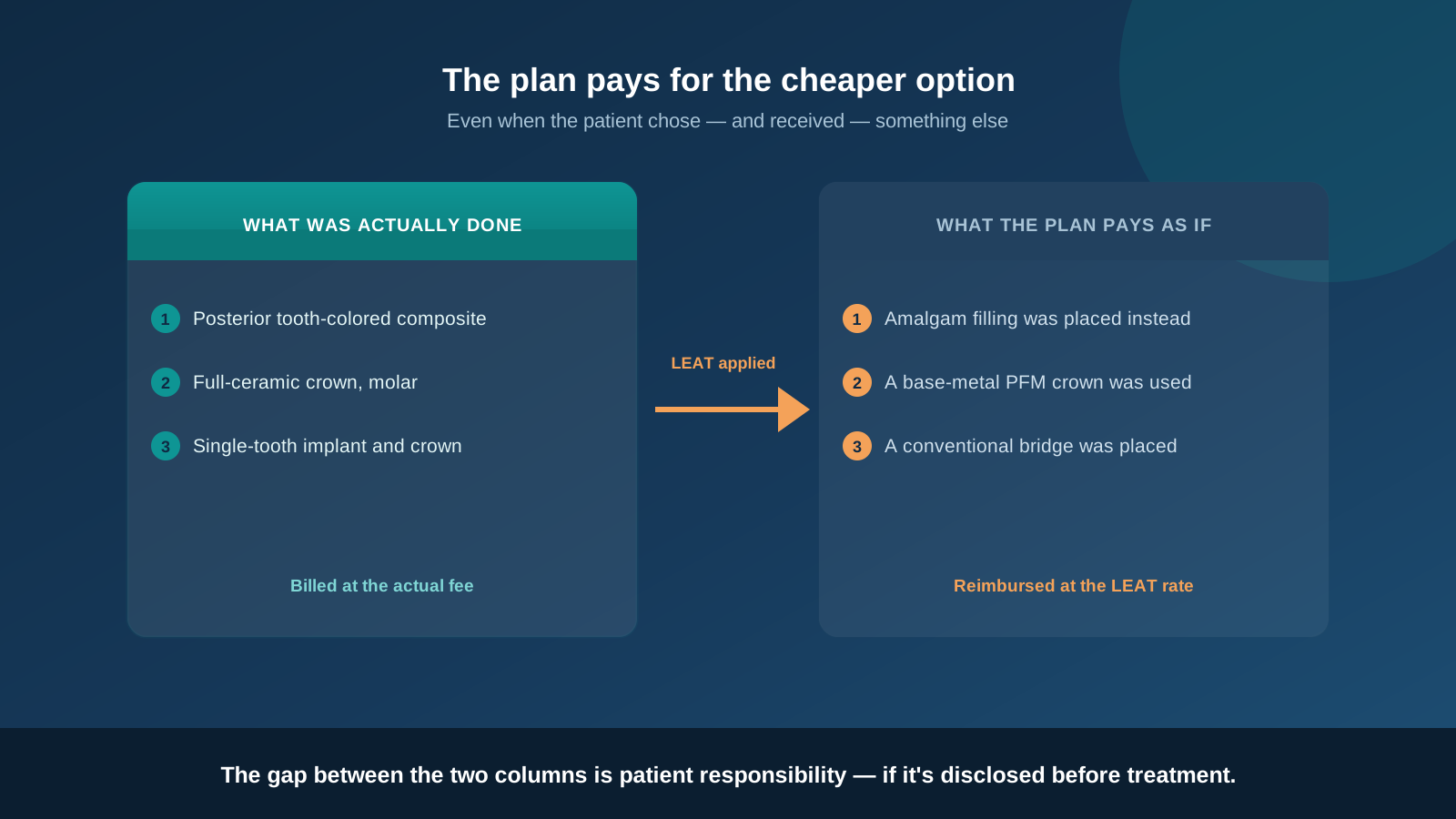
A patient chooses a tooth-colored composite on a molar instead of a silver filling. Or a full-ceramic crown instead of one with a metal substructure. Or an implant instead of a bridge. The treatment goes exactly as planned — and then the EOB comes back paying far less than the fee for what was actually done, because the plan reimbursed it as if the cheaper option had been placed instead.
That's not a coding error or a processing mistake. It's a specific piece of plan language called the alternate benefit clause, and it's one of the most common sources of unexpected patient balances in a dental office — precisely because it's legal, common, and rarely explained to the patient before the chair.
Written by John Moses, founder of Dental Claim Professionals, whose team verifies benefits and bills dental claims for practices across the country every day.
What the alternate benefit clause actually says
Most dental plans don't promise to pay for whatever treatment is chosen — they promise to pay toward the condition being treated, at the rate of the least expensive alternative treatment (LEAT) that a general dentist would consider clinically acceptable. If more than one option can resolve the same problem, the carrier reimburses at the rate of the cheapest one on that list, regardless of which option the dentist and patient actually selected.
The clause exists because insurers are paying toward a baseline standard of care, not underwriting every material or technique available. A posterior amalgam and a posterior composite both restore a decayed tooth, so the plan pays the amalgam rate on either one. A PFM crown and an all-ceramic crown both restore a broken tooth, so the plan pays the PFM rate. An implant-supported crown and a three-unit bridge both replace a missing tooth, so some plans — particularly older ones — still pay the bridge rate on the implant, treating it as the "downgrade" comparison even though implants are now standard of care in most practices.
Where it shows up most in daily billing
The clause is predictable once a practice knows where to look for it.
- Posterior composites. The single most common trigger. Many plans still write the alternate benefit specifically around amalgam vs. composite on molars and premolars, even though amalgam has fallen out of routine use in most practices.
- Crown material. All-ceramic and full-porcelain crowns are frequently downgraded to a base-metal or PFM rate, particularly on molars where the carrier considers esthetics elective rather than functionally necessary.
- Implants vs. bridges and partials. This is the most expensive version of the clause. Some plans genuinely exclude implants and pay only the bridge or partial rate; others have added implant coverage but still apply an alternate benefit comparison if a lower-cost prosthetic option exists.
- Onlays vs. fillings. A cast or ceramic onlay can be downgraded to the rate of a large filling if the plan considers a filling clinically sufficient for that amount of tooth structure loss.
In every case, the claim itself doesn't get denied — it gets paid, just at a lower amount than the billed fee, which is why these downgrades are easy to miss on a quick EOB scan and easy for a patient to be surprised by later.
How to disclose it before it becomes a billing surprise
The clause itself can't be negotiated away claim by claim, but the financial surprise attached to it can be eliminated with a process built around it.
- Read the alternate benefit language during verification — not just whether a procedure is "covered," but whether it's subject to a LEAT comparison, and against which alternative.
- Submit a pre-treatment estimate whenever a lower-cost clinical alternative exists, so the exact downgrade amount comes back from the carrier before treatment instead of being discovered on the EOB.
- Put the estimated difference in writing on a financial responsibility or informed consent form the patient signs before the appointment, naming both the plan's expected payment and the patient's estimated portion.
- Check the participating provider agreement before assuming the difference can be balance-billed — some in-network contracts limit what can be collected beyond the plan's allowed amount, even when an alternate benefit applies.
- Flag high-dollar cases early — implant cases especially — so the financial conversation happens during treatment planning, not after the crown is already cemented.
The bottom line
The alternate benefit clause isn't a claims error to chase down after the fact — it's a plan rule that can be read and quoted before treatment ever starts. Practices that build a LEAT check into every pre-treatment estimate turn a potential billing dispute into a routine financial conversation. Practices that don't tend to have that conversation anyway — just later, after the patient has already seen a balance they didn't expect.
Frequently asked questions
What is an alternate benefit clause in dental insurance?
An alternate benefit clause — often called a least expensive alternative treatment (LEAT) provision — lets a plan pay for a covered condition at the rate of the least expensive clinically acceptable treatment, even if the patient and dentist chose a different, more advanced option. The plan pays the LEAT rate; the patient owes the difference.
Which procedures does the alternate benefit clause affect most?
It shows up most often on posterior composite fillings downgraded to the amalgam rate, ceramic or all-porcelain crowns downgraded to a PFM or base-metal rate, and implant-supported restorations downgraded to the rate of a conventional bridge or removable partial.
Is the alternate benefit clause the same as a downgrade?
They describe the same outcome from two angles. The alternate benefit clause is the plan language that authorizes it; a downgrade is what shows up on the EOB when that language is applied — a lower payment than the fee for the procedure actually performed.
How can a practice avoid a surprise alternate benefit downgrade?
Submit a pre-treatment estimate for any procedure with a lower-cost clinical alternative, read the plan's alternate benefit language during verification, and have the patient sign a financial responsibility form disclosing the estimated difference before treatment begins.
Can a patient be balance-billed for the alternate benefit difference?
In most cases yes, as long as the practice is out-of-network or the plan's participating provider agreement allows it, and the patient was informed of the estimated difference before treatment. In-network agreements with some carriers restrict what can be collected, so the contract terms should be checked plan by plan.
Stop letting alternate benefit downgrades surprise your patients
Dental Claim Professionals verifies benefits — including LEAT and alternate benefit language — before treatment, and bills every claim accurately inside Open Dental, Dentrix, Eaglesoft, Denticon, or Softdent.
Book a Free Consultation