
A treatment plan gets built around a number: "$900 remaining on the annual maximum." The estimate goes out, the patient agrees to schedule, and three weeks later the actual payment posts a few hundred dollars short. Nothing was miscoded and nothing was denied — the $900 was just never a fixed number to begin with.
Annual maximums move constantly during the benefit year, and the figure any eligibility check reports is a snapshot, not a running total. Understanding what actually counts against that number, and why the carrier's own count can lag behind reality, is what keeps a treatment estimate from quietly becoming a billing dispute.
What actually counts against the maximum (and what doesn't)
An annual maximum is a dollar cap, not a service cap — once paid claims for a member hit that number within the benefit year, the plan stops paying, no matter how much treatment is still clinically appropriate. But not every dollar spent applies to it the same way.
Many PPO plans exclude preventive and diagnostic care — exams, routine cleanings, bitewings — from the maximum entirely, as an incentive to keep patients coming in. Basic and major restorative services almost always apply. Orthodontics is usually carved out into its own separate lifetime maximum rather than sharing the annual one. None of this is standardized across carriers, so "does this count toward the max" has to be checked per plan, not assumed from how a similar plan behaved last year.
It's also worth not confusing the annual maximum with the deductible or a waiting period — they're three separate levers on the same plan, and a patient can be past their waiting period, past their deductible, and still hit a wall because the maximum itself is close to exhausted.
Why "remaining benefits" on today's check can already be wrong
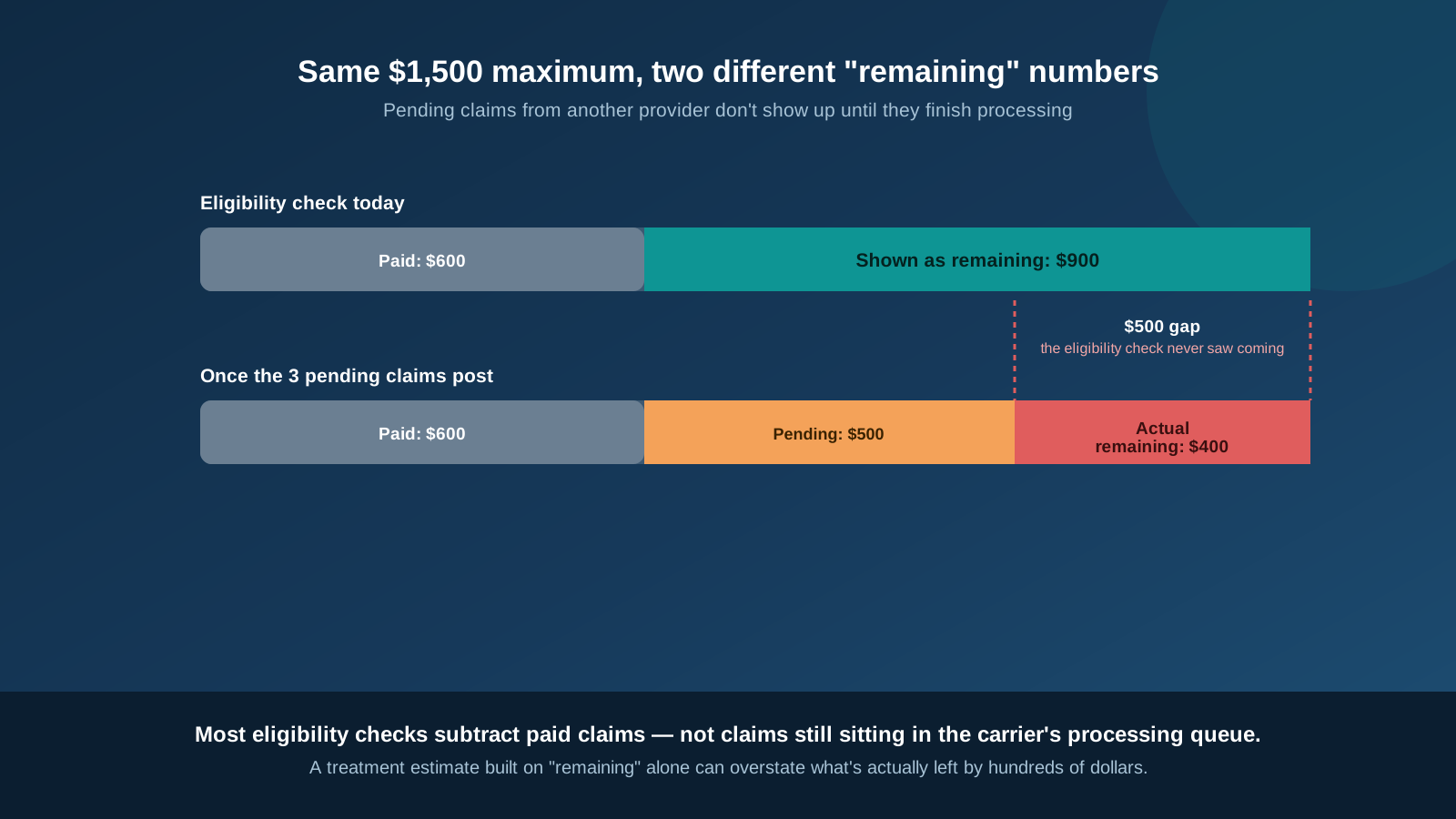
The remaining-benefits figure on a carrier portal or 270/271 eligibility response is typically calculated as: annual maximum minus claims that have finished adjudication and posted to the member's accumulator. Claims that have been submitted but are still sitting in the carrier's processing queue usually aren't subtracted yet — which means the displayed number can overstate what's actually left.
Other providers treating the same patient are the most common blind spot. A patient seeing an orthodontist, a periodontist, or a second general dentist during the same benefit year can have claims processing that your eligibility check has no visibility into until they post — sometimes days or weeks later.
Carrier update frequency varies. Some portals update in near real time; others batch-refresh accumulators overnight or weekly, so a claim paid yesterday might not show up until tomorrow, and a claim your own practice submitted last week might not have hit the accumulator yet either.
Family aggregate maximums add another layer. Some plans pool the maximum across all covered family members instead of tracking it per person, so a sibling's treatment earlier in the year can shrink what's left for everyone else on the plan — invisible unless the eligibility check is run at the family level, not just the individual.
How to manage annual maximums so patients aren't surprised at the chair
The fix isn't distrusting every number — it's treating the displayed remaining balance as an estimate with a known lag, and building the workflow around that:
- Ask directly whether the patient has seen another dentist or specialist this benefit year. That single question surfaces most of the pending-claims blind spot before it becomes a shortfall.
- Re-pull the remaining balance close to the date of service, not just at the initial consult — the gap between the estimate and reality only grows the longer treatment is delayed.
- Present the figure as an estimate, explicitly, in the treatment plan and financial agreement, so a shortfall is a disclosed possibility rather than a surprise.
- Sequence multi-phase treatment across the benefit-year boundary when it's close to exhausted, splitting a large case so part falls in the next year's fresh maximum instead of stalling mid-treatment.
None of this requires new software — it requires timing the check to the treatment date and asking the one question a portal can't answer on its own. See our insurance verification services for how we build that timing into the eligibility process before it becomes a billing dispute.
Frequently asked questions
What is a dental insurance annual maximum?
The annual maximum is the total dollar amount a dental plan will pay toward covered services for one member within a benefit year. Once claims paid in that year reach the maximum, the plan stops paying and the patient is responsible for the remainder, regardless of how much treatment is still clinically needed.
Does the annual maximum reset every calendar year?
Usually, but not always on the calendar year. Most plans reset on January 1, but some employer-sponsored plans run on a plan year tied to the employer's renewal date instead, which can fall anywhere in the year. This should be confirmed per plan rather than assumed.
Do preventive services count against the annual maximum?
It depends on the plan. Many PPO plans exclude routine preventive and diagnostic care, such as exams, cleanings, and bitewings, from counting against the annual maximum. Some plans, especially lower-cost individual plans, apply the maximum to every covered service including preventive care. This detail is not consistent across carriers and needs to be verified per plan.
Why did an eligibility check show more remaining benefit than what actually paid?
Most eligibility portals only subtract claims that have finished adjudication and posted to the member's benefit accumulator. Claims still in the carrier's processing queue, including ones submitted by another provider treating the same patient, aren't reflected yet, which makes the displayed remaining balance temporarily higher than the true amount.
Can a patient use remaining benefits from more than one dental plan in the same year?
Sometimes, through coordination of benefits. If a patient has both a primary and secondary dental plan, the secondary plan can pick up some costs after the primary pays, potentially preserving room under the primary plan's maximum. This only works if both plans are billed correctly in COB order, not simply billed twice for the same service.
Stop building estimates on stale numbers
Dental Claim Professionals verifies eligibility — including remaining maximums, deductibles, and frequency limits — close to the date of service, not just at the initial consult.
Book a Free Consultation