
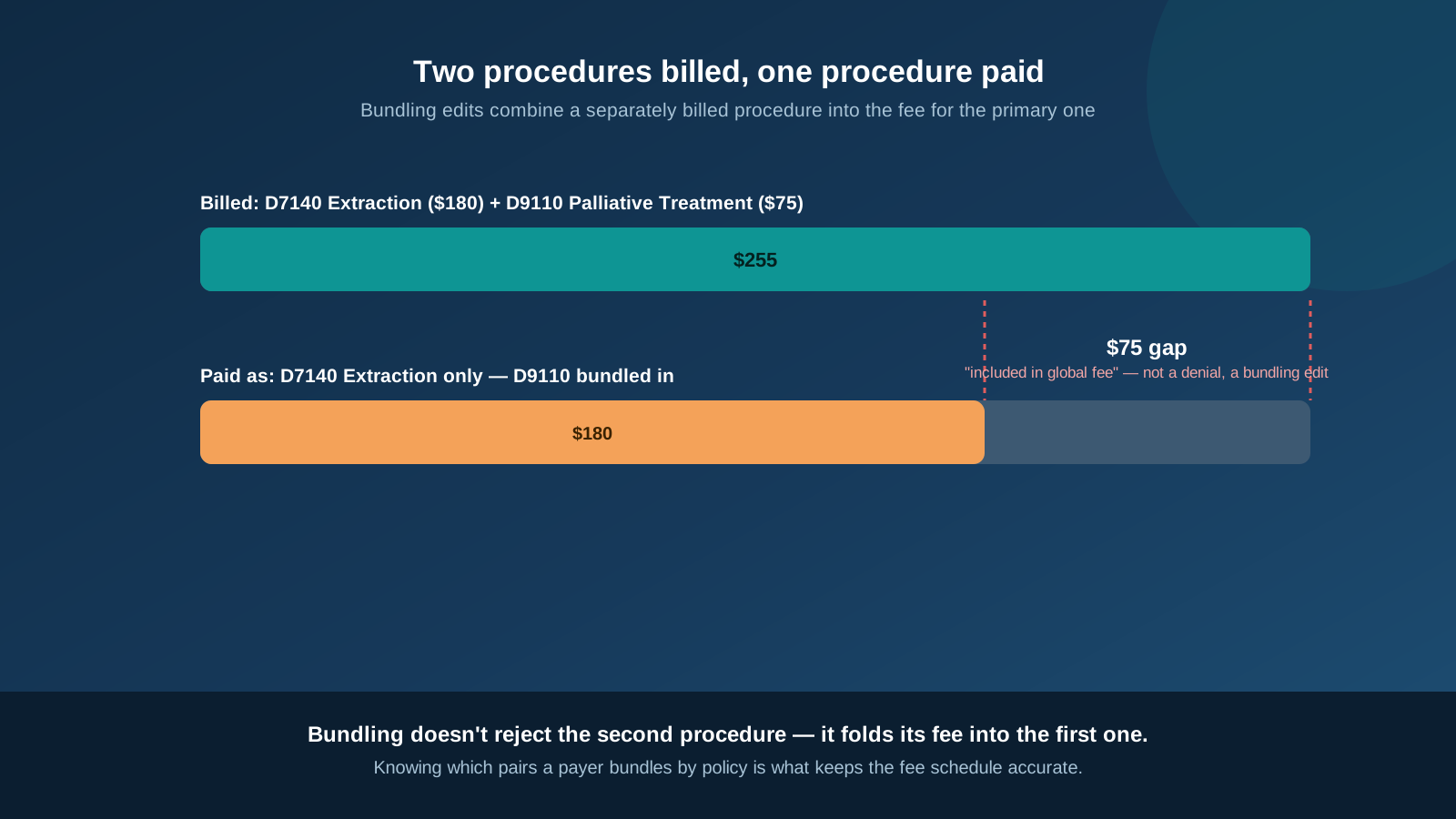
The extraction claim posts at full fee, but the palliative treatment billed on the same tooth, same day, comes back paid at $0.00 with a remark code reading "included in the fee for another service." Nothing was denied outright — the practice performed both, documented both, and billed both correctly. The insurer's claims editing software simply decided the second code belongs inside the first one's fee, not next to it.
That's bundling, and it's one of the most misunderstood line items on a dental EOB. Unlike a denial, it doesn't mean something went wrong. Unlike downcoding, it doesn't mean the documentation was thin. It means the payer's adjudication logic treats two billed procedures as a single reimbursable event — and knowing which pairs get bundled, versus which claims trigger a real unbundling flag, is what keeps a fee schedule from quietly shrinking.
Bundling vs. unbundling: two sides of the same coding rule
Bundling happens on the payer's side during adjudication. Claims editing software — the same type of logic behind National Correct Coding Initiative (NCCI) edits in medical billing — checks whether two codes submitted on the same claim, same date, same tooth or area, are considered "component and comprehensive." When they are, the payer reimburses only the comprehensive code and zeroes out the component, regardless of how the practice billed it.
Unbundling is the mirror image, and it's a billing-side practice payers actively watch for: separating the steps of what should be one comprehensive procedure into multiple codes to increase reimbursement. Billing a surgical extraction's bone removal or flap elevation as its own code, on top of the extraction code that already includes those steps, is unbundling. Most of the time it isn't intentional — it's a coding habit built before a payer updated its bundling logic, or a code entered from a fee guide that doesn't reflect a specific plan's edits. Either way, the claims system catches it and repackages the payment, sometimes with a note, sometimes without one.
The procedure pairs that get bundled most often
A handful of combinations account for most bundling denials in a typical dental A/R report:
- Palliative treatment (D9110) with a definitive procedure. If a filling, extraction, or root canal is completed on the same tooth the same day as an emergency visit, D9110 is almost always bundled into the definitive code — it isn't a separate, billable event once treatment resolves the pain.
- Bone grafting or socket preservation with an extraction. Many plans consider routine socket management part of a surgical extraction's global fee, and only pay a graft code separately when the narrative documents a distinct, medically necessary grafting procedure beyond normal healing support.
- Local anesthesia billed as its own line. Anesthesia delivered for a covered procedure is bundled into that procedure's fee industry-wide; billing it separately is one of the most consistently flagged unbundling patterns payers see.
- A limited exam (D0140) on the same day as a comprehensive exam (D0150). Plans that see both codes for the same patient visit typically pay only the more comprehensive one and bundle the limited exam into it.
None of these are the practice doing something wrong. They're predictable edits — and predictable enough that a practice can pre-check a claim against them before submission instead of discovering the bundle after the EOB arrives.
Reading the EOB — and when a bundle is worth appealing
A bundled line looks different from a downcode or a denial: the procedure code appears on the EOB exactly as billed, the allowed amount reads $0.00, and the remark points to another line on the same claim as the reason. Payment posting staff who only check the total deposit against the total billed can miss this distinction entirely, since the claim as a whole may still look "paid close to expected."
Not every bundle is final. If the two procedures were genuinely distinct — different teeth, a separate date of service, or a documented medical necessity the plan's own coding policy doesn't list as included — a bundle can be appealed with a narrative explaining why the services were independent rather than components of one event. A bundle that matches the payer's published bundling policy, on the other hand, isn't a documentation problem and won't be reversed by resubmitting the same claim with more notes attached.
See our dental insurance billing services for how we check every claim against known payer bundling edits before submission, and separate a real bundling policy from one worth appealing once the EOB comes back.
Frequently asked questions
What is bundling in dental insurance billing?
Bundling is when an insurer's claims editing software combines two separately billed procedure codes into one, paying only the fee for the primary procedure because the second is considered part of it. It shows up on the EOB as a code paid at $0 with a remark like "included in the fee for another service," not as a denial of a service that wasn't rendered.
How is bundling different from unbundling?
Bundling is the payer's edit that combines codes together during adjudication. Unbundling is the opposite action on the billing side: submitting separate codes for steps of a single procedure that should have been billed as one comprehensive code. Payers watch for unbundling because it can inflate reimbursement, and claims editing software is built to catch and repackage it automatically.
Which dental procedure pairs get bundled most often?
Palliative treatment (D9110) billed alongside a definitive procedure on the same tooth the same day, bone grafting or socket preservation billed with an extraction, local anesthesia billed separately from a surgical procedure, and a limited exam (D0140) billed on the same date as a comprehensive exam are among the most commonly bundled pairs.
Can a bundled dental claim be appealed?
It depends on whether the bundle reflects the plan's stated policy or a misapplied edit. If the two procedures were clinically distinct and separately documented — different teeth, different visits, or a service the plan's own policy doesn't list as included — the bundle can be appealed with a narrative and supporting chart notes. A bundle that matches the plan's published coding policy usually isn't reversible.
Stop losing revenue to bundling edits you didn't see coming
Dental Claim Professionals checks every claim against known payer bundling policies before it's submitted, and knows which bundled lines are worth appealing.
Book a Free Consultation