
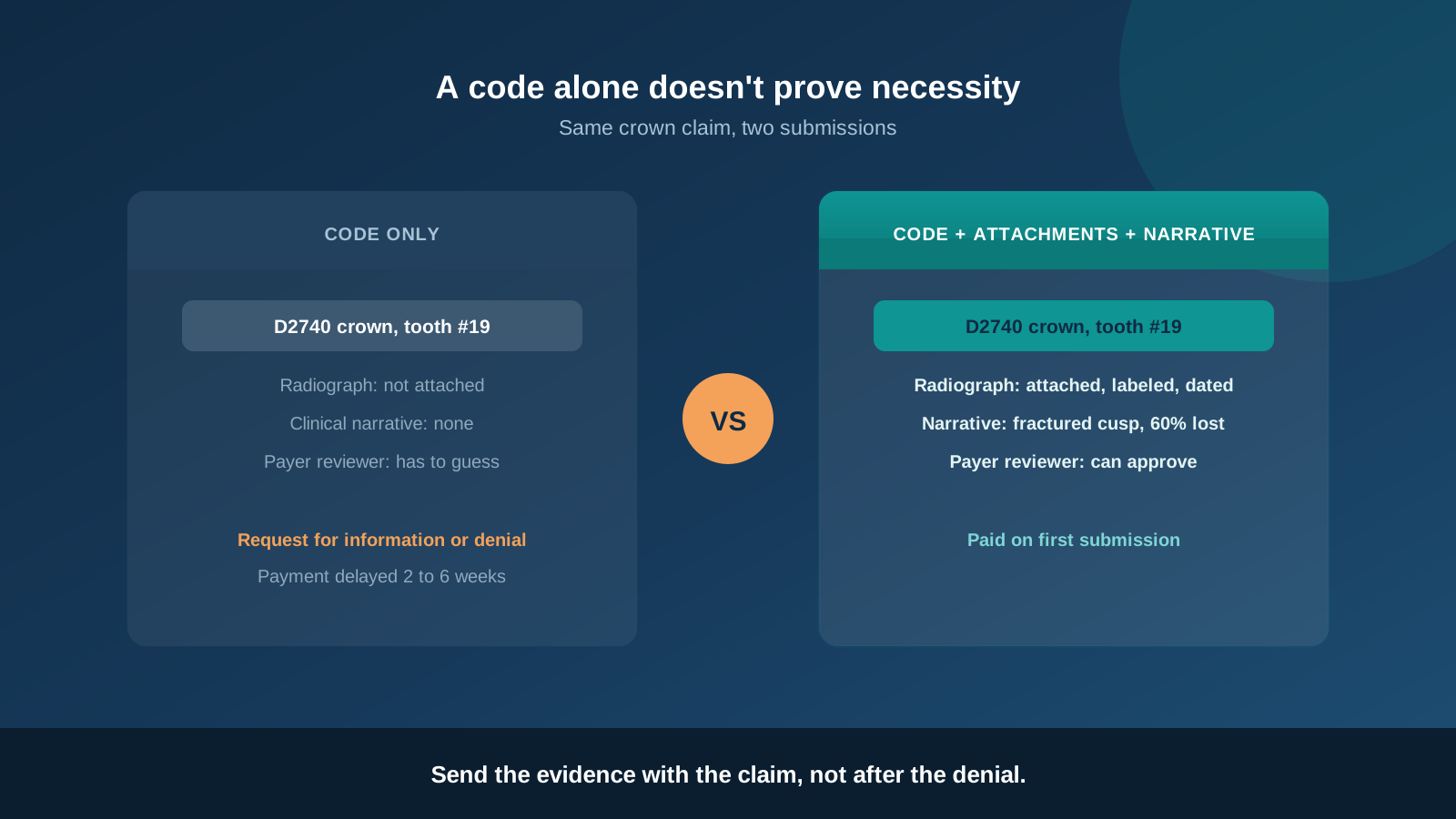
A procedure code tells a payer what was done. It says nothing about why. For routine services that gap doesn't matter, but for crowns, periodontal treatment, implants, and other major work, the claims reviewer is looking for proof of medical necessity, and if the claim doesn't carry it, the claim doesn't get paid. It comes back as a denial or a request for information, and the practice loses weeks it didn't need to lose.
What to attach, and when
Requirements vary by payer and plan, but a few pairings show up again and again. Building them into the claim workflow, rather than assembling them after a denial, is the single biggest first-pass payment improvement most practices can make.
- Crowns and buildups. A dated pre-operative radiograph showing the decay, fracture, or failing restoration. Add an intraoral photo when the problem is a cracked cusp that won't show on film.
- Scaling and root planing. Full periodontal charting with pocket depths and bone-loss evidence on radiographs. Charting that shows mostly 3 mm readings undercuts the diagnosis.
- Implants and bone grafts. Radiographs, the reason for the extraction or missing tooth, and the date it was lost, since payers check this against missing tooth clauses and waiting periods.
- Replacement of existing work. The date of the original placement and a reason the restoration can't be repaired, because replacement frequency limits apply.
Whatever the procedure, images must be labeled with the patient name, date, and tooth or area, and be legible at the resolution the payer receives. An unreadable or undated image is treated the same as no image.
Writing a narrative reviewers can approve
A good narrative is short, clinical, and specific. Reviewers are often working through dozens of claims and want the answer to one question: is this treatment necessary and consistent with the plan's criteria? Effective narratives usually cover four things in a few sentences:
- Diagnosis and findings: what the clinician found and where, such as “fractured distal cusp on #19 with approximately 60% of coronal structure lost.”
- Why a lesser option won't work: the direct restoration would not hold, or the tooth has already been restored twice.
- Consequence of no treatment: risk of fracture below the gumline, pain, or loss of the tooth.
- Reference to the attachments: point the reviewer to the radiograph or chart so they can verify the statement.
Avoid vague phrases such as “patient needs crown” and copy-pasted text that doesn't match the chart. A narrative that contradicts the radiograph is worse than none, because it invites a denial and an audit question. Every statement should be traceable to the clinical record.
Submitting and tracking attachments
Attachment handling is where otherwise good claims fall apart. Some payers accept images electronically through a clearinghouse or attachment service; others still require a portal upload, fax, or mail. Confirm each payer's method, note the attachment or tracking number on the claim, and follow up if the payer shows the claim as pending for information you already sent. Track these claims against the payer's timely filing limit, since a request for information doesn't always pause the clock.
Our dental insurance billing team builds attachment and narrative requirements into each claim before it is submitted, so the evidence travels with the code.
Frequently asked questions
What attachments do dental insurance claims need?
It depends on the procedure and payer, but crowns, periodontal scaling and root planing, implants, and other major services commonly need a dated radiograph. Perio treatment usually needs full periodontal charting, and some payers also want intraoral photos.
What is a claim narrative in dental billing?
A narrative is a short written explanation of why the treatment was necessary. It states the diagnosis, the clinical findings, and what would happen without treatment, so the payer's reviewer can approve without guessing.
Should attachments be sent with the claim or after a request?
Send them with the claim whenever the procedure is one the payer routinely reviews. Waiting for a request for information adds weeks to payment and risks running into the timely filing deadline.
Why do dental claims get denied for missing information?
Most often the claim reached the reviewer with a code but no radiograph, charting, or explanation, or the image was undated, unreadable, or for the wrong tooth. The payer denies rather than assumes necessity.
Do electronic claim attachments work for every payer?
Not every payer accepts them the same way. Many accept images through an attachment service or portal upload, while others still require mail or fax, so confirm each payer's method and record the tracking number.
Get paid on the first submission
Dental Claim Professionals prepares claims with the right attachments and narratives, so fewer of them come back for more information.
Book a Free Consultation