
More and more patients walk in with two dental plans — their own coverage plus a spouse's, or a child covered under both parents. On paper, that should mean more money collected, not less. In practice, coordination of benefits (COB) is one of the most common places dual-coverage claims stall out, get underpaid, or don't get billed to the second plan at all.
COB is the set of rules that decides which plan pays first, which pays second, and how much the second plan owes once the first has paid. Get the sequence or the paperwork wrong, and the secondary payment either never shows up or gets written off as "not worth chasing." Multiply that across every dual-coverage patient in an active practice, and it adds up to real, recoverable revenue.
Written by John Moses, founder of Dental Claim Professionals, whose team bills primary and secondary dental claims for practices across the country every day.
What coordination of benefits actually decides
COB answers two questions: who bills first, and how much (if anything) the second plan owes after the first one pays. The determination rules are fairly consistent across carriers:
A patient's own plan is always primary for them. If someone is covered as an employee or subscriber on one plan and as a dependent on a spouse's plan, their own plan pays first, every time.
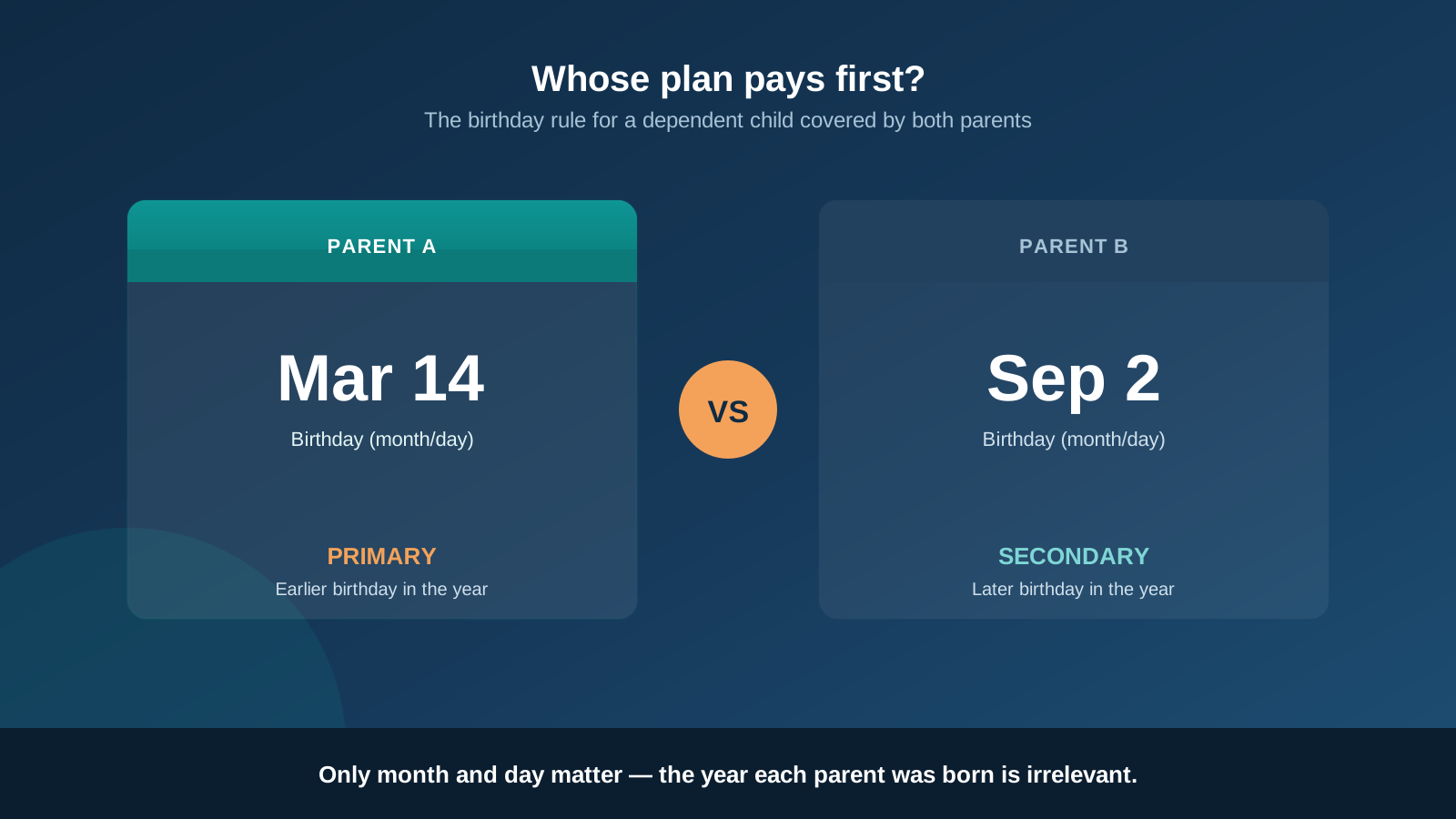
The birthday rule decides it for dependent children. When a child is covered under both parents' plans, the parent whose birthday — month and day, not year — falls earlier in the calendar year holds the primary plan. A parent born in March is primary over a parent born in September, even if the March parent is younger. This trips up front desks constantly, because the natural assumption is that the older parent, or the higher earner, or whoever answers the phone is primary. None of that matters; only the birthday sequence does.
Court decrees override the birthday rule. For divorced or separated parents, a custody or divorce decree that names a specific parent responsible for health coverage takes precedence over the birthday rule. That documentation needs to be on file, not assumed.
Medicaid is always last. If a patient has Medicaid and any private dental plan, the private plan bills first without exception. Medicaid is the payer of last resort and should never be billed before the private carrier's EOB is in hand.
Where dual-coverage claims go wrong
None of the rules above are especially complicated on their own. What causes lost revenue is skipping the process around them.
Taking the patient's word for it. Patients often don't know which of their plans is primary, or assume it's whichever one they think of as "the good plan." Relying on that answer instead of verifying both plans directly with the carriers is one of the fastest ways to bill the wrong payer first — which usually means a denial, a refund, and a rebill weeks later.
Only verifying one plan at intake. If the front desk checks eligibility on the plan the patient mentions and never asks whether there's a second policy, the practice loses the secondary payment entirely — not because it wasn't available, but because nobody billed for it.
Submitting the secondary claim without the primary EOB attached. Almost every secondary payer requires proof of what the primary plan billed, allowed, and paid before they'll process anything. A secondary claim sent without that EOB attached typically comes back as a rejection, not a payment — and it sits in that state until someone catches it.
Misreading a "non-duplication of benefits" clause as an error. Some secondary plans only pay the difference between what they would have allowed and what the primary plan already paid — and if the primary payment is equal to or greater than the secondary's allowed amount, the secondary legitimately owes nothing. Teams that don't know this clause exists sometimes assume a $0 secondary payment is a processing mistake and either resubmit it repeatedly or write off the claim as denied when it was actually paid correctly the first time.
Not re-verifying COB after a life event. A new job, a divorce, a spouse switching plans during open enrollment — any of these can flip which plan is primary. Billing the old primary plan out of habit, instead of re-checking at the next visit, produces a denial that didn't need to happen.
A process that gets COB claims paid right the first time
Dual-coverage claims aren't fundamentally harder than single-coverage claims — they just need one extra layer of verification and sequencing built into the workflow.
- Ask every patient, every time, whether they have a second dental plan — not just at new-patient intake, but as a standing question at eligibility checks, since coverage changes.
- Verify both plans directly with the carriers rather than relying on what the patient believes is primary, and confirm the birthday-rule sequence or court-decree assignment for dependent children.
- Bill the primary plan first and wait for the EOB before submitting to the secondary — then attach that EOB to the secondary claim as a matter of process, not an afterthought.
- Read the secondary plan's COB clause so a $0 secondary payment on a non-duplication plan is recognized as correct instead of flagged as an error and re-billed unnecessarily.
- Track dual-coverage patients as their own AR category, so a secondary claim that hasn't been billed within a reasonable window after the primary EOB arrives gets caught, instead of quietly aging past timely filing.
That last point matters more than it sounds. Secondary payers have their own timely-filing deadlines, usually measured from the date of the primary EOB, not the date of service. A secondary claim that sits for two months while someone gets around to it can miss that window entirely — turning a fully recoverable payment into a written-off balance for no reason other than a process gap.
The bottom line
Two insurance plans should mean more revenue for the practice and less out-of-pocket for the patient — not a claim that stalls between two payers until someone gives up on it. The practices that handle COB well treat it as a defined process: verify both plans up front, sequence them correctly, attach the right documentation, and track secondary claims until they're resolved. The ones that don't tend to write off money they were actually owed, simply because nobody followed the claim all the way through.
Frequently asked questions
How do you determine which dental plan is primary?
For a patient covered under their own plan, that plan is always primary for them. For a dependent child covered by both parents, most states use the birthday rule: the parent whose birthday (month and day, not year) falls earlier in the calendar year has the primary plan. Court decrees for divorced or separated parents override the birthday rule when one exists.
What is the birthday rule in dental insurance?
The birthday rule determines which parent's plan is primary for a dependent child covered by both parents' dental insurance. The parent whose birthday falls earlier in the calendar year, comparing only month and day, has the primary plan — regardless of which parent is actually older.
Why did the secondary dental plan pay nothing on a claim?
Many secondary plans have a non-duplication of benefits clause, meaning they only pay if their own allowed amount is higher than what the primary plan already paid. If the primary payment already meets or exceeds what the secondary plan would have allowed, the secondary plan can legitimately pay zero.
Does the secondary dental claim need the primary EOB attached?
Yes. Nearly every secondary payer requires the primary carrier's EOB showing what was billed, allowed, and paid before they will process the claim. Submitting a secondary claim without it is one of the most common reasons dual-coverage claims sit unpaid or get denied.
Who determines primary coverage when a patient has Medicaid and a private dental plan?
Medicaid is always the payer of last resort. Any private dental plan the patient or dependent is covered under is billed first, and Medicaid is billed secondary only after the private plan's payment and EOB are received.
Stop writing off secondary claims you're actually owed
Dental Claim Professionals verifies both plans, sequences primary and secondary billing correctly, and tracks every dual-coverage claim to resolution — inside Open Dental, Dentrix, Eaglesoft, Denticon, or Softdent.
Book a Free Consultation