
A denial letter reads like a final answer. It isn't one. Most dental plans build an appeals process into the contract precisely because claims examiners make decisions with incomplete information — a missing x-ray, a vague clinical note, a procedure code that didn't match the narrative. The claim didn't fail because the treatment wasn't covered. It failed because the paperwork didn't prove it.
That distinction matters, because practices that treat a denial as the end of the conversation leave real money on the table. Practices that treat it as a request for better evidence recover a meaningful share of it.
Written by John Moses, founder of Dental Claim Professionals, whose team files and tracks appeals across dozens of carriers every week.
Why most denials are appealable
Claims examiners work from a checklist against the information submitted, not from a full clinical picture. A crown denied as "not medically necessary" may simply mean the submitted x-ray didn't clearly show the extent of decay or an existing large restoration. A scaling and root planing claim denied for "insufficient documentation of bone loss" may mean the periodontal charting wasn't attached, not that the disease wasn't present.
Carriers deny in these situations because the burden of proof sits with the practice, and the initial submission often doesn't carry enough of it. That's good news, structurally: it means the fix is usually a documentation problem, not a coverage problem, and documentation problems are solvable after the fact.
The reasons worth appealing fall into a few recurring buckets: necessity denials that need better clinical evidence, frequency or downgrade denials that need the plan language checked against the actual treatment, and processing errors — wrong fee schedule, wrong plan on file, claim applied to the wrong patient — that need nothing more than a correction request. Knowing which bucket a denial falls into changes what the appeal needs to contain.
What separates a strong appeal from a weak one
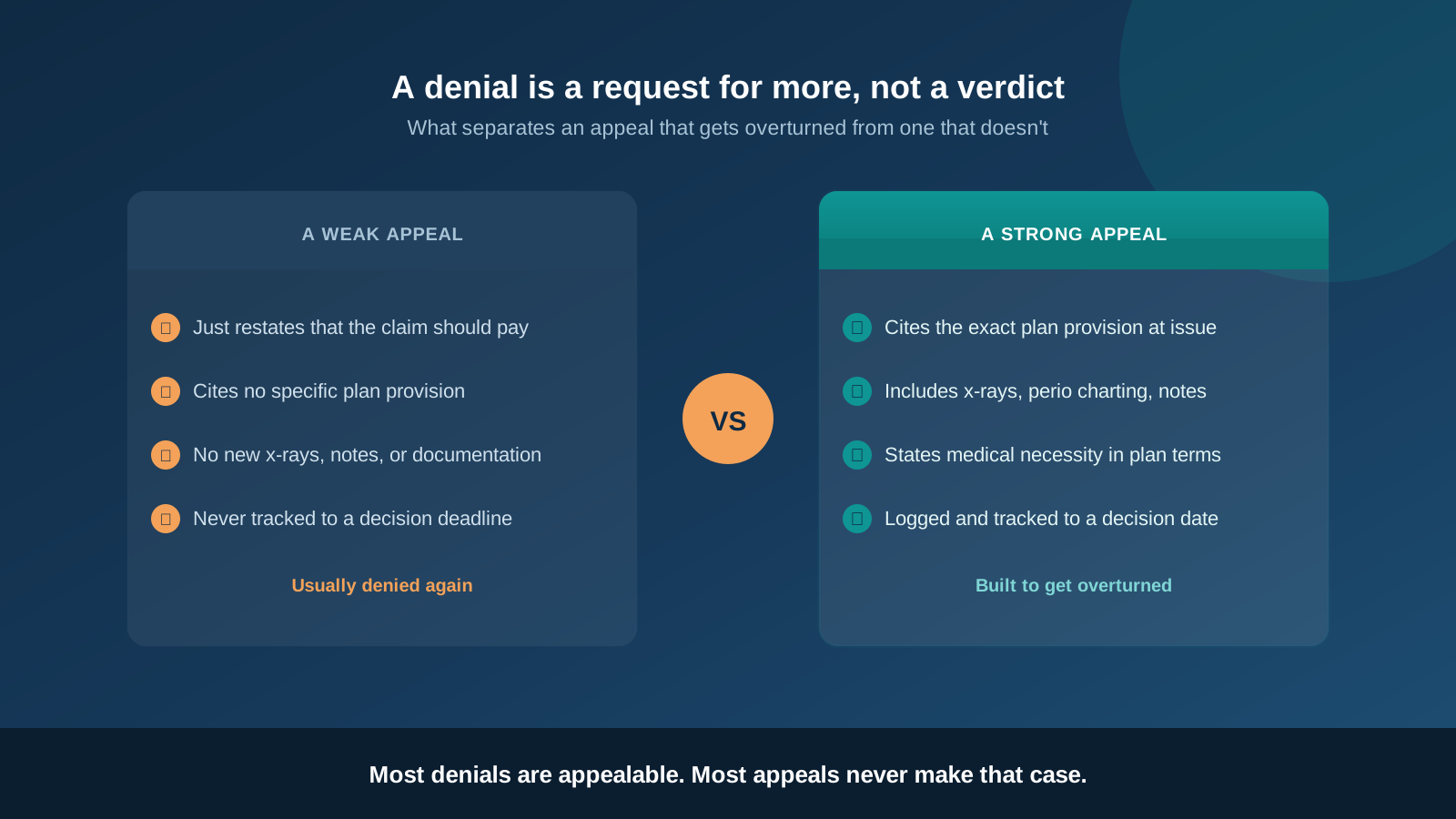
A weak appeal letter says, in effect, "please reconsider and pay this claim." It restates the treatment, expresses disagreement with the outcome, and attaches nothing new. Carriers deny these at close to the same rate as the original claim, because nothing about the file has actually changed.
A strong appeal does three specific things. First, it names the exact plan provision or clinical criterion the denial was based on — not "the claim was denied" but "the plan requires radiographic evidence of bone loss for SRP, and the attached bitewings and periodontal chart document 5mm+ pocketing in three or more sites per quadrant." Second, it attaches the documentation that closes that specific gap: current x-rays, periodontal charting, clinical notes, a narrative from the treating dentist when judgment is in question. Third, it's addressed to the right reviewer — a general reconsideration queue for a processing error, but a dental consultant or peer-to-peer review request when the denial is a genuine clinical judgment call.
Framing matters as much as documentation. An appeal that argues from the plan's own language — "per section 4.2, X is covered when Y is present, and Y is documented here" — reads as a correction to the record. An appeal that argues from frustration reads as a complaint, and complaints don't move claims examiners.
First-level vs. second-level appeals
Most carriers offer at least two rounds. A first-level appeal is reviewed by the same plan, often by a different examiner than the one who issued the original denial, and it's the right venue for documentation gaps and processing errors. If it's denied again, or if the issue is a genuine clinical dispute rather than missing paperwork, a second-level appeal escalates to a senior reviewer or dental consultant — sometimes a licensed dentist reviewing the case directly, which is where a peer-to-peer conversation can carry real weight.
Deadlines are unforgiving on both levels. Appeal windows commonly run 90 to 180 days from the denial date depending on the carrier and whether the plan is insured or self-funded, and once that window closes, the right to appeal is typically gone regardless of how strong the case would have been. See our insurance and billing services for how we build appeals into the daily claims workflow rather than treating them as a separate project.
Building a process that doesn't rely on memory
The practices that recover the most from appeals don't have better luck with carriers — they have a system. Every denial gets logged the day it's received, not weeks later when someone finally works through a stack of EOBs. Each entry tracks the denial reason, the appeal deadline, the documentation gathered, and the date it was submitted. Appeals sit in their own aging queue, separate from standard AR, because a 120-day appeal window and a 30-day claim aging bucket need to be watched differently.
Without that structure, appeals lose to the calendar as often as they lose on the merits. A denial that would have been overturned with the right x-ray simply expires because no one followed up before the deadline passed.
Frequently asked questions
Is a dental insurance denial final?
No. Most dental plans give providers and patients the right to appeal a denied claim, usually through a first-level appeal and, if that fails, a second-level appeal or independent review. A denial is the carrier's decision based on the information it had at the time, not a final ruling on whether the treatment was covered.
What is the difference between a first-level and second-level dental appeal?
A first-level appeal is reviewed by the same carrier, often by a different claims examiner, and typically requires new documentation addressing the stated denial reason. A second-level appeal escalates to a senior reviewer or dental consultant, sometimes a licensed dentist, and is used when the first-level appeal is denied or the case involves a clinical judgment call.
How long does a practice have to appeal a dental claim denial?
Appeal windows vary by carrier and plan type, commonly ranging from 90 days to 180 days from the date of the denial notice. Some self-funded ERISA plans allow longer windows. The deadline is stated in the explanation of benefits, and missing it typically forfeits the right to appeal.
What documentation should be included in a dental claim appeal?
A strong appeal includes the original EOB, current periapical or bitewing x-rays, clinical notes documenting medical necessity, periodontal charting where relevant, and a cover letter that cites the specific plan provision or clinical criteria being disputed rather than simply restating that the claim should pay.
Should a dental practice track appeals separately from regular claims?
Yes. Appeals move slower than standard claims and are easy to lose track of in a general AR report. Practices that log each appeal with the date filed, the carrier's response deadline, and the documentation submitted are far less likely to let a winnable appeal expire unresolved.
Stop letting winnable appeals expire on the calendar
Dental Claim Professionals works inside your existing practice management system — Open Dental, Dentrix, Eaglesoft, Denticon, or Softdent — to file, document, and track every appeal to a decision.
Book a Free Consultation