
Deductibles look like the simplest number on an eligibility check — a flat dollar amount the patient owes before the plan starts paying. In practice, it's one of the easiest figures to misquote, because "deductible met" can mean different things depending on whether the plan is individual or family, and whether the family total is embedded or aggregate. Two plans can show the same $50 individual and $150 family deductible and still settle a claim completely differently.
When a front desk assumes one model applies and the plan actually uses the other, the estimate given at check-in and the amount that actually posts after the EOB can be off by the full deductible amount — money that's either uncollected from the patient or written off unnecessarily.
Individual vs. family deductibles
An individual deductible applies separately to each covered person: a spouse's claims don't count toward a child's deductible, and vice versa. A family deductible is a shared cap across everyone on the plan — once the family's combined payments reach that number, it changes how remaining members' claims are treated. Most employer dental plans carry both figures, and both matter: quoting only the individual amount on a family plan can understate what's actually left to collect, or overstate it, depending on how much of the family total other members have already used this plan year.
Embedded vs. aggregate: the detail that decides what "met" means
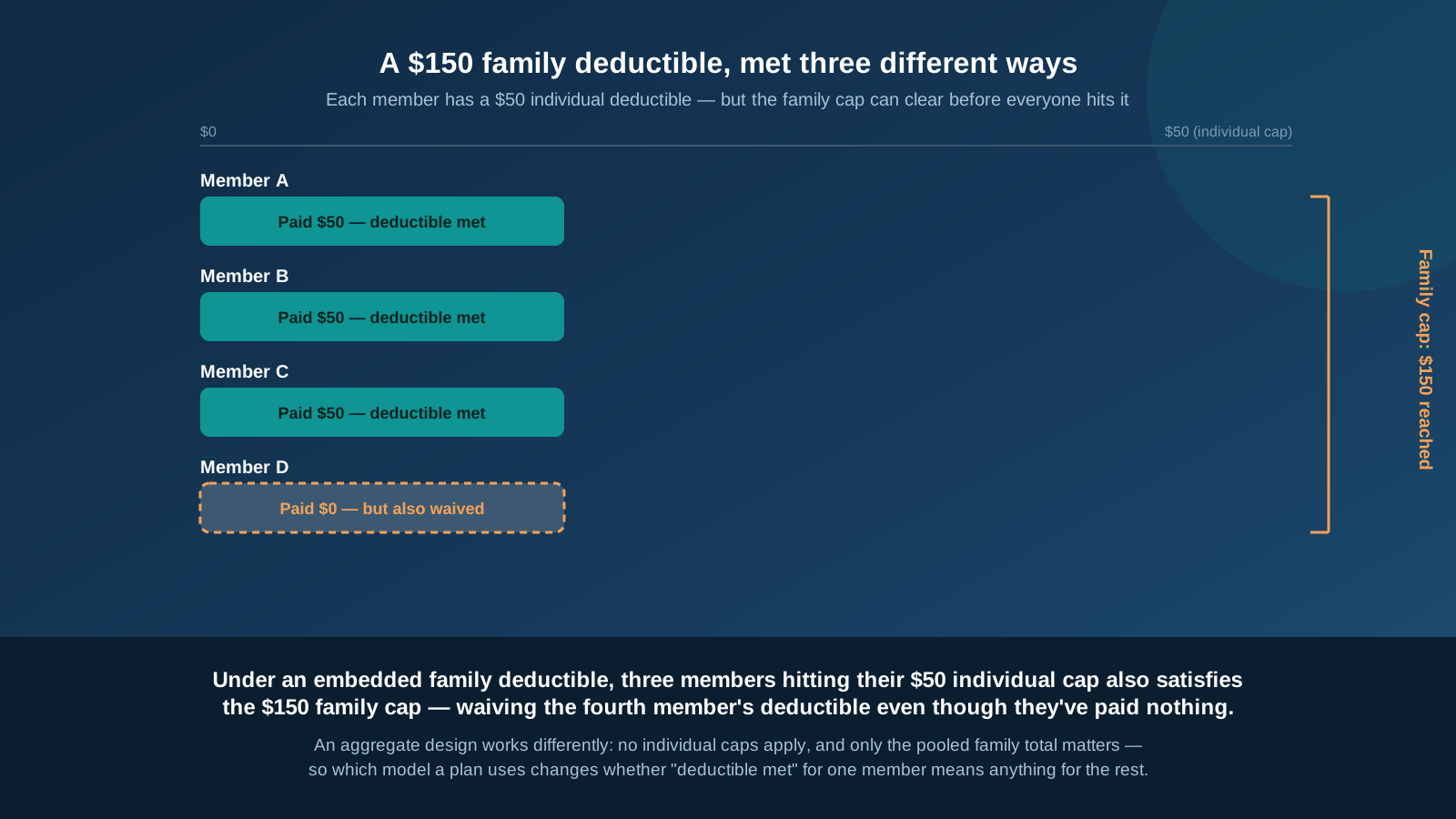
This is where estimates most often go wrong. In an embedded design, each family member also carries their own individual cap that sits inside the family total — a member's deductible is satisfied the moment their own claims hit that individual number, independent of what anyone else in the family has paid. Once enough members individually reach their cap to add up to the family total, the family deductible is considered met for everyone, including a member who's paid nothing at all toward it.
In an aggregate design, there are no individual caps. Every dollar any family member pays goes into one shared pool, and no one's deductible — including the person who's paid the most — is considered met until that pool reaches the full family amount. A member who has personally paid $100 toward a $150 aggregate family deductible still owes toward their next claim if the family total hasn't cleared $150, even though $100 is well past what an embedded plan's individual cap might have required.
The two models can produce different answers from the exact same claims history, and a plan's summary of benefits — not a default assumption — is the only reliable place to confirm which one applies.
Verifying deductible status before treatment
A deductible estimate is only as good as three things confirmed during eligibility verification, not assumed from the plan type:
- Ask embedded or aggregate directly for any plan with a family deductible — most payer portals will state it if asked, even when it isn't obvious from the summary of benefits alone.
- Check what other family members have already applied this plan year before finalizing an individual patient's estimate, since their claims may have already moved the family total closer to — or past — the cap.
- Confirm which procedures are deductible-exempt rather than assuming all preventive care skips it — some plans waive the deductible only for specific preventive codes, not the whole category.
- Re-verify at the start of each new plan year, since deductibles reset annually and a patient's "already met" status from December doesn't carry into January.
Getting deductible status wrong at check-in doesn't just cost a single claim — it compounds across every family member seen afterward. See our dental insurance verification services for how we confirm deductible design, not just the dollar figure, before treatment happens.
Frequently asked questions
What's the difference between an individual and a family dental deductible?
An individual deductible applies separately to each covered person on the plan — each family member must meet their own amount before the plan starts paying their claims. A family deductible is a combined cap: once the family's total out-of-pocket payments across all members reach that number, the plan may treat the deductible as satisfied for some or all remaining members, depending on whether the plan is embedded or aggregate.
What's the difference between an embedded and an aggregate family deductible?
In an embedded design, each member also has their own individual cap within the family total, so a member's deductible is met as soon as their own claims hit that cap, and the family deductible is met once enough members individually reach it. In an aggregate design, there are no individual caps — only the pooled family total counts, so no member's deductible is considered met until combined family claims reach the full family amount, however that total is distributed across members.
Does preventive care count toward the dental deductible?
It depends on the plan. Many dental plans waive the deductible for preventive services like cleanings and exams, but not all do, and some waive it only for certain preventive codes while applying it to others, such as fluoride or sealants on adult patients. The plan's summary of benefits, not a general assumption, determines which services are deductible-exempt.
How can a practice verify a patient's deductible status before treatment?
During eligibility verification, confirm both the individual and family deductible amounts, ask explicitly whether the family deductible is embedded or aggregate, and check whether the deductible applies plan-year-to-date, not just what a single procedure's eligibility check displays. For a family plan, note how much of the family total other members have already applied before finalizing an estimate for the patient being seen.
Stop guessing at deductible estimates
Dental Claim Professionals verifies deductible design — not just the dollar amount — on every plan before treatment, so patient estimates hold up when the EOB arrives.
Book a Free Consultation