
A paid claim feels like a closed loop — the EOB posted, the balance zeroed out, the chart moved on. Then, months later, a remittance shows an unexplained negative line, or a letter arrives asking the practice to send money back. This is a recoupment, and it's one of the more disruptive things a dental payer can do, because the practice already recognized that revenue and may have already reconciled the patient's account.
Recoupments aren't rare, and they aren't always wrong either — but they aren't always right, and payers don't always make that easy to tell. Knowing why they happen, how the money actually moves, and what response window exists is what turns a recoupment from an automatic loss into a claim the practice can actually push back on.
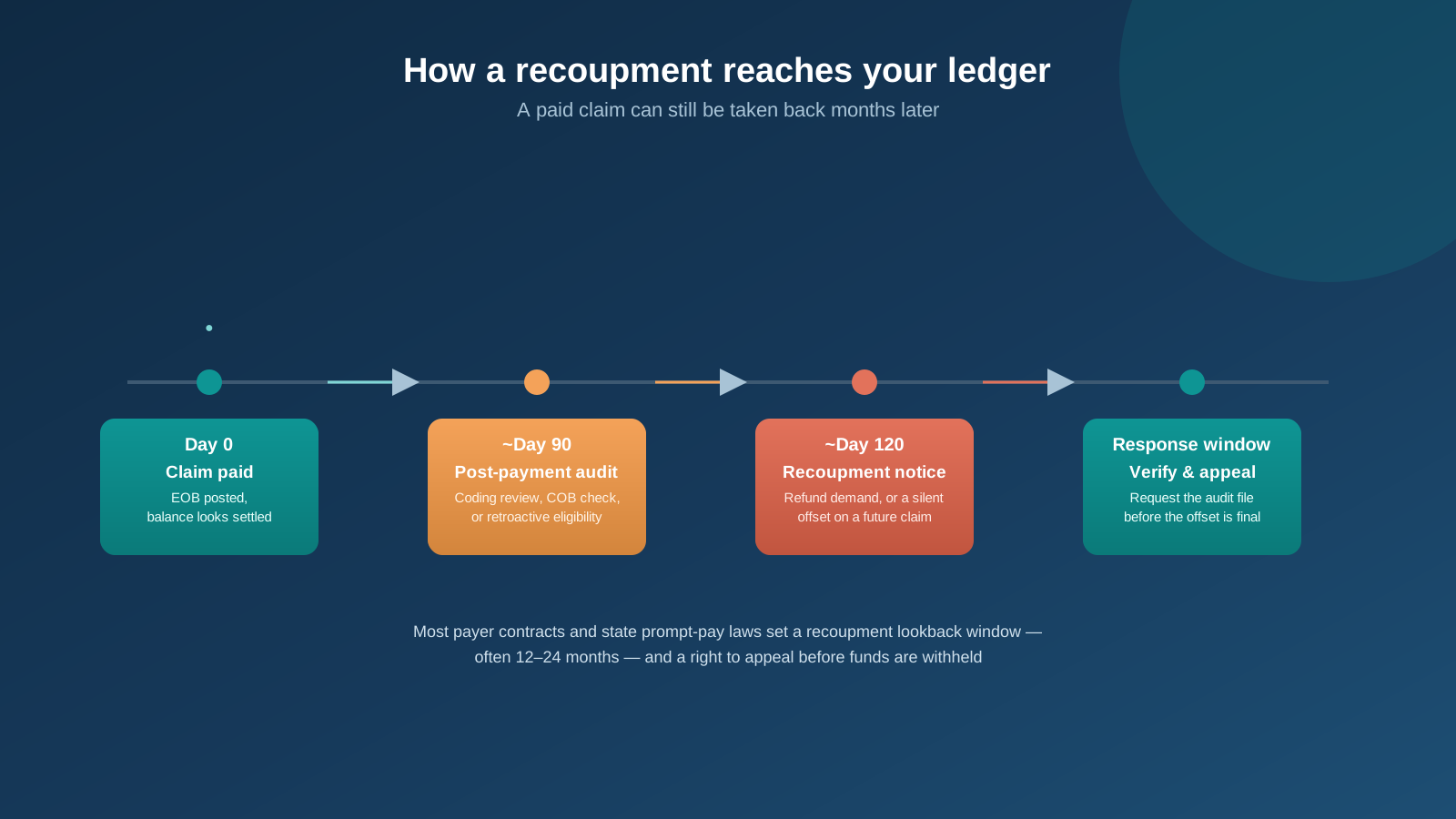
Why insurers recoup payments after the fact
A recoupment is triggered by something the payer discovers after the original adjudication, not at the time of it. The most common causes:
- Post-payment audits. Insurers periodically sample paid claims for coding accuracy, medical necessity, or documentation support — separate from the review that happened before the claim was originally paid.
- Retroactive eligibility termination. A patient's coverage gets cancelled or changed effective before the date of service, often because an employer processed a termination late, so a claim that was valid when paid becomes technically ineligible.
- Coordination-of-benefits corrections. The payer later learns it should have been secondary, not primary, and recoups the difference once the other carrier's payment is known.
- Duplicate or overpayment errors. The payer's own processing system paid a claim twice, paid above the contracted fee schedule, or paid a corrected claim without reversing the original.
None of these require the practice to have made a mistake. That's exactly why every recoupment notice deserves a second look rather than automatic acceptance.
How the offset actually reaches your books
Recoupments arrive in one of two ways, and the difference matters for how a practice catches them. A direct refund demand comes as a formal letter with a dollar amount, a reason code, and a deadline to either pay or appeal. A silent offset instead shows up as a negative adjustment buried inside a future remittance for a completely different patient's claim — the practice never gets a check for the full amount owed on that later claim, and unless someone is reconciling remittances line by line, the shortfall can go unnoticed for months.
Most state prompt-pay statutes and payer provider contracts define a recoupment lookback window, commonly 12 to 24 months from the original payment date, along with a right to written notice and appeal before funds are withheld. Self-funded ERISA plans and Medicaid managed care contracts can carry different or longer terms, so the applicable limit has to be checked against both state law and the specific contract — not assumed to be uniform across every payer a practice bills.
How to protect the practice when a notice arrives
A recoupment notice is a claim decision, and it can be appealed the same way a denial can. Before agreeing to anything:
- Verify the underlying claim and payment history against the original EOB, eligibility check, and clinical documentation — don't take the payer's audit finding at face value.
- Request the itemized audit findings or the specific reason code behind the demand. A vague "overpayment" letter with no supporting detail is itself worth pushing back on.
- Confirm the recoupment falls inside the applicable lookback window under state law and the payer contract before conceding the amount is even collectible.
- File a written appeal on anything that looks wrong, rather than letting an automatic offset go unchallenged — a recoupment that's silently deducted from a later claim is just as appealable as one demanded by letter.
- Log every recoupment the practice receives, separate from routine denials, so a pattern from one payer becomes visible instead of looking like scattered one-off errors.
A practice that reconciles every remittance line by line catches silent offsets before they compound into a real cash-flow problem. See our dental insurance billing services for how we handle denial management and payment posting so recoupments don't slip through unnoticed.
Frequently asked questions
What is a dental insurance recoupment?
A recoupment is when a dental insurer takes back money it already paid on a claim, usually after a post-payment audit, a retroactive eligibility change, or a coordination-of-benefits correction. It shows up either as a direct refund demand or as a negative adjustment offsetting a future, unrelated claim payment.
Can an insurer take back a dental claim payment without asking first?
Often, yes, if the plan's contract allows silent offsetting: the recoupment appears as a deduction on a future remittance rather than a separate letter. Most state prompt-pay laws and payer contracts still require written notice and a lookback window, typically 12 to 24 months, but the notice can easily be missed if no one is reconciling remittances line by line.
How far back can a dental insurer recoup a payment?
It depends on the plan type and state. Fully insured commercial plans are usually bound by state recoupment statutes, commonly 12 to 24 months from the payment date. Self-funded ERISA plans and Medicaid managed care plans can have longer or contractually defined lookback windows, so the applicable limit should be checked against both state law and the specific payer contract.
What should a practice do when a recoupment notice arrives?
Verify the claim and payment history before agreeing to anything, request the itemized audit findings or the specific reason code behind the demand, confirm the recoupment falls inside the applicable lookback window, and file a written appeal if the finding is wrong rather than letting an automatic offset go unchallenged.
Can a practice dispute a recoupment offset taken against a different claim?
Yes. Offsetting an unrelated claim's payment to satisfy a recoupment from a different patient's claim should still be itemized and traceable on the remittance. If the offset isn't clearly linked to a specific overpayment finding, it can and should be disputed with the payer's provider relations or appeals department.
Don't let a silent offset erase revenue you already earned
Dental Claim Professionals reconciles every remittance line by line and appeals recoupments that don't hold up, so paid claims stay paid.
Book a Free Consultation