
A patient comes in for a cleaning almost exactly six months after the last one. The hygienist charts it, the claim goes out, and it comes back denied — "frequency limitation exceeded." Nothing was miscoded, nothing was misdiagnosed, and the front desk swears the scheduling gap looked fine on the calendar. It usually did. The plan just wasn't counting the same way the calendar was.
Frequency limitations are one of the most routine denial reasons in dental billing, and also one of the most avoidable — because unlike a clinical judgment call, the rule is written down in the plan and can be checked before the patient ever sits in the chair.
Written by John Moses, founder of Dental Claim Professionals, whose team verifies benefits and bills dental claims for practices across the country every day.
What frequency limitations actually are
A frequency limitation caps how often a plan will pay for a specific procedure code within a defined window, regardless of whether the procedure was clinically appropriate. It's separate from whether something is covered at all — a prophylaxis is a covered benefit on nearly every plan, but the plan will still deny a second one billed too soon after the first.
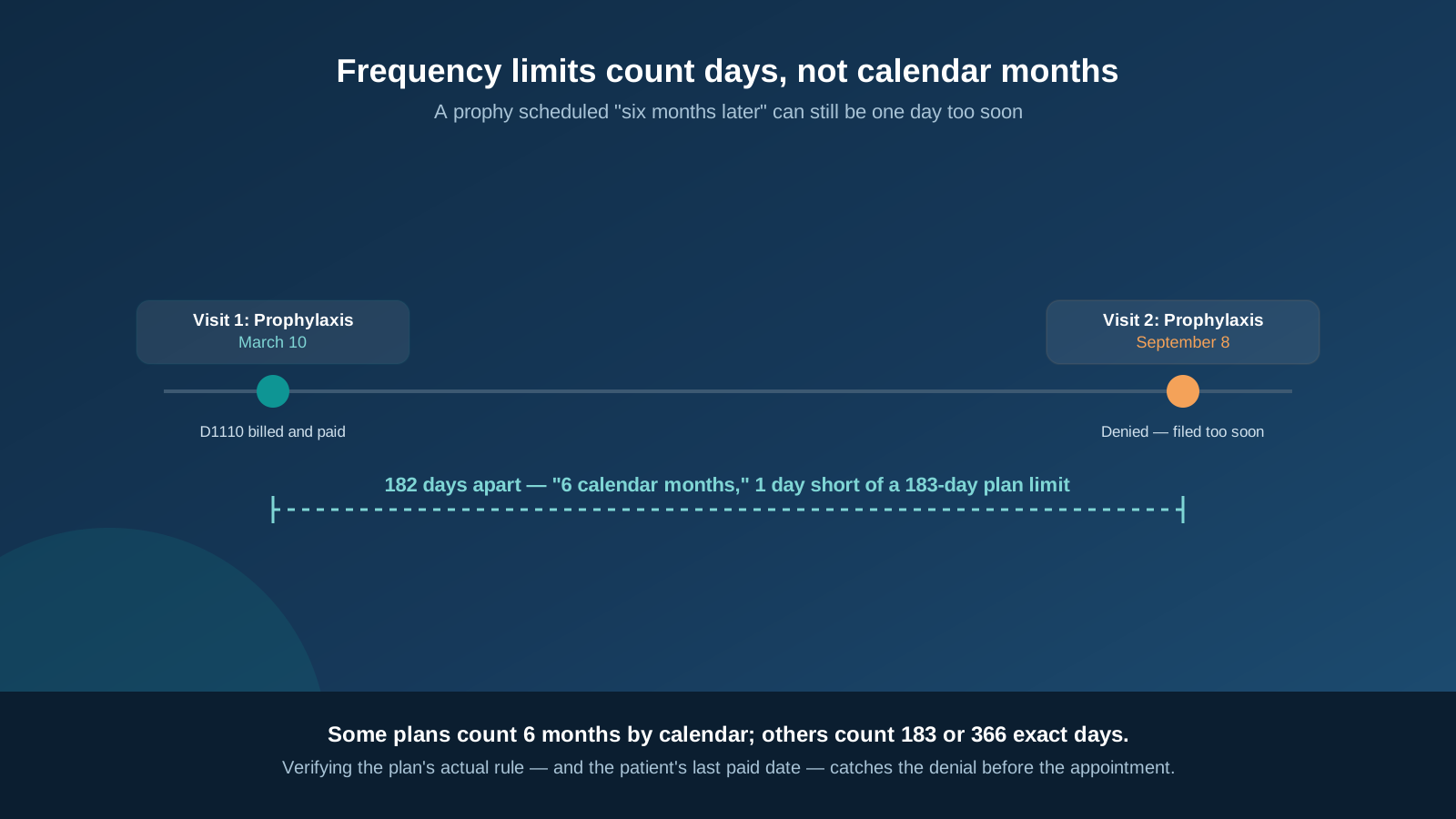
The window itself is where practices get tripped up. Some carriers write the limit in calendar terms — "twice per calendar year" resets every January 1 no matter when the last visit happened. Others write it as a rolling interval — "once every six months" or "once every 12 months" from the date of the last paid service. And a growing number write it in exact elapsed days: 183 days for a six-month benefit, 366 for an annual one. A visit booked for what front desk staff would call "six months out" can still land a day or two short of a strict day-count rule, and the claims system doesn't round in the practice's favor.
Where it trips up claims most
Frequency denials cluster around a small set of predictable procedures.
- Prophylaxis and periodontal maintenance. The most common trigger, especially for patients who reschedule earlier than their original recall date or who see a new provider without their history following them.
- Bitewing radiographs. Frequently limited to once per calendar or benefit year — a patient who transfers practices mid-year and had bitewings taken at the prior office is an easy denial if the new office doesn't ask.
- Full-mouth series and panoramic images. Usually limited to once every three to five years, which is long enough that front desk staff and even the patient often don't remember the last one was taken.
- Fluoride treatments. Many plans restrict the benefit to patients under a certain age, so an adult fluoride application can be a frequency-and-eligibility denial in one.
- Crowns and other major restorative work. Longer replacement intervals — five, seven, sometimes ten years — that get missed when a crown is redone for a legitimate clinical reason but the prior placement date isn't checked against the plan's replacement clause first.
In every case, the claim isn't disputing whether the procedure was needed — it's applying a counting rule the practice can look up in advance.
How to catch it before the appointment
Frequency denials are one of the few denial types that are almost entirely preventable with a verification step, because the rule and the patient's history are both knowable before the visit.
- Pull the last paid date of service for the specific procedure code during eligibility verification — not just whether the benefit exists, but when it was last used, including at a different practice if the history is available through the payer.
- Confirm whether the plan counts calendar time or exact days. This single detail determines whether a visit booked "six months out" is safe or one day premature.
- Flag borderline recalls in the practice management system so scheduling doesn't book a cleaning, bitewing set, or maintenance visit a few days ahead of the allowed interval — pushing the appointment out slightly costs nothing; a denial costs a resubmission or a write-off.
- Ask new patients directly about recent radiographs or cleanings at other offices, since a payer's claims history doesn't always populate instantly and a patient's memory is sometimes the fastest check available.
- Get a signed financial waiver on file when a visit is medically appropriate but frequency-risky, so if the claim does deny, the patient was informed in advance rather than surprised by a balance afterward.
The bottom line
A frequency limitation isn't a clinical dispute and it isn't a coding error — it's a countdown that starts on the last paid date of service and runs on rules the plan already publishes. Practices that check the countdown during verification turn a routine denial into a routine scheduling decision. Practices that don't tend to find out about the countdown from the EOB, after the visit has already happened and the write-off is the only option left.
Frequently asked questions
What is a frequency limitation in dental insurance?
A frequency limitation is a plan rule capping how often a covered procedure is reimbursed in a given period — for example, one prophylaxis every six months, one set of bitewings per calendar year, or one full-mouth series every three to five years. A procedure that's otherwise covered is denied if it's billed before the allowed interval has passed.
Does "6 months" mean the same thing on every dental plan?
No. Some plans count by calendar month (any date in the sixth month after service qualifies), while others count exact elapsed days — commonly 183 days — from the last paid date of service. A visit that looks like six months out on a calendar can still fall one or two days short of a strict day-count rule.
Which procedures get denied for frequency most often?
Prophylaxis and periodontal maintenance visits scheduled too close together, bitewing X-rays taken more than once in a benefit year, full-mouth series or panoramic images taken before the plan's multi-year interval has elapsed, and fluoride treatments billed on adult patients whose plan only allows the benefit for children are the most common frequency denials.
Does a frequency denial always mean the patient owes the full fee?
Only if the patient was told in advance. A frequency limitation isn't a coverage exclusion the practice can bill around after the fact — most participating provider agreements expect the patient to be informed the visit may not be covered before it happens, typically through a signed financial waiver, or the practice absorbs the write-off.
How can a practice catch a frequency denial before it happens?
Pull the patient's last paid date of service for that procedure code during eligibility verification, check whether the plan counts calendar months or exact days, and flag the chart in the practice management system so scheduling doesn't book the next cleaning or bitewing set a day too early.
Stop losing revenue to preventable frequency denials
Dental Claim Professionals verifies benefits — including exact frequency intervals and last-paid dates — before treatment, and bills every claim accurately inside Open Dental, Dentrix, Eaglesoft, Denticon, or Softdent.
Book a Free Consultation