
A patient comes in for a bridge or an implant to replace a tooth they lost years ago — sometimes decades ago. The clinical work is straightforward. Then the claim comes back denied, and the reason is a provision most front desk teams have heard of but rarely check before treatment: the missing tooth clause.
It's one of the more frustrating exclusions in dental insurance, because it isn't about anything the office did wrong at the time of treatment. It's about something that happened before the patient ever had this particular coverage. Understanding exactly how it works — and verifying it before submitting a pre-treatment estimate — is the difference between a covered claim and a written-off balance the patient didn't expect.
Written by John Moses, founder of Dental Claim Professionals, whose team verifies benefits and bills dental claims for practices across the country every day.
What the missing tooth clause actually says
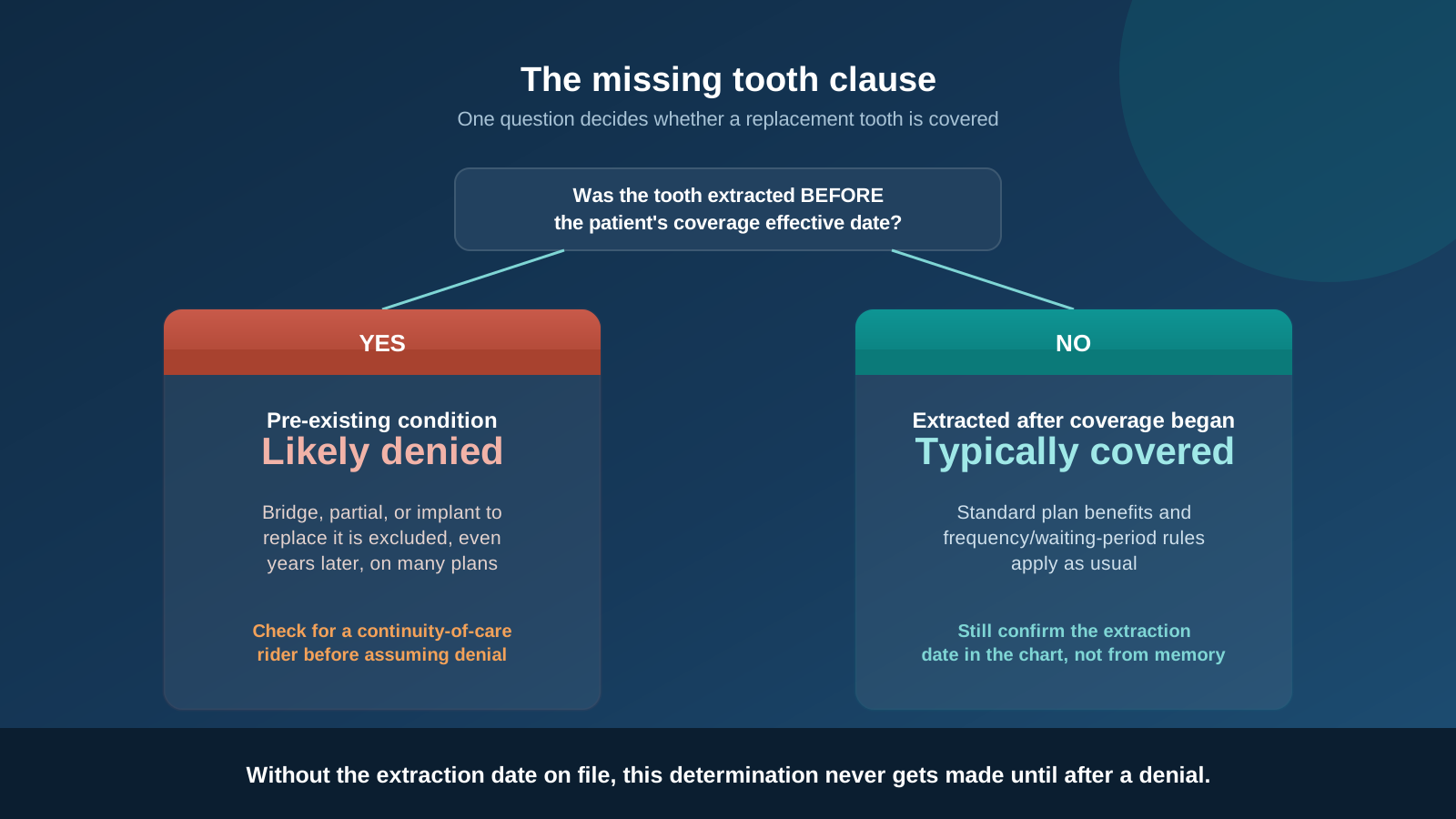
A missing tooth clause excludes coverage for replacing a tooth that was already missing before the patient's coverage under that specific plan became effective. The logic from the carrier's side is straightforward: dental insurance is meant to cover new conditions and treatment needs that arise during the coverage period, not to fund replacement of a loss that predates the policy — the same reasoning behind pre-existing condition exclusions in other types of insurance.
The clause applies regardless of the replacement method. A fixed bridge, a removable partial, or an implant and crown are all treated the same way if the tooth being replaced was extracted before the effective date. And critically, there's usually no time limit built into the clause. A tooth extracted eight years ago under a completely different employer's plan can still trigger a denial today, because what matters is the patient's effective date on the plan being billed — not when they first had any dental coverage at all.
Why these denials catch practices off guard
The missing tooth clause rarely comes up during the clinical conversation, which is exactly why it causes problems downstream.
Nobody asks when the tooth was actually extracted. Patients often don't remember an exact date, and if the extraction happened at a different office, it may not be in the current chart at all. Without that date, the clause can't be checked before treatment — only discovered after a denial.
The clause isn't part of a standard eligibility check. A routine verification call confirms the patient is active and what percentages apply to each category of service. It typically doesn't surface plan-specific exclusions like a missing tooth clause unless someone asks about that tooth by name.
Continuity of care riders get missed. Some plans waive the missing tooth clause entirely if the patient can show continuous prior dental coverage since the extraction — often through a previous carrier. That rider has to be identified and documented; it isn't applied automatically just because the patient technically qualifies for it.
A pre-treatment estimate goes out without the history attached. If the estimate is submitted without the tooth's history — or without proactively noting continuous prior coverage — the carrier defaults to denying it, and the practice finds out only when the EOB comes back, often after the crown has already been seated.
How to bill around it correctly
None of this requires guessing. It requires putting one question into the workflow before treatment plans involving a replacement tooth go out the door.
- Confirm the extraction date in the chart before submitting any bridge, partial, or implant claim on a previously missing tooth — from the patient's own records if the extraction happened at this practice, or from the patient's recollection and prior provider if it didn't.
- Ask the carrier directly whether the plan has a missing tooth clause during benefits verification, rather than assuming it's standard or absent. Clauses vary significantly between plans, even from the same carrier.
- Check for a continuity of care or replacement rider whenever the extraction predates this plan's effective date. If the patient had continuous prior dental coverage since the extraction, document it and reference it explicitly on the pre-treatment estimate.
- Submit a pre-treatment estimate before committing to treatment whenever the missing tooth clause is a possibility, so a denial surfaces as a benefit determination the patient can plan around — not a billing surprise after the work is done.
- Set patient expectations up front if the clause is confirmed to apply, so the financial conversation happens before the appointment, not after the claim is denied.
The bottom line
The missing tooth clause isn't a billing error waiting to happen — it's a plan rule that's entirely predictable once someone asks the right question at the right time. Practices that build that question into every pre-treatment estimate for a replacement tooth catch the exclusion before it becomes a denial. Practices that don't tend to discover it on the EOB, after the treatment is already finished and the patient is expecting the claim to pay.
Frequently asked questions
What is a missing tooth clause in dental insurance?
A missing tooth clause is a plan provision that excludes coverage for replacing a tooth that was already missing before the patient's coverage under that plan became effective. It treats the missing tooth as a pre-existing condition, regardless of how the replacement is done — bridge, partial denture, or implant.
Does the missing tooth clause apply if the tooth was extracted decades ago?
Yes. Most missing tooth clauses have no time limit — if the tooth was extracted before the patient's coverage effective date on that specific plan, the exclusion can still apply even if the extraction happened many years, or even decades, earlier.
What is a continuity of care or replacement rider?
A continuity of care (or replacement) rider is an optional plan provision that waives the missing tooth clause if the patient had continuous dental coverage — often with a prior carrier — covering the period since the tooth was extracted. Not all plans include it, so it has to be verified rather than assumed.
How do you find out if a patient's plan has a missing tooth clause?
The clause is stated in the plan's benefit booklet or summary of benefits, and most carriers will confirm it directly during a benefits verification call or through their provider portal. It should be checked before any pre-treatment estimate is submitted for a bridge, partial, or implant on a previously missing tooth.
Can a missing tooth clause denial be appealed?
It can be appealed, but only successfully with documentation that changes the facts — such as proof of a continuity of care rider, evidence of continuous prior coverage, or records showing the extraction actually occurred after the effective date. An appeal without new documentation is unlikely to overturn a clause that was correctly applied.
Stop finding out about exclusions after the claim is denied
Dental Claim Professionals verifies benefits — including plan-specific clauses like this one — before treatment, and handles appeals when a denial deserves a second look, inside Open Dental, Dentrix, Eaglesoft, Denticon, or Softdent.
Book a Free Consultation