
Most dental billing follows a simple rhythm: treat, submit, get paid. Orthodontics doesn't work that way. A single case can generate a dozen or more claims spread across two years, drawing against a benefit that resets on its own schedule and disappears for good once it's gone. Practices that bill orthodontic cases the same way they bill a filling or a crown tend to lose track of payments somewhere in the middle of the case — and by the time anyone notices, months of continuation claims may never have gone out.
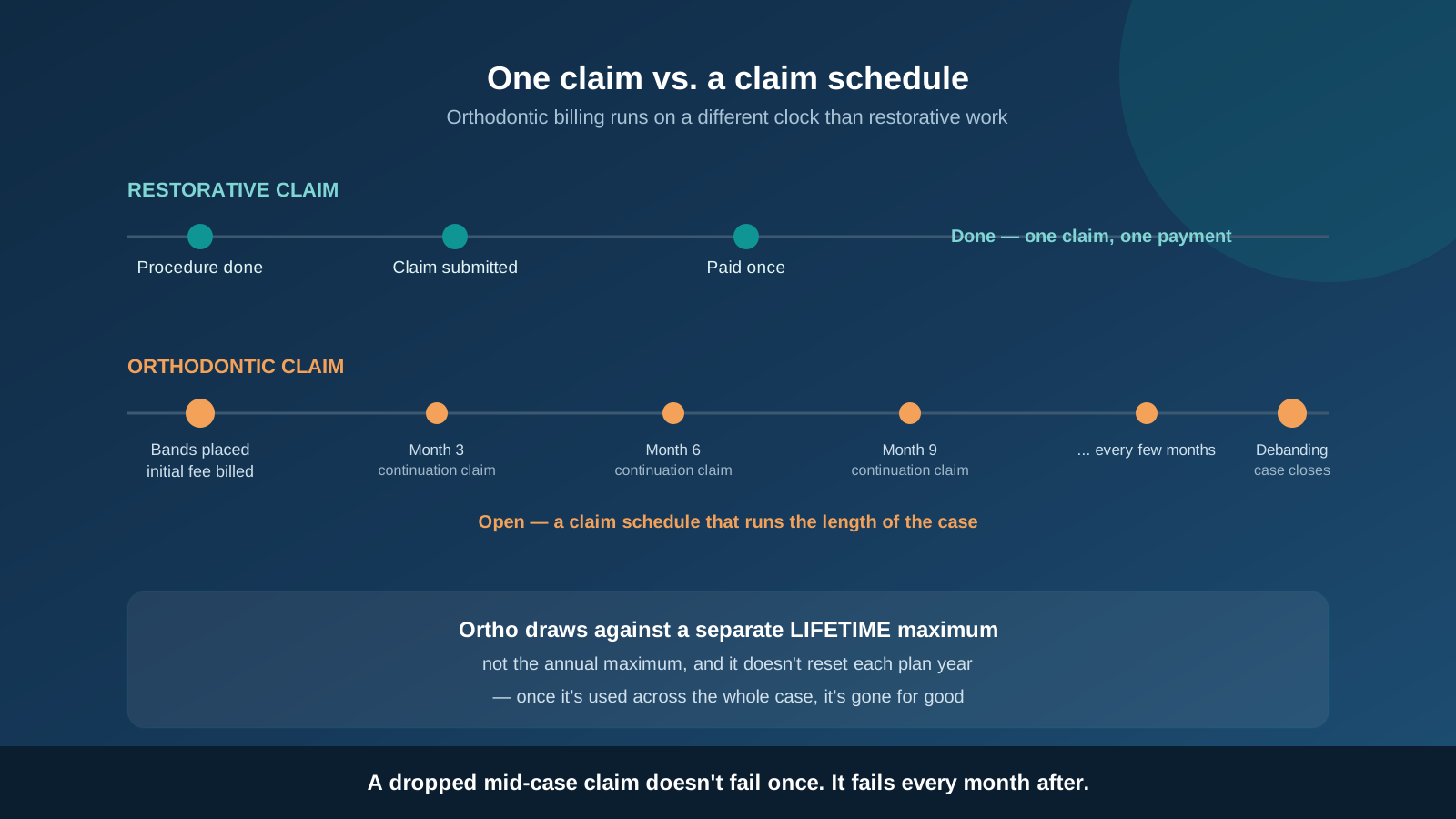
How orthodontic claims are structured differently
Most orthodontic fee agreements split the total case fee into two pieces: an initial or "banding" fee billed once treatment begins, and the remaining balance spread across continuation-of-treatment claims submitted periodically — often quarterly — for as long as the patient is in active treatment. Each of those follow-up claims references the original treatment plan and banding date, not a new date of service, which is a detail that trips up billing software configured around single-visit procedures.
The schedule doesn't stop until the case does. A 24-month case might generate eight or more separate claims, and every one of them has to land correctly for the practice to collect the full contracted amount. Skip a submission window and that installment doesn't just arrive late — on some plans it can be missed entirely if it falls outside the timely filing period counted from the original banding date.
The lifetime maximum problem
Orthodontic benefits almost never draw from the same annual maximum used for cleanings, fillings, or crowns. Instead, plans typically apply a separate lifetime orthodontic maximum — a fixed dollar amount, often $1,000 to $3,000, that doesn't reset each plan year and doesn't refresh once it's been used. Once that lifetime cap is exhausted across a case, there's no remaining ortho benefit for that person, full stop, even on a future case years later.
Age and dependent limits compound this. Many plans cover orthodontics only for dependents under a set age — commonly 19 or 26 — and exclude adult orthodontic treatment altogether unless the employer added a specific adult ortho rider. None of this is reliably visible on a routine eligibility check; it has to be confirmed against the plan's actual benefit summary before a case starts, not assumed from the fact that the plan covers "orthodontics" in general.
Where the schedule breaks down
A few specific points are where orthodontic billing most often goes wrong:
- Continuation claims fall off the calendar. Without a recurring tracker tied to the banding date, it's easy for a practice to submit the initial claim and then lose the thread on quarterly follow-ups over a two-year case.
- Coverage lapses mid-case. If a patient loses their plan partway through treatment, continuation payments generally stop even though the case is still active in the mouth. A new plan may prorate its own benefit based on how much of the case is already complete, which requires documentation the practice has to produce on request.
- Dependents age out. A patient banded at 17 on a plan that caps ortho coverage at 19 can lose benefit eligibility mid-case if treatment runs long, turning future continuation claims into denials the front desk didn't see coming.
- Family transfers between offices. When a patient switches practices mid-treatment, the banding fee and remaining continuation payments have to be prorated between the original and new provider — a step that's easy to get wrong without clear documentation of what was already billed.
Keeping a case on track
Tight orthodontic billing comes down to treating each case as a schedule to manage, not a claim to file once. That means verifying the lifetime maximum and any age or dependent limits before treatment starts, documenting the banding date clearly so continuation claims reference it consistently, and running a recurring check to confirm every scheduled installment actually went out and posted. See our insurance and billing services for how we track multi-claim cases like this from banding through debanding.
Frequently asked questions
How is orthodontic insurance billing different from other dental claims?
A restorative claim is billed once for a completed procedure and paid once. An orthodontic case is billed as an upfront initial (banding) fee followed by a series of continuation-of-treatment claims submitted periodically, often every three to six months, for the length of active treatment — sometimes two years or more.
What is a lifetime orthodontic maximum?
Most dental plans that cover orthodontics track it against a separate lifetime maximum instead of the annual maximum used for other services. That lifetime cap doesn't reset each plan year — once it's used across the full case, no further orthodontic benefit is available for that person, even years later on a different case.
What happens to orthodontic claims if a patient loses insurance mid-treatment?
Continuation-of-treatment payments generally stop once coverage ends, even though the case is still active in the mouth. If a new plan picks up the patient, it often prorates its own ortho benefit based on how much of the case is already complete, which requires documentation of the original banding date and treatment plan.
Do all dental plans cover adult orthodontics?
No. Many dental plans limit orthodontic coverage to dependents under a specific age, commonly 19 or 26, and exclude adult orthodontic treatment entirely or cover it only under a separate rider. Age and dependent status should be confirmed before a case starts, not assumed from general plan coverage.
How are continuation of treatment claims submitted?
After the initial banding claim, follow-up claims are typically submitted on a recurring schedule set by the plan (often quarterly), referencing the original treatment plan and banding date rather than a new date of service. Missing one submission window can delay that payment and complicate tracking how much of the lifetime maximum remains.
Don't let continuation claims fall through the cracks
Dental Claim Professionals tracks multi-claim orthodontic cases from the banding fee through the final continuation claim, so payments keep pace with treatment instead of trailing months behind.
Book a Free Consultation