
Most dental offices check insurance before every major procedure. Effective date, active coverage, looks fine — proceed with treatment.
Then the EOB comes back denied. Waiting period not met.
If that's ever happened to you on a claim you were sure you'd checked correctly, there's a good chance the problem wasn't that you skipped verification. It's that there are actually two different effective dates on many insurance plans, and most eligibility portals only show you one of them.
Written by John Moses, founder of Dental Claim Professionals, whose team verifies eligibility and submits claims across dozens of plans every week.
The two dates
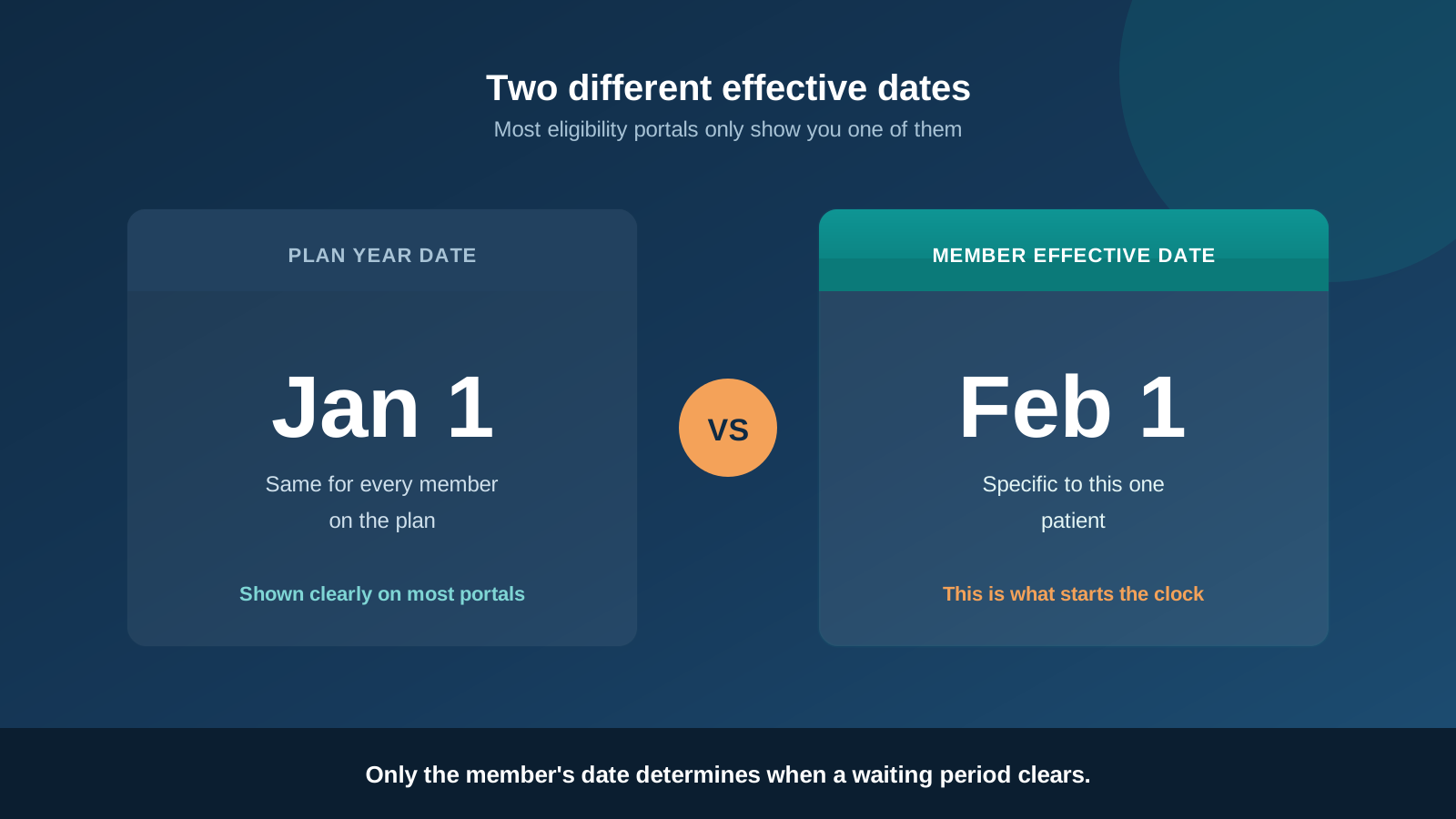
Plan enrollment date (plan year date)
This is when the insurance plan itself runs — often standardized to a calendar year, like January 1 through December 31. It's the same for every member on that plan, regardless of when any individual person actually joined.
Member enrollment date (individual effective date)
This is when that specific patient actually enrolled — which can be any date during the year. Plans allow enrollment outside the standard calendar-year window in plenty of cases: mid-year plan switches, special enrollment periods, and group or policy changes that shift a member's own effective date independently of the plan year.
Waiting periods are calculated from the member's effective date — not the plan year date. That distinction is easy to miss, because most eligibility portals tend to surface the plan year date clearly and bury or omit the individual date entirely.
What a waiting period actually is, and why it exists
A waiting period is a set stretch of time after a member's effective date during which a plan won't pay for certain services, even though the member is otherwise "covered." Insurers use waiting periods to prevent adverse selection — people enrolling in a plan specifically because they already know they need an expensive procedure, using the coverage once, then dropping it. Spreading that cost across a larger, more predictable pool is what keeps premiums manageable for everyone else on the plan.
Waiting periods almost always vary by service category, not by the plan as a whole:
- Preventive care (cleanings, exams, routine X-rays) — usually no waiting period at all. Most insurers want members getting preventive care immediately, since it reduces costlier claims down the line.
- Basic services (fillings, extractions, periodontal maintenance) — commonly a 3 to 6 month waiting period.
- Major services (crowns, root canals, bridges, dentures, oral surgery) — commonly 6 to 12 months, with 12 months being typical on many plans.
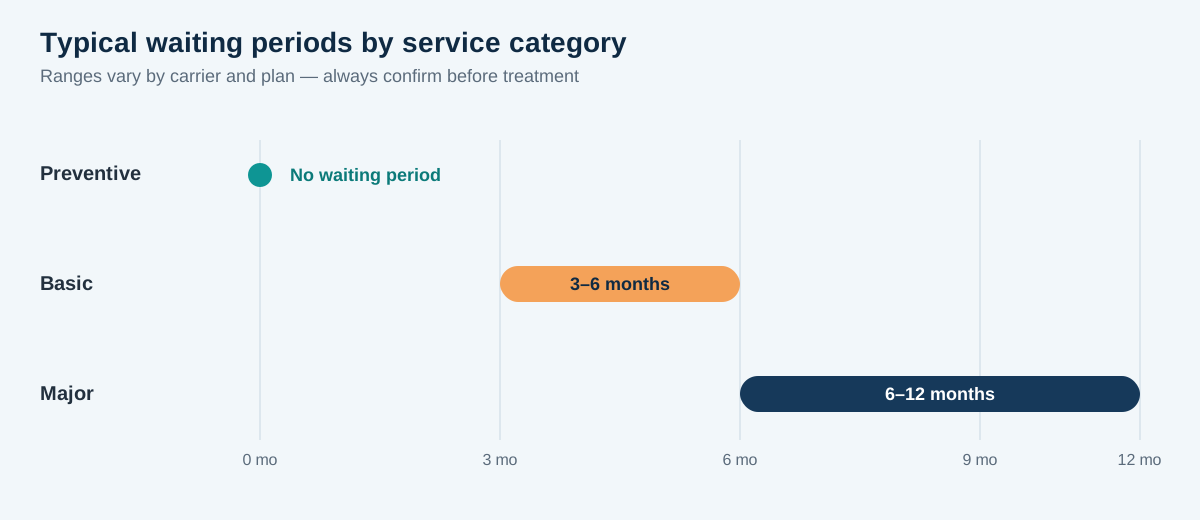
These ranges vary by carrier, by plan, and sometimes by state, so they're never safe to assume — they need to be confirmed for the specific plan and specific procedure category in question, not inferred from the plan type or the employer.
Some plans waive waiting periods entirely if the patient can show continuous prior dental coverage without a lapse — worth asking about for patients switching plans, since it can eliminate the wait altogether.
The ranges above are general industry norms, not guarantees. Always confirm the actual waiting period for the specific plan and procedure category directly with the carrier before treatment — see our insurance verification service for how we handle this on a daily basis.
How this plays out in real life
Here's a real example from a dental billing discussion group:
A long-time patient switched to a new insurance plan but didn't have the new insurance card with them at check-in. With no card to reference, the office verified eligibility through the payer's portal, which showed a plan year of January 1 through December 31, and proceeded on that basis.
The office performed a root canal on July 1 — five months after the plan year start shown on the portal, which looked well outside any reasonable waiting period.
The claim was denied. Reason: waiting period not met.
After digging through the plan's coverage documents — and finally getting a copy of the patient's insurance card — the office found the real answer: the card showed a member effective date of February 1, and major services carried a 6-month waiting period calculated from that date, not the plan year date of January 1. Six months from February 1 is August 1. The procedure was done July 1, one month too early.
Nothing on the portal made this clear, and without the card in hand at intake, no one knew there was a second date to check at all. The plan year date looked safe. The real clock hadn't finished running.
Why this is getting more common, not less
Practices are increasingly relying on low-cost automated verification tools — the type running $200–$400 a month — to check eligibility quickly and cheaply. These tools are built to be fast, not thorough, and they typically don't distinguish between plan-level and member-level dates, or surface waiting period details at all.
The tradeoff is real: a practice might save a few hundred dollars a month on verification, only to lose several times that in denied claims that a closer check would have caught.
This doesn't mean automated tools are useless — they're a fine starting point. It means they shouldn't be the last step for major procedures. See our insurance verification service for what a full benefits breakdown — not just an eligibility ping — actually involves.
What to check instead
For any major procedure:
- Make collecting the physical insurance card a standard intake step, not an optional one. Plan information given over the phone or from memory is often incomplete or outdated — patients frequently don't know their own effective date, and a verbal description of coverage can miss the individual enrollment date entirely. The card itself usually has it printed. Build this into intake for every new patient and every patient reporting a plan change, rather than relying on the portal or verbal information to fill the gap.
- Don't rely on the portal's displayed effective date alone. Confirm whether it's showing the plan year or the individual member's date.
- Call and request a faxback with a reference number. A live rep can confirm both dates and the specific waiting period for the procedure category (basic vs. major).
- Ask specifically about waiting periods, separate from asking about effective dates — they are calculated independently and a portal confirming "active coverage" says nothing about whether a waiting period has cleared.
- Document everything — the rep's name, the reference number, and the date/time of the call. If a denial is disputed later, this is what supports your case.
Frequently asked questions
What's the difference between a plan effective date and a member effective date?
The plan effective date is when the insurance plan itself runs, often a standard calendar year. The member effective date is when a specific patient actually enrolled, which can fall anywhere within that year. Waiting periods and coverage timelines are based on the member's own date, not the plan's.
Can a waiting period be waived?
Sometimes. Many plans will waive or reduce a waiting period if the patient can show continuous prior dental coverage without a lapse. This isn't automatic — it usually has to be requested and verified with the carrier, so it's worth asking about directly for any patient switching plans.
Do waiting periods apply to preventive care?
Usually not. Most plans cover preventive care (cleanings, exams, routine X-rays) from day one, since insurers want members getting preventive care early to avoid costlier claims later. Waiting periods are much more common for basic and major services.
What happens if a procedure is done before the waiting period ends?
The claim is typically denied, with the EOB citing a waiting period or "service not covered" reason. At that point, the balance usually becomes the patient's responsibility, which is why confirming the waiting period before treatment — not after — matters so much.
How do I find out a patient's actual waiting period?
The eligibility portal alone often isn't enough. Calling the carrier directly and requesting a faxback with a reference number is the most reliable way to confirm both the individual effective date and any applicable waiting period for the specific procedure category.
The takeaway
An effective date on a portal or a certificate of coverage tells you a plan is active. It doesn't tell you which effective date you're looking at, and it doesn't tell you whether a waiting period has cleared. Those require a closer check — usually a phone call — especially for major procedures where a denial means a four-figure claim, an upset patient, and a billing team stuck cleaning it up after the fact.
Stop losing claims to missed waiting periods
Dental Claim Professionals handles insurance verification, claim submission, and denial management so practices don't have to untangle situations like this one after the fact.
Book a Free Consultation