
A patient is scheduled for a crown. The office submitted a predetermination weeks ago, got back an approval letter, and quoted the patient their portion with confidence. Then the claim comes back denied — or paid at a fraction of what the letter implied. The front desk is left explaining to a patient why "approved" didn't mean "paid," which is one of the most uncomfortable conversations in dental billing.
A predetermination of benefits is a written estimate a carrier issues before treatment, confirming whether a proposed procedure is likely covered, medically necessary under the plan's criteria, and what the contracted fee would be. It's a genuinely useful tool. But almost every carrier prints some version of the same disclaimer directly on the letter: this is not a guarantee of payment. Understanding exactly what that disclaimer means — and where the gap between approval and payment actually opens up — is what separates a predetermination that protects your practice from one that just creates false confidence.
Written by John Moses, founder of Dental Claim Professionals, whose team submits and tracks predeterminations across dozens of plans every week.
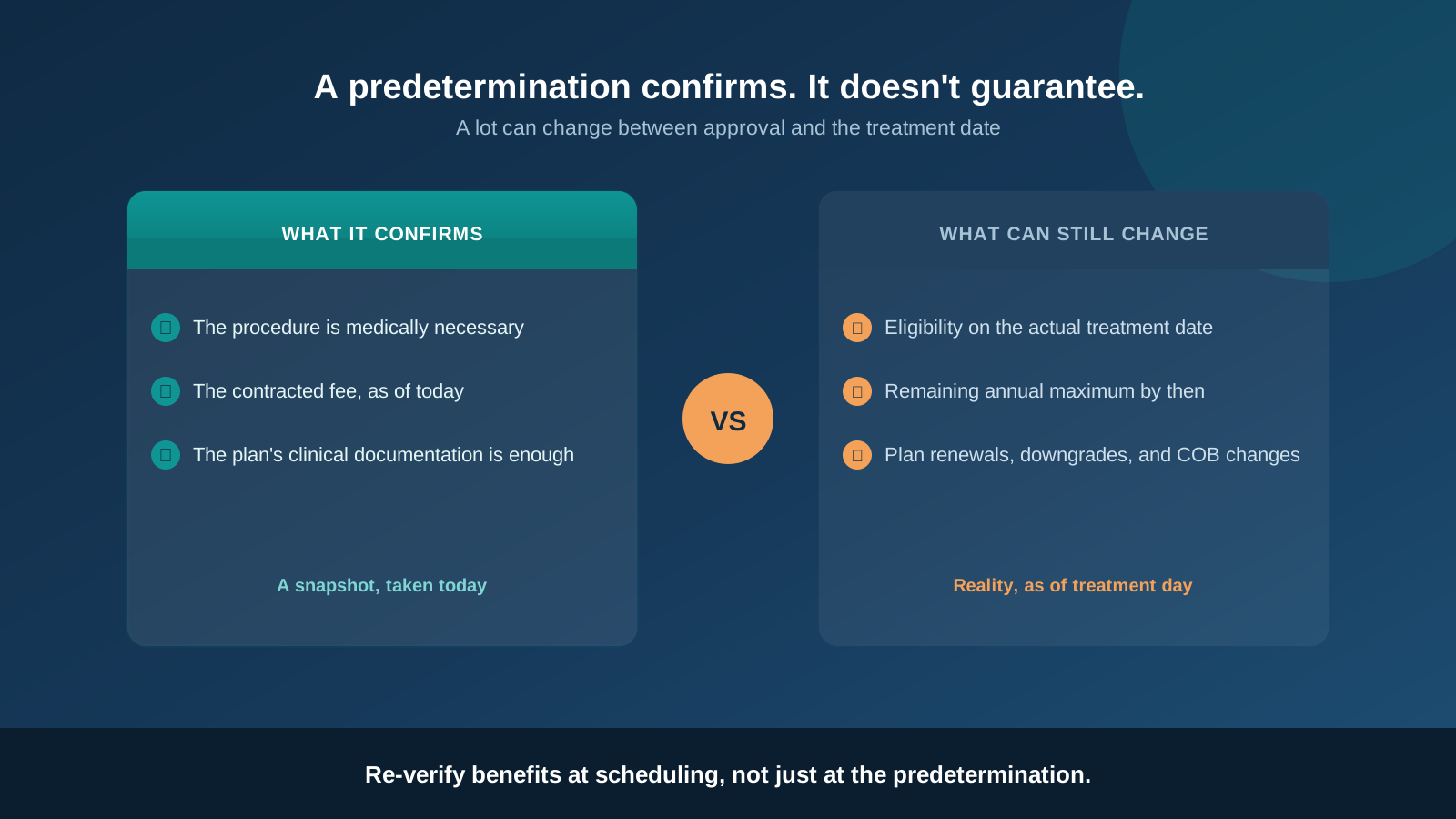
What a predetermination actually confirms
A predetermination locks in a few specific things, and it's worth being precise about what they are. It confirms that the carrier's reviewers consider the proposed procedure medically necessary based on the documentation submitted — x-rays, periodontal charting, narrative, whatever the plan requires. It confirms the contracted fee for that procedure code as of the date the letter was issued, which matters for network practices where the allowed amount is fixed by contract. And it confirms that, based on the information on file at that moment, the plan's clinical criteria are satisfied.
What it does not confirm is anything about the future. The letter is a snapshot of the plan's records on the day it was reviewed, not a binding commitment tied to the patient or the treatment date. That distinction sounds small until you see how often it's the entire reason a claim comes back different than expected.
Where the gap actually opens up
Four things routinely change between a predetermination and the treatment date, and each one can turn an approved estimate into a denied or reduced claim.
Eligibility lapses. A patient can lose coverage between the predetermination and the appointment — a job change, a plan cancellation, a payment lapse on the employer's end. The predetermination said nothing about whether the patient would still be covered months later, because it couldn't.
The annual maximum gets used up. If the patient has other work done in the meantime — a filling here, a periodontal procedure there — those claims draw down the same annual maximum the predetermined procedure is counting on. By the time the crown is placed, there may not be enough benefit left to pay what the letter implied.
The plan renews. Many employer plans renew annually, sometimes with new fee schedules, new frequency limitations, or new exclusions. A predetermination issued in March under last year's plan terms doesn't automatically carry over to a treatment date that falls after the renewal.
Coordination of benefits shifts. If the patient gains, loses, or changes secondary coverage, the primary/secondary determination on the original predetermination may no longer be accurate — which changes what each plan actually owes.
Building it into your workflow
None of this means predeterminations aren't worth doing — they still catch real problems, like a procedure the plan won't cover at all, or documentation the carrier needs before it will pay anything. The fix is treating the predetermination as one step in the process, not the last one.
- Request it for the procedures that warrant it — crowns, bridges, implants, periodontal surgery, orthodontics, dentures, and anything above the plan's stated review threshold.
- Track the expiration window. Most predeterminations are valid for a defined period, often 60 to 365 days depending on the carrier. If the treatment date slips past that window, request a new one rather than assuming the old approval still applies.
- Re-verify eligibility and remaining maximum close to the scheduled date — not just at the time of the predetermination — so the patient's estimate reflects reality on the day of treatment, not the day the letter was issued.
- Quote patients with a caveat. An approved predetermination is a strong signal, not a promise. Framing the estimate that way up front avoids a much harder conversation if the claim comes back differently.
The real cost of treating it as final
When a predetermination gets treated as a final answer instead of a snapshot, the cost shows up in two places: patient trust and staff time. Patients who were quoted a confident number and then billed something different tend to blame the practice, not the insurance plan — even when the plan is the one that changed. And the office ends up reworking the claim, appealing where possible, and having a collections conversation that a five-minute eligibility recheck could have avoided entirely.
The practices that get the most value out of predeterminations are the ones that use them for what they're actually good at — flagging coverage and documentation issues early — while re-confirming eligibility and benefits closer to the treatment date, when it actually matters. See our insurance verification services for how we build that recheck into the scheduling workflow.
Frequently asked questions
What is a predetermination of benefits in dental insurance?
A predetermination of benefits is a written estimate a dental office requests from an insurance carrier before treatment, confirming whether a proposed procedure is likely covered, medically necessary under the plan's criteria, and what the contracted fee would be at that time.
Is a predetermination a guarantee of payment?
No. Most carriers state directly on the predetermination that it is not a guarantee of payment. It reflects coverage as of the date it was issued, subject to the patient still being eligible, having remaining annual maximum, and the plan terms not changing by the actual date of service.
How long is a predetermination of benefits valid?
Most predeterminations are valid for 60 to 365 days depending on the carrier, but the exact window is stated on the approval letter. If treatment happens after it expires, the practice should request a new one rather than assume the original approval still holds.
Which dental procedures typically need a predetermination?
Higher-cost or higher-scrutiny procedures are the usual candidates: crowns, bridges, implants, periodontal surgery, orthodontics, and full or partial dentures. Many plans specify a dollar threshold above which a predetermination is strongly recommended or required.
Why would a claim still deny after a predetermination was approved?
The most common reasons are the patient losing eligibility between approval and treatment, the annual maximum being used up by other procedures in the meantime, a plan renewal changing coverage terms, or a change in coordination of benefits that wasn't reflected in the original approval.
Stop losing revenue to stale approvals
Dental Claim Professionals works inside your existing practice management system — Open Dental, Dentrix, Eaglesoft, Denticon, or Softdent — to submit predeterminations, re-verify benefits before treatment, and keep claims moving accurately every day.
Book a Free Consultation