
An insurance payment arrives, and it isn't a check or a direct deposit — it's a 16-digit card number sitting in an email or a mailed letter, with instructions to run it through a card terminal to collect the funds. The front desk processes it like any other card payment, the claim gets marked paid, and nobody notices that the terminal just took a 3-5% cut before the money ever reached the practice's account.
Virtual credit cards, or VCCs, have become one of the most common ways dental insurers and their payment vendors reimburse claims — and one of the least understood. The fee isn't hidden exactly; it's disclosed in fine print most people never read before swiping. But multiplied across a full month of insurance receivables, it adds up to real, recoverable revenue.
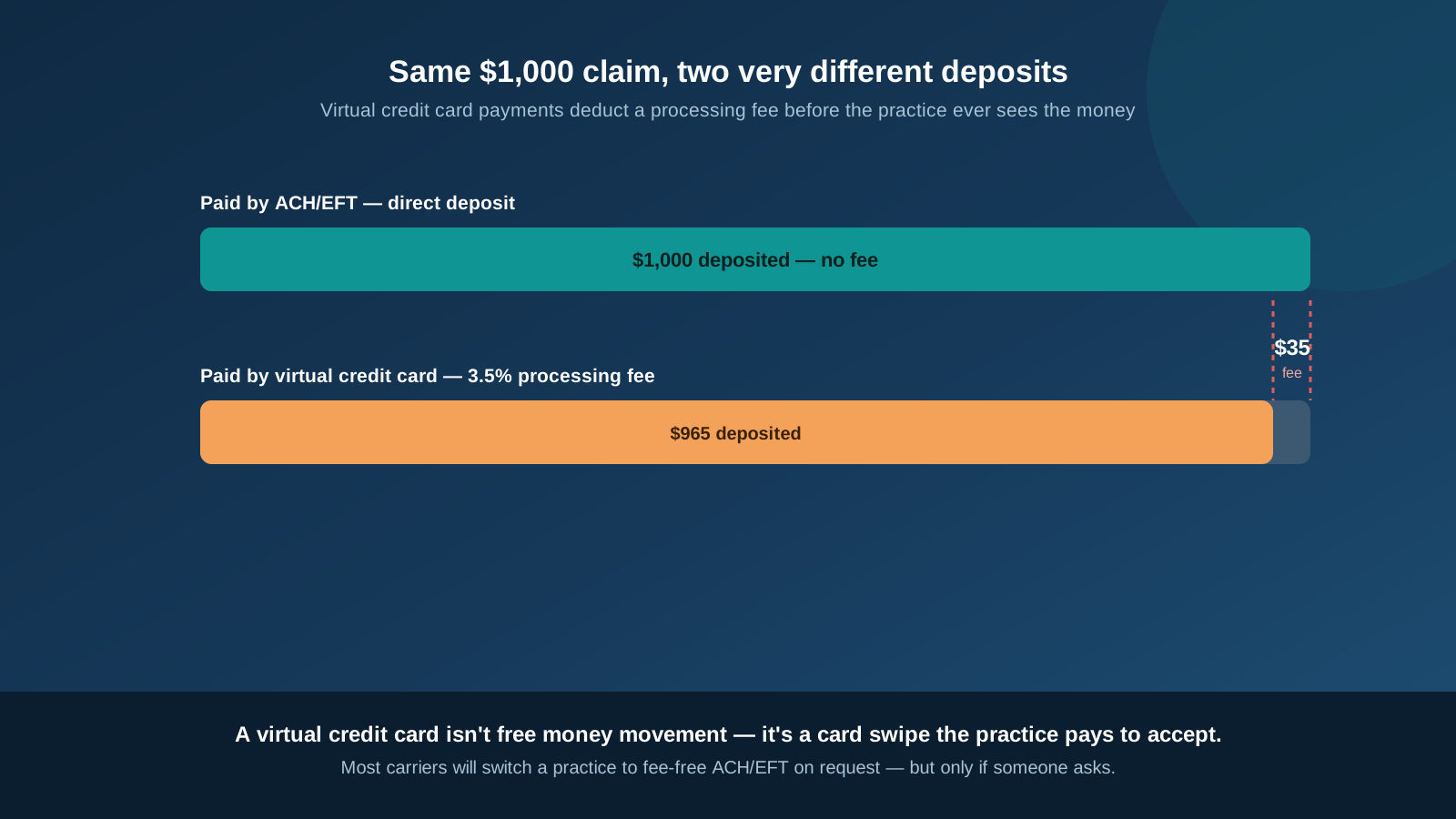
How VCC payments work — and why insurers like them
A virtual credit card is a single-use 16-digit number, usually delivered by fax, email, or mail, tied to a specific claim payment amount. Instead of cutting a check or initiating a direct deposit, the insurer's payment vendor issues this card number, and the practice runs it through a standard credit card terminal or virtual terminal to collect the funds — exactly like taking a patient's card payment at checkout.
Insurers and their third-party payment processors favor VCCs because the card networks pay them an incentive for volume, and because it moves the cost of payment processing from the payer onto the provider. The practice, not the insurer, absorbs the interchange and processing fee every time the card is run — typically 3% to 5% of the payment amount, depending on the practice's card processor and rate plan.
Unlike a check or ACH deposit, that fee is invisible on the EOB. The remittance shows the full claim amount as paid; the deduction only shows up later, on the practice's own credit card processing statement, days or weeks apart from the claim it relates to. That gap in timing and paperwork is exactly why VCC fees are so easy to miss.
Calculating the real cost across a full month
A single VCC fee looks small next to the claim it's attached to — $35 on a $1,000 crown reimbursement doesn't jump out. The cost only becomes visible when it's totaled across every VCC payment a practice receives in a month, not evaluated claim by claim.
- Identify which carriers pay by VCC. Not every payer uses them, and some use them only through specific clearinghouses or payment vendors like ECHO Health or VPay rather than paying the carrier's own name.
- Total the VCC-paid claims for a month and multiply by the average processing rate the practice's terminal charges — most fall between 3% and 5%.
- Compare that total to a year of insurance receivables. A practice collecting $50,000 a month in insurance payments, with even half arriving by VCC at a 4% fee, is losing roughly $1,000 a month — about $12,000 a year — to a payment method it never chose.
That number is what makes the case for switching worth the administrative time, since the fee recurs on every single claim payment for as long as VCC stays the default.
Switching to fee-free ACH/EFT
The good news is that VCC is rarely the only option — it's usually just the default a practice never opted out of. Most payment vendors that issue virtual credit cards, including the largest ones processing dental claims, also offer ACH/EFT enrollment at no cost, precisely because federal and many state prompt-payment rules require payers to offer an electronic funds transfer alternative.
The practical steps: identify the specific vendor issuing each VCC (it's usually printed on the card letter or email, not always the insurance carrier's own name), locate that vendor's ACH/EFT enrollment portal, and submit the practice's banking and NPI details. It's a one-time setup per vendor rather than a recurring task, and most enrollments take effect within one to two payment cycles. Some vendors also route ERA (electronic remittance advice) through the same enrollment, which speeds up payment posting as a side benefit.
See our dental insurance billing services for how we audit incoming remittances for VCC fees and manage the carrier-by-carrier ACH/EFT enrollment so practices stop paying to get paid.
Frequently asked questions
What is a virtual credit card payment from a dental insurer?
A virtual credit card, or VCC, is a single-use card number an insurer or its payment vendor emails or mails to a practice in place of a paper check or direct deposit. The practice runs the card number through a credit card terminal like any other card payment to collect the claim reimbursement.
Why do VCC payments cost the practice money?
Because a VCC is processed as a credit card transaction, it's subject to the same interchange and processing fees as any other card swipe, typically 3-5% of the payment. That fee is deducted before or as the funds settle, so a $1,000 claim payment can net $950 or less after the card is run.
Can a dental practice refuse virtual credit card payments?
Yes. Most carriers and their payment vendors are required to offer a fee-free ACH/EFT enrollment option if a practice requests it, though it isn't always advertised. Practices generally have to actively opt in to direct deposit or the VCC will keep arriving by default.
How much revenue can VCC fees cost a practice per year?
It scales with claim volume. A practice collecting $60,000 a month in insurance reimbursements through virtual credit cards at a 4% average fee is losing roughly $2,400 a month, or nearly $29,000 a year, to processing fees that ACH/EFT enrollment would eliminate entirely.
Is switching from VCC to ACH/EFT difficult?
Usually not. It typically requires identifying which clearinghouse or payment vendor issues the VCC for each carrier, then completing that vendor's ACH/EFT enrollment form with the practice's banking and NPI information. It's a one-time setup per carrier or payment vendor, not a recurring task.
Stop paying a processing fee to get paid
Dental Claim Professionals audits incoming remittances for VCC fees and handles ACH/EFT enrollment carrier by carrier, so reimbursements land in full.
Book a Free Consultation