
An eligibility check comes back clean: the plan is active, the patient is enrolled, coverage looks straightforward. Three months later, a crown claim denies. Nothing changed about the plan's status — the practice just ran into a waiting period, and the verification step that said "active" never surfaced it.
Waiting periods are one of the most common reasons a properly verified, properly submitted claim still comes back denied. They're not a coverage gap in the sense of a missing benefit — the benefit exists, it just hasn't started yet for that category of service. Understanding how they're structured, and where the standard verification process misses them, is the difference between catching it at the consult and eating it as a write-off.
How waiting periods are actually structured
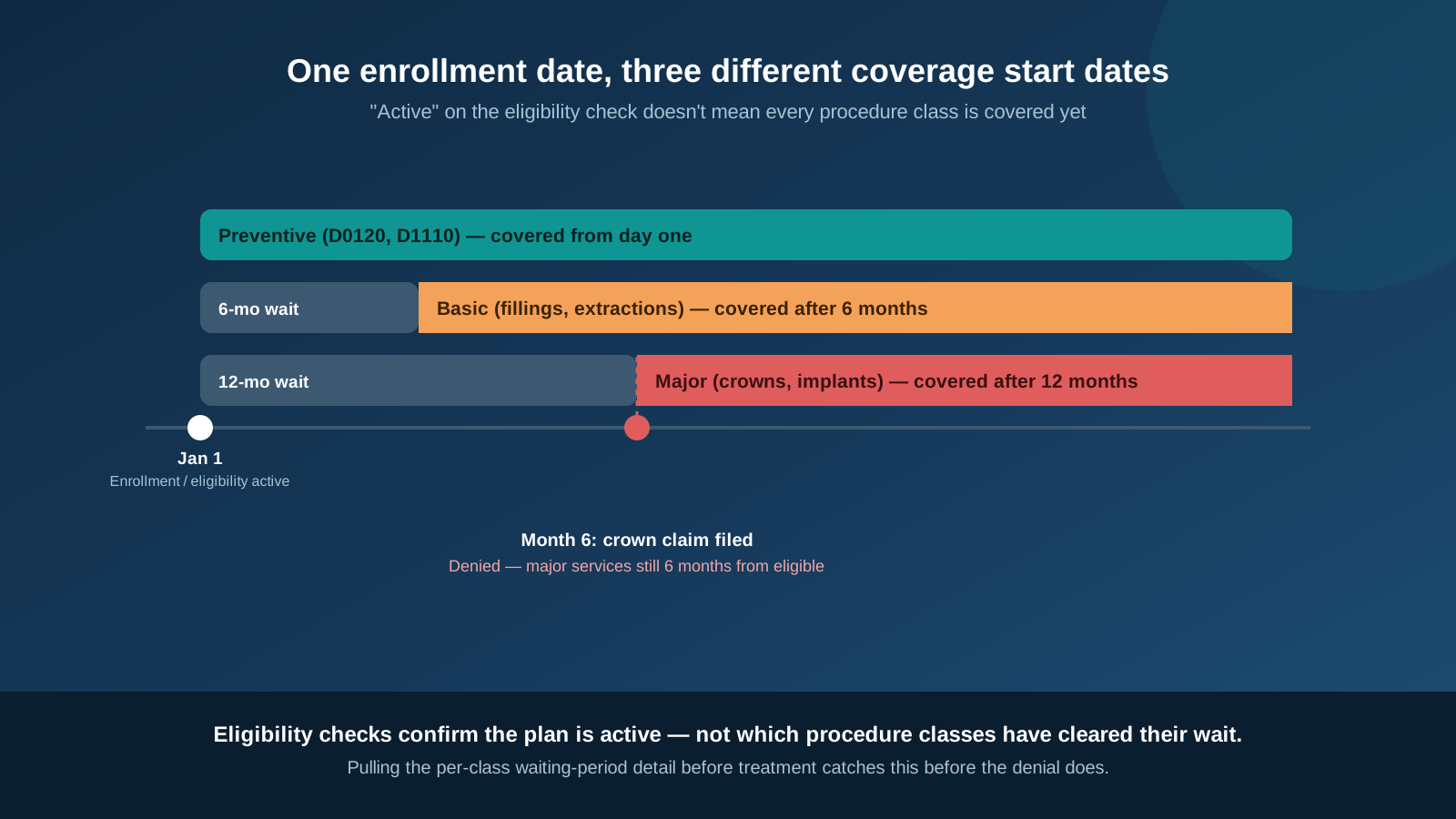
A waiting period isn't one clock that starts and stops for the whole plan. Most carriers tier it by procedure class, and each class runs on its own timeline from the same enrollment date.
Preventive services — exams, cleanings, routine x-rays — are almost always covered from day one, since carriers want patients seeing a dentist immediately. Basic services — fillings, simple extractions, periodontal maintenance — commonly carry a 3- to 6-month wait. Major services — crowns, bridges, dentures, implants, root canals on some plans — often carry a 6- to 12-month wait, sometimes longer on individual-market plans.
That staggering is exactly what makes waiting periods easy to miss. A patient can be fully eligible for their cleaning in month one, fully eligible for a filling in month four, and still be three months away from crown coverage — all under the same "active" plan status. The eligibility response doesn't fail; it just answers a narrower question than the one the front desk needed answered.
Where verification checks miss it
Most eligibility tools — clearinghouse portals, carrier websites, even phone verification — are built to answer "is this patient covered?" with a yes or no. That's the wrong question when a waiting period is in play. The right question is "is this specific procedure code covered as of this specific date?"
Real-time eligibility (270/271) responses frequently return plan-level status and general benefit percentages without breaking out waiting-period detail by procedure class. A response can show 80% coverage on basic services without disclosing that the 80% doesn't apply for another ten weeks.
New patients coming from a different practice are the highest-risk group, because there's no billing history in your own system to flag that the enrollment date is recent. If the patient doesn't mention they just started a new plan, nothing in a routine eligibility check forces the question.
Group plan changes at open enrollment can quietly reset a clock. An employer switching carriers, or moving an employee between plan tiers, sometimes triggers a new waiting period even though the patient never had a coverage lapse. This is easy to miss because the employer name on the card doesn't change — only the underlying plan does.
How to catch it before the chair, not after the denial
The fix isn't more verification — it's a more specific one. A few habits close most of the gap:
- Ask the enrollment date directly, not just whether the plan is active. A patient who enrolled two months ago is a different verification problem than one who's been on the plan for three years.
- Pull waiting-period detail by procedure class, not just the plan summary — call the carrier if the portal doesn't break it out, especially before scheduling major treatment.
- Ask about prior continuous coverage. Many carriers waive a waiting period entirely if the patient can show no lapse of more than 30 to 63 days from a prior dental plan — but only if someone requests the waiver and documents it.
- Get it in writing before treatment when a waiting period applies. A signed financial agreement disclosing the patient's likely out-of-pocket cost prevents a billing dispute after the fact.
None of this requires new software — it requires treating "active" as the start of the eligibility question, not the end of it. See our insurance verification services for how we structure this check before it becomes a denial.
Frequently asked questions
What is a waiting period in dental insurance?
A waiting period is the length of time a patient must be enrolled on a dental plan before a specific category of services becomes eligible for benefits. Most plans stagger waiting periods by procedure class, so preventive care may be covered immediately while basic and major services aren't covered until later.
Do all dental plans have waiting periods?
No. Waiting periods are most common on individual and small-group plans purchased directly by an employer or individual. Many larger employer-sponsored group plans waive waiting periods entirely, especially when the plan replaces prior continuous dental coverage.
Can a dental insurance waiting period be waived?
Sometimes. Many carriers will waive a waiting period if the patient can show proof of continuous prior dental coverage without a lapse of more than a set number of days, often 30 to 63 days. This has to be requested and documented, not assumed.
What happens if a claim is submitted during the waiting period?
The claim is denied for that procedure class, regardless of whether the plan itself shows as active. The patient becomes responsible for the full fee unless the practice disclosed the waiting period and obtained a signed financial agreement before treatment.
Does a waiting period restart if a patient changes plans with the same employer?
It can. Even when the employer stays the same, switching carriers or plan tiers is often treated as new enrollment, which can reset the waiting-period clock. This should be confirmed with the new carrier rather than assumed to carry over.
Stop losing revenue to missed waiting periods
Dental Claim Professionals verifies eligibility down to the procedure-class detail — waiting periods, frequency limits, and plan maximums — before your patients ever sit in the chair.
Book a Free Consultation