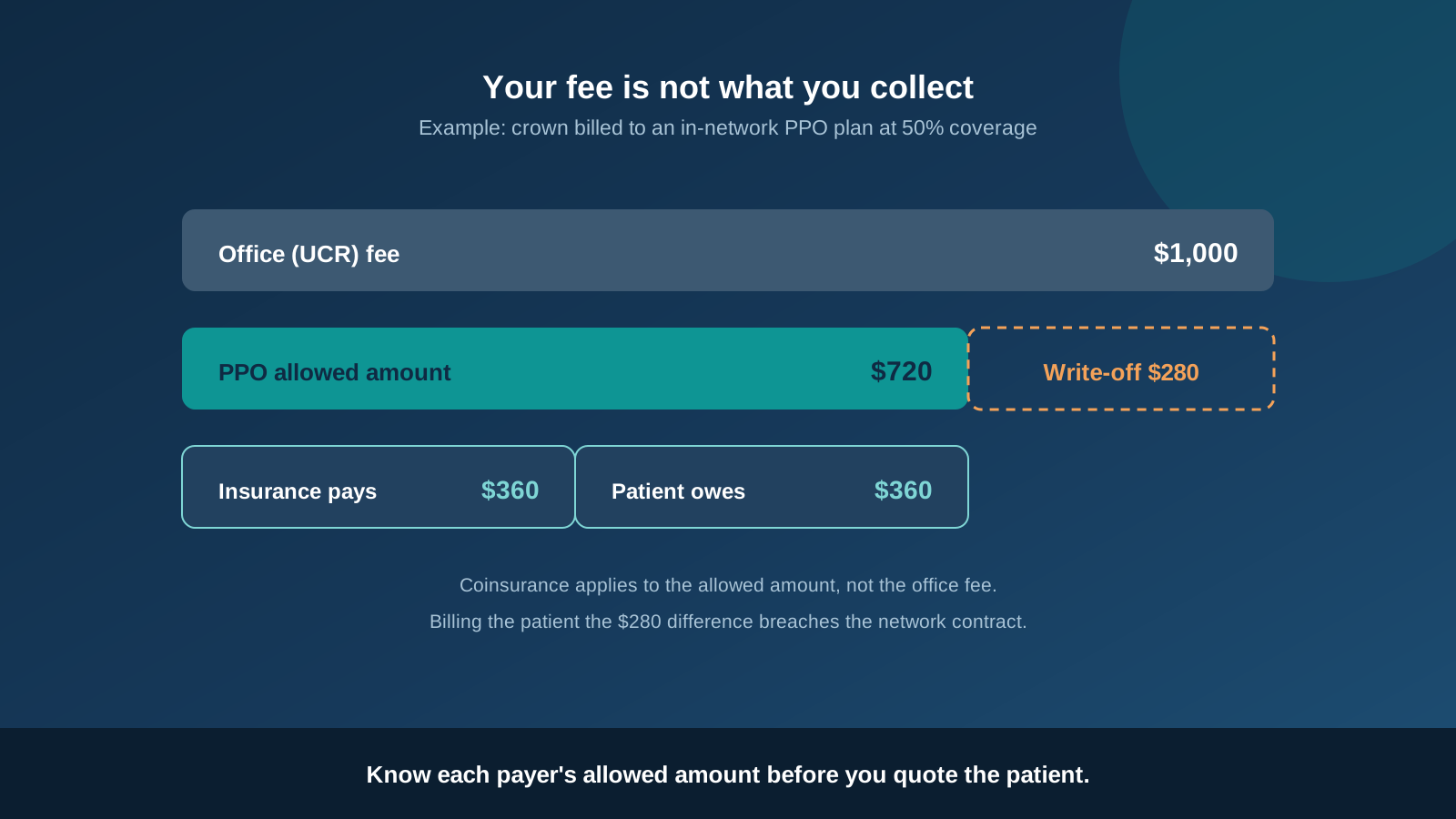
A crown on your fee schedule is $1,000. The patient's PPO plan says it covers crowns at 50 percent. So the payment should be $500, right? Not quite. In-network plans pay a percentage of their own contracted allowed amount, and the gap between your fee and that amount is a contractual write-off. Practices that misunderstand this either overquote patients, collect less than they should, or bill balances they have no right to bill.
How the allowed amount sets the math
When a practice joins a PPO network, it agrees to accept a contracted fee schedule as payment in full for covered services. Using the example above, the plan allows $720 for the crown. It pays 50 percent of that, $360, and the patient owes the other $360. The remaining $280 is written off. The practice's total collection is $720, not $1,000, and it is the same whether the patient or the insurer pays more of it.
Three details trip up front-office teams:
- Deductibles come off the allowed amount too. A remaining $50 deductible is applied before coinsurance, and it counts toward the $720, not on top of it. See our guide to dental insurance deductibles.
- The annual maximum limits payment, not the write-off. The write-off still applies when benefits are exhausted. The patient owes the allowed amount, not your full fee. See annual maximums.
- Multiple plans change the calculation. With two carriers, coordination of benefits rules decide how much the secondary plan pays, and the write-off usually follows the primary contract.
Where practices go wrong
The most common error is balance billing: collecting the written-off $280 from the patient. For covered services, that violates most network agreements and can draw payer audits or complaints. The reverse error is also costly: posting the full $1,000 as a charge and letting the write-off sit as an unexplained balance, which inflates accounts receivable and hides the real collection rate. Clean payment posting means the adjustment is recorded as it arrives, tied to the correct payer.
Two other trouble spots are non-covered services and unlisted procedures. Some contracts and many state laws require the contracted fee even when the plan does not pay for the service, while others allow your full fee. Read each agreement rather than assuming. And when a payer downcodes a procedure, the write-off applies to the lower code, so the true loss is bigger than it first looks.
Quote accurately and review your contracts
Accurate patient estimates start with the payer's allowed amount, which is available through the portal during eligibility and benefits verification. Quote the patient from that number, not your office fee, and note remaining deductible, coinsurance, and frequency limits on the treatment plan.
Then look at the contracts themselves. Compare each payer's allowed amounts to your cost per procedure and to local fee benchmarks at least once a year, and again before every renewal. A plan that pays 60 percent below your fee on your most common procedures may not be worth the volume it brings. Our dental insurance billing team tracks write-offs by payer so those decisions rest on real numbers.
Frequently asked questions
What is a contractual write-off in dental billing?
The difference between a practice's office fee and the lower allowed amount it agreed to accept from an in-network payer. It is written off the account and cannot be billed to the patient.
Can I bill the patient for the difference between my fee and the allowed amount?
Not for in-network covered services. Balance billing the contracted difference breaches most payer agreements. Out-of-network providers generally can, subject to plan and state rules.
Is coinsurance calculated on my fee or the allowed amount?
On the allowed amount. If a plan pays 80 percent of a $720 allowed amount, it pays $576 and the patient owes $144, regardless of a higher office fee.
Do I write off the difference when a service is not covered?
It depends on the contract and state law. Many PPO contracts require the contracted fee even for non-covered services, so review each agreement before billing the patient your full fee.
How often should I review payer fee schedules?
At least annually and at each contract renewal, comparing your allowed amounts to your costs and to the 50th percentile of local fees.
Know what each plan really pays
Dental Claim Professionals tracks allowed amounts and write-offs by payer, so your estimates and collections match your contracts.
Book a Free Consultation