
The exam is the most frequent service in any practice, and it is also one of the most commonly miscoded. Picking a periodic exam when the patient is new, or a comprehensive exam too soon after the last one, triggers frequency denials and write-offs that add up across hundreds of visits. A short, consistent routine fixes most of it.
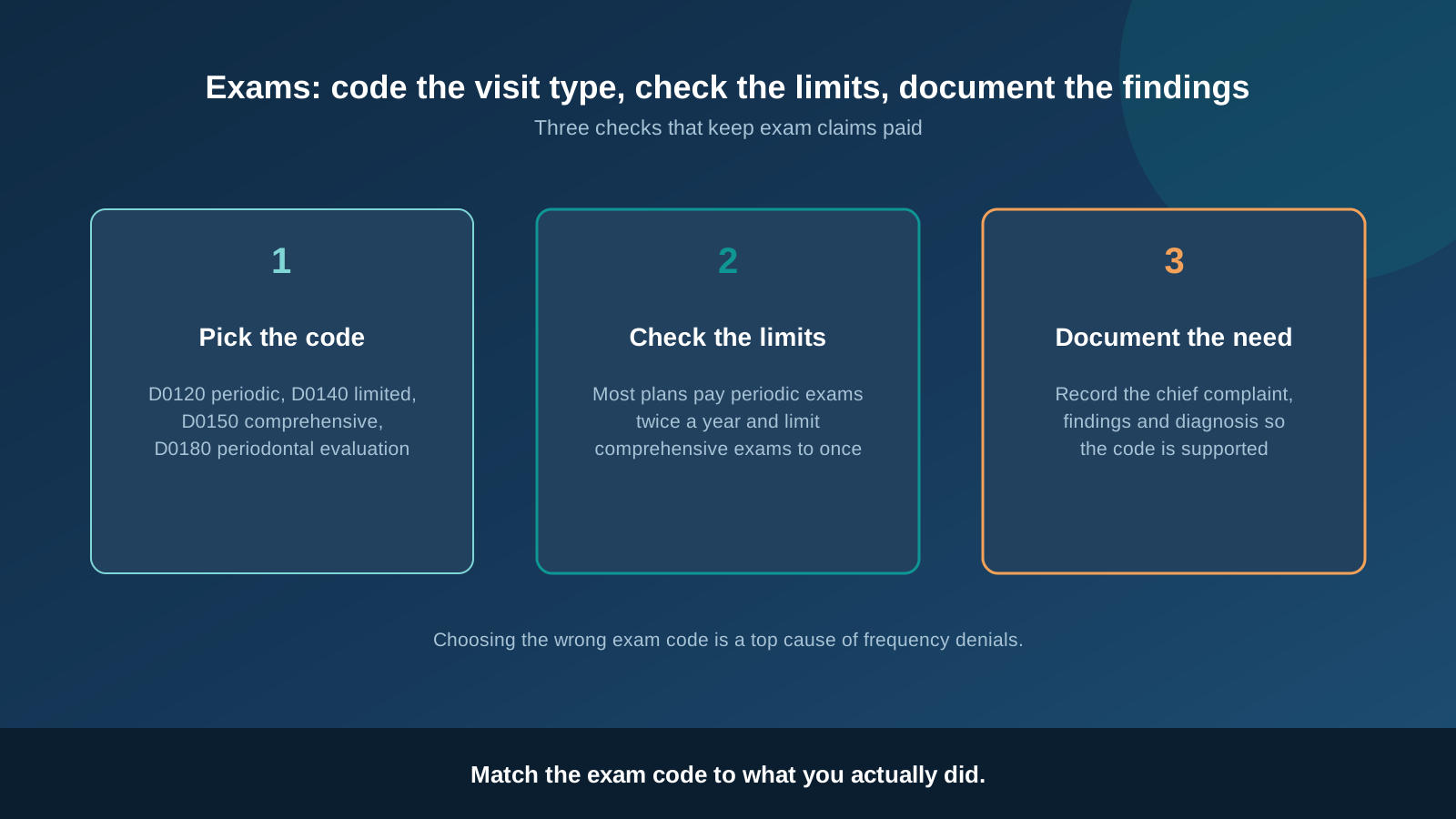
Match the exam code to the visit
CDT defines each exam by its scope, not by how long the appointment lasted.
- D0120: periodic oral evaluation. An established patient's recall exam, the code most plans cover twice per benefit year.
- D0140: limited oral evaluation, problem focused. Use it for an emergency or a specific complaint, such as a toothache or swelling.
- D0150: comprehensive oral evaluation. For a new patient or an established patient returning after a long absence, or after a significant change in health.
- D0180: comprehensive periodontal evaluation. For patients with signs of periodontal disease or risk factors, and typically reported with charting.
A common error is billing D0150 at every new-patient visit regardless of what was done, or D0120 for a patient who has not been seen in years. Payers define "established patient" differently, often as seen within the past 24 to 36 months, so check the plan. Related imaging has its own rules, covered in our guide to radiograph billing.
Verify frequency and watch for downcoding
During eligibility verification, confirm how often each exam type is covered and whether the limit is shared. Many plans allow two periodic or comprehensive exams per year but only one comprehensive exam per provider every few years, and a limited exam may be paid only once a year. A frequency limitation can also count from the last exam at a different office.
Some payers pay a comprehensive exam as a periodic exam for an established patient. That is downcoding, and it is worth appealing when the record supports the higher code. If an exam is billed alongside a cleaning and x-rays on the same day, make sure none of the codes is bundled into another under the plan's rules.
Document the findings and estimate honestly
The chart should show what the exam code claims: a medical history review, an extraoral and intraoral exam, a periodontal screening, caries and soft-tissue findings, and a diagnosis. A limited exam needs a clear chief complaint. Without those notes, a recoupment audit can reverse payment months later, as explained in our post on recoupments.
Most plans cover exams at 100 percent with no deductible, but not all, so give a clear estimate when an exam falls outside the frequency limit. Patients are usually fine paying for a service when they know the reason before the visit rather than after the EOB arrives.
Bottom line
Exam billing is simple when the team is consistent: pick the code by the visit type, confirm the frequency limit before the appointment, and write clinical notes that support the code. If you would rather not chase exam denials, our insurance billing services handle verification, submission and follow-up.
Frequently asked questions
What is the difference between D0120 and D0150?
D0120 is a periodic exam for an established patient at a recall visit. D0150 is a comprehensive exam for a new patient or one returning after a long gap or a significant change in health.
When should I use a limited exam, D0140?
Use D0140 for a problem-focused visit, such as pain, swelling or trauma, where the dentist evaluates a specific complaint rather than the whole mouth.
How often does insurance pay for exams?
Many plans cover two periodic or comprehensive exams per benefit year, with comprehensive exams limited to once per provider every few years. Verify the exact limits for each patient.
Can I bill D0180 with D0120 on the same day?
Usually not. Both describe a full evaluation, so most payers pay only one, and D0180 is meant for patients with periodontal signs or risk factors, supported by charting.
What should I do if a plan downcodes my exam?
Review the EOB, confirm that the chart supports the billed code, and appeal with the exam notes and the patient's history if the payer's definition of an established patient was not met.
Get paid for every exam
Dental Claim Professionals verifies benefits up front and follows up on every denied claim.
Book a Free Consultation