
The dentist is excavating deep decay on #19 and gets close to the pulp. Maybe the pulp stays covered and a protective liner goes down. Maybe there's a pinpoint exposure that gets capped. Maybe the coronal pulp comes out entirely. Each of those is a different CDT code, and each gets treated differently by payers. Pulp caps and pulpotomies are small line items, but they're a steady source of bundling write-offs, denials and recoupments when the code doesn't match what happened in the tooth.
Choosing the code
All of these codes exclude the final restoration, which is billed separately on its own line.
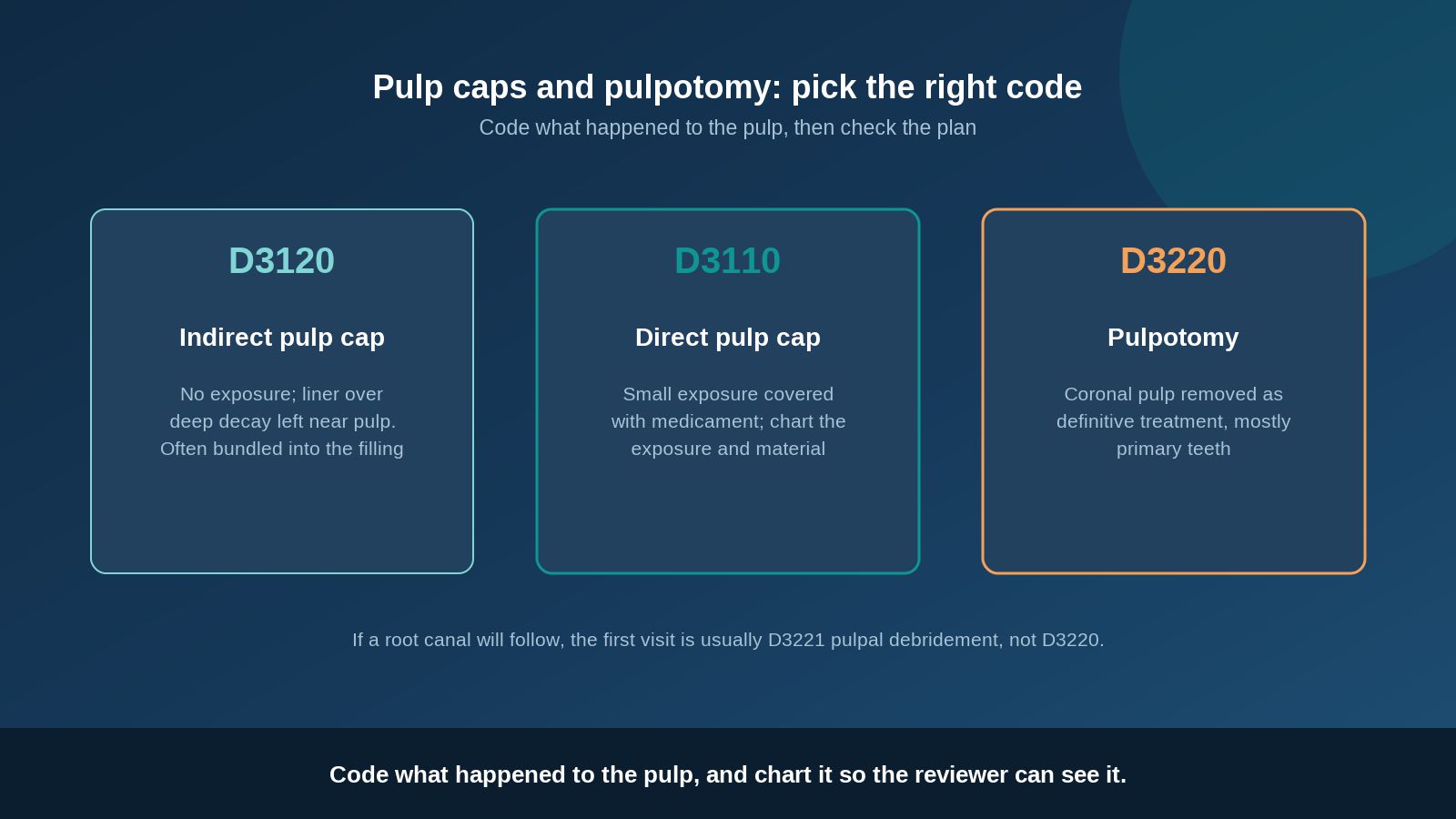
- D3120, indirect pulp cap. No exposure. Deep decay is intentionally left near the pulp and covered with a protective material so the tooth can lay down reparative dentin. A routine liner or base under a filling is not an indirect pulp cap.
- D3110, direct pulp cap. The pulp is exposed, usually a small exposure in healthy tissue, and a medicament such as MTA or calcium hydroxide is placed directly over it.
- D3220, therapeutic pulpotomy. The coronal pulp is removed to the canal orifices and a medicament is placed. It's most common on primary molars and is meant as definitive treatment, not the first step of a root canal.
- D3221, pulpal debridement. Used to relieve acute pain when a root canal will follow. It isn't billed when the root canal is completed the same day.
- D3222, partial pulpotomy for apexogenesis. For a permanent tooth with incomplete root development, where the goal is to keep the root growing.
Why these claims get denied
- Indirect pulp caps get bundled. Many plans treat D3120 as part of the same-day filling and pay nothing for it. In network, that amount is usually a contractual write-off, not a patient balance. Bill it when it truly happened, but set expectations.
- Pulpotomy followed by a root canal. If the same office bills D3220 and then completes endodontic treatment on that tooth, many plans deny the pulpotomy or recoup it later. When a root canal is the plan, the emergency visit is D3221.
- Age and tooth limits. Some plans pay D3220 only on primary teeth or under a certain age. Others pay it on permanent teeth. Check during verification.
- Same-day combinations. A direct and an indirect pulp cap on the same tooth, or a pulp cap with a pulpotomy, is rarely payable. Report the procedure that best describes the treatment.
What to document
Reviewers want to see that the code matches the clinical picture:
- Depth of decay and whether the pulp was exposed. For D3110, note the size of the exposure and how bleeding was controlled.
- The material placed over the pulp, and the final restoration that followed.
- A pre-operative radiograph showing decay approaching the pulp.
- Pulpal diagnosis for a pulpotomy, such as reversible pulpitis on a primary molar.
A one-line narrative covers most reviews: "#19 deep DO caries; 1 mm mechanical exposure, hemostasis achieved, MTA placed; DO composite completed."
Bottom line
Pulp procedure claims get paid when the code describes what actually happened to the pulp and the chart backs it up. Use D3221 when a root canal is coming, expect D3120 to bundle with many plans, and verify age and tooth limits for D3220 before treatment. If your team wants help keeping restorative and endo claims clean, our insurance billing services cover verification, coding review and appeals.
Frequently asked questions
What is the difference between D3110 and D3120?
D3110 is a direct pulp cap, placed when the pulp is actually exposed and a medicament is applied over the exposure. D3120 is an indirect pulp cap, placed when there is no exposure but deep decay is left near the pulp and covered with a protective material. Both exclude the final restoration, which is billed separately.
Does dental insurance pay for indirect pulp caps?
Many plans consider D3120 part of the restoration placed the same day and pay nothing extra for it, and the write-off may be required under a network contract. Some plans do pay it, so verify, and document why the deep decay was left in place rather than removed.
Can D3220 be billed before a root canal?
D3220 is meant as definitive treatment, not the first stage of root canal therapy. If the same office completes the root canal later, many plans deny or recoup the pulpotomy. When a root canal is planned, the emergency visit is usually reported as D3221, pulpal debridement.
Is a pulpotomy covered on permanent teeth?
Some plans pay D3220 on permanent teeth and some limit it to primary teeth or by age. For a permanent tooth with incomplete root development, D3222 partial pulpotomy for apexogenesis may be the better fit. Check the plan's limitations during verification.
What should be documented for a pulp cap or pulpotomy?
Record the tooth, the depth of decay, whether the pulp was exposed and how large the exposure was, bleeding control, the material placed, and the final restoration. A pre-operative radiograph and a short narrative help when the claim is reviewed.
Get pulp procedure claims paid
Dental Claim Professionals verifies benefits and reviews coding before claims go out.
Book a Free Consultation