
A root canal is one of the highest-dollar procedures a general or endodontic office bills, and one of the easiest to get wrong. The code depends on the tooth, the payable date depends on the plan, and the treatment almost always leads to a build-up and crown that compete for the same annual maximum. A few habits at the front desk keep these claims clean.
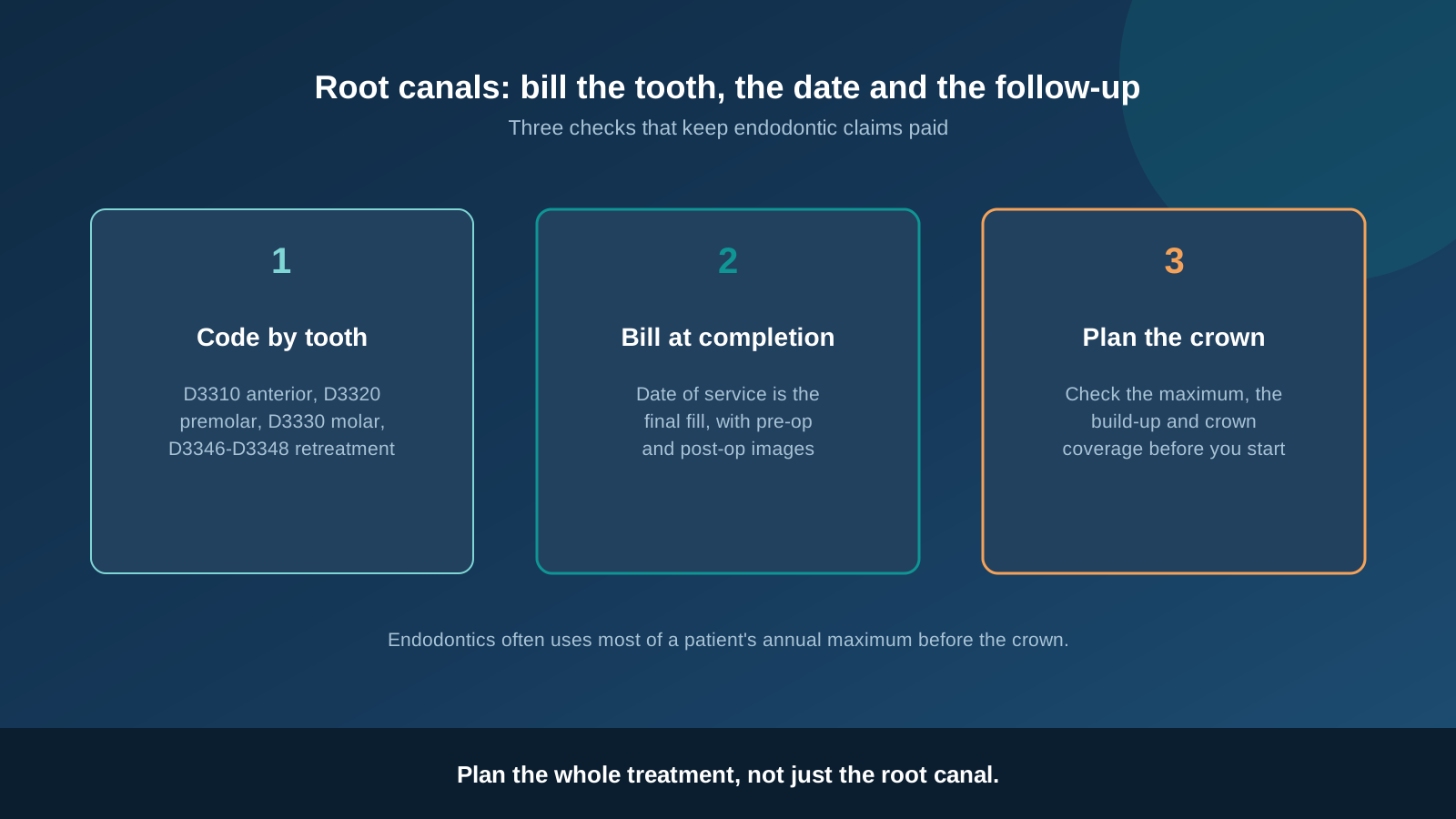
Choose the code by tooth and treatment type
Endodontic codes are set by the type of tooth, not by the number of canals treated.
- D3310, D3320 and D3330: root canal therapy. Anterior, premolar and molar teeth. These include the treatment-phase work and the final filling, but not the final restoration.
- D3346, D3347 and D3348: retreatment. Used when a previously completed root canal is redone. Payers often require a narrative, the earlier date of service and radiographs.
- D3220 and D3221: pulpotomy and pulpal debridement. Interim or emergency procedures that relieve pain. They are not a substitute for root canal therapy and are often limited to once per tooth.
- D3410 and related codes: apicoectomy. Surgical endodontics, billed separately with supporting images.
Report the tooth number and any surface or canal detail the claim form allows. Do not report a molar code for a premolar because the canals were complex. If the tooth was unusually difficult, explain it in a narrative instead, as outlined in our claim attachments and narratives guide.
Bill on completion and document the diagnosis
The safest date of service is the day the canals are obturated and the final filling is placed. Billing at the access visit can pay early, but if the patient never returns, the practice may face a recoupment. Multi-visit treatment should be tracked so the claim goes out as soon as the last visit is complete.
Most payers expect a pre-operative radiograph showing the periapical condition, and many want a post-operative image showing the fill. Record the pulpal and periapical diagnosis, the symptoms, and any pain or swelling that drove the urgency. If an emergency visit came first, check how the plan handles overlapping services, since some pay the debridement and then reduce the root canal. Thin documentation is a common cause of downcoded claims and denials.
Plan the benefits for the whole treatment
The root canal is rarely the end of the story. A tooth that needs endodontic treatment usually needs a build-up and a crown, and those draw from the same annual maximum. Plans also differ on whether endodontics is a basic or major service, which changes the coinsurance and any waiting period. Verify the category by code, confirm the limit, and review the crown and build-up billing rules before the patient leaves the chair.
Then give the patient a single estimate for the whole plan rather than only the root canal. A clear estimate at the start prevents the surprise balance that makes patients postpone the crown and risk the tooth.
Bottom line
Root canal billing comes down to three habits: code by tooth type, submit on the completion date with images and a diagnosis, and estimate the root canal, build-up and crown together. If your team would rather not chase endodontic denials, our insurance billing services handle verification, claim submission and follow-up.
Frequently asked questions
Which code do I use for a molar root canal?
Use D3330 for a molar. Anterior teeth use D3310 and premolars use D3320. The code is set by tooth type, not by the number of canals. Retreatment of a previous root canal uses D3346, D3347 or D3348 for anterior, premolar and molar teeth.
When should I submit the root canal claim?
Most plans want the claim submitted when treatment is complete, meaning the canals are obturated, so use the date the final filling was placed. Submitting at the access visit can trigger a denial, or an overpayment that is later recouped if the patient does not return.
Does insurance pay for an emergency visit and a root canal on the same tooth?
Often it pays the emergency service, such as D3221 pulpal debridement or D9110 palliative treatment, but some plans apply it toward the root canal or deny the second. Check the plan's rules on same-tooth, same-day and prior-service overlap before billing both.
Is a root canal a basic or a major service?
It depends on the plan. Many classify endodontics as a basic service paid at 80 percent, while others treat it as major at 50 percent. The classification changes the patient's portion and any waiting period, so verify it by code.
Does the crown after a root canal count against the same annual maximum?
Yes. The root canal, build-up and crown all draw from the same annual maximum, so a patient with 1,500 dollars may have little left for the crown. Estimate the whole treatment plan, and consider staging the crown into the next benefit year when clinically appropriate.
Get paid for every root canal
Dental Claim Professionals verifies endodontic benefits up front and follows up on every denied claim.
Book a Free Consultation