
Crowns are among the highest-value procedures in a general practice, and the build-up that often goes with them is the line payers question most. A crown claim that comes back with the build-up denied can cost a practice a few hundred dollars a case. The fix is rarely a different code. It is better support at the time of service. Here is how to get both lines paid.
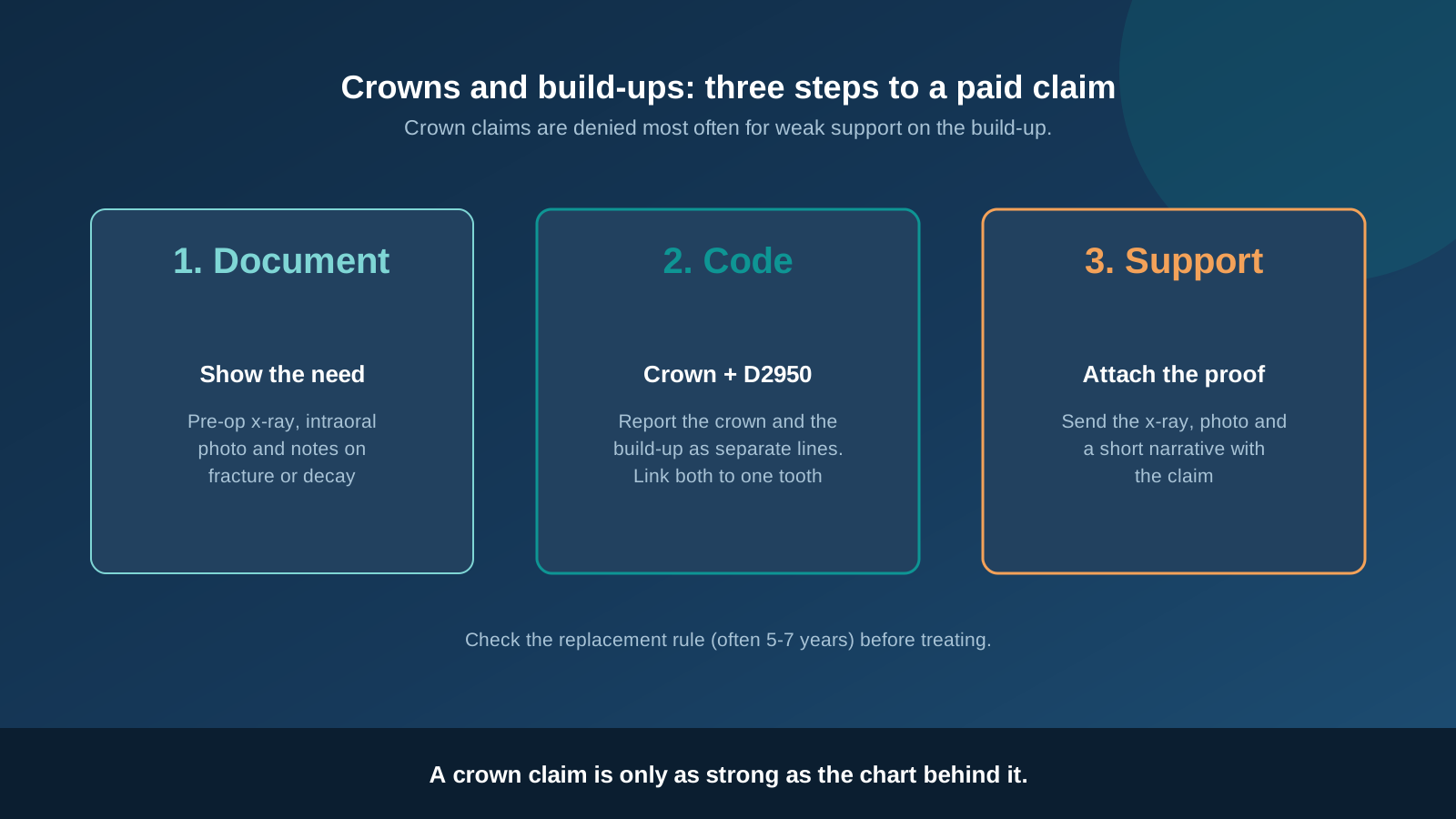
Document the clinical need
A payer wants to see why the tooth needs a crown and, separately, why it needs a build-up. Capture a pre-operative radiograph that shows the decay, fracture or failing restoration, and add an intraoral photo when the break is visible. Chart the amount of remaining tooth structure in the clinical notes. A build-up is generally supported when too little structure remains to retain the crown, so note that in plain words. A crown placed to replace a large existing filling is also easier to defend when the record states what failed and when.
Code each procedure on its own line
Report the crown with the code that matches the material and report the build-up as D2950 on the same tooth, dated the same as the crown. Do not report a build-up for a simple filling-style foundation or for a tooth that kept most of its structure, since that is a common cause of downcoding and of bundling denials. Bill on the seat date, not the prep date. Then check the plan's frequency limitations. Most plans pay a crown on the same tooth once every five to ten years, and the previous crown may have been placed elsewhere, so ask the patient and the payer. A missing tooth clause can also affect a crown that is part of a bridge.
Submit with support, and estimate accurately
Send the pre-operative x-ray, the photo and a short narrative with the original claim rather than waiting for a request. Our guide to claim attachments and narratives covers what to include. For expensive or questionable cases, a predetermination settles coverage in advance. Crowns are usually a major service, so the deductible, a lower coinsurance percentage and the annual maximum all affect what the patient owes. Build the estimate from verified benefits so there are no surprises at the seat appointment. If the build-up is denied despite good records, a short appeal with the same x-ray usually resolves it.
Frequently asked questions
Is a build-up (D2950) paid separately from the crown?
Many plans cover it, but often only when the tooth has lost enough structure that the crown needs the build-up for retention. Some plans bundle it into the crown fee, so verify before treatment.
Why was my build-up denied?
Common reasons are no pre-operative x-ray showing the loss of structure, a build-up billed on a tooth that did not need one, or the plan treating it as included in the crown.
What is a crown replacement limitation?
Most plans pay for a crown on the same tooth only once every five to ten years. Confirm the date of the prior crown, which may have been done at another office.
Can I bill when the crown is seated or when it is prepped?
Bill on the seat date. Reporting at the prep appointment can trigger a denial or a recoupment if the crown is never delivered.
Does a crown need a predetermination?
It is not required by most plans, but it is worthwhile for high-cost cases or when replacement limits and the build-up are in question.
Losing money on crown and build-up denials?
Dental Claim Professionals verifies benefits, files complete claims with the right attachments and follows up until they are paid.
Book a Free Consultation