
Scaling and root planing (SRP) is one of the most common periodontal procedures, and one of the most frequently questioned by payers. The treatment is straightforward; the claim is where practices lose money. A denied or downcoded SRP claim usually traces back to the chart, not the code. Here is how to get it paid the first time.
Document the clinical need
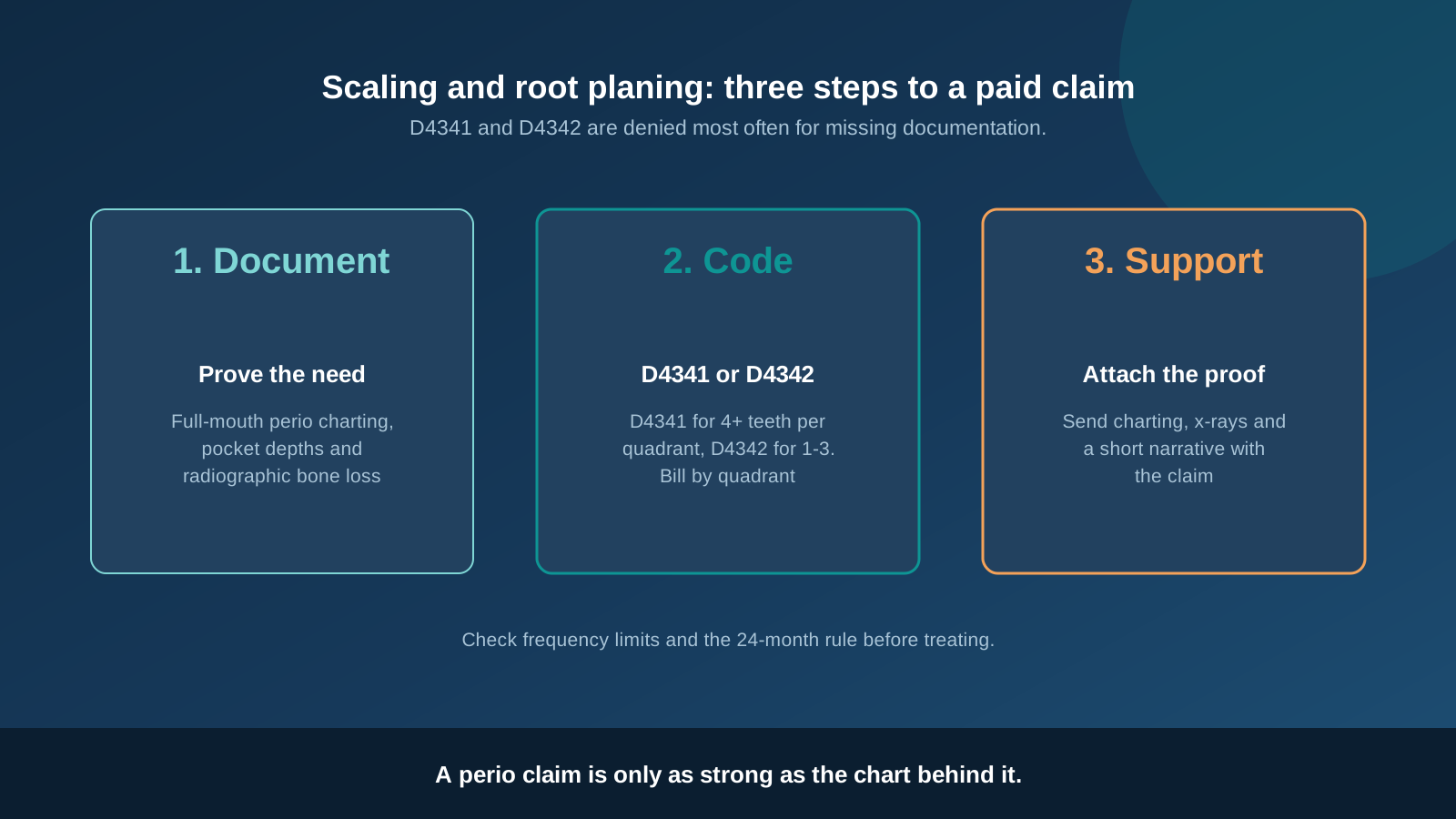
Payers approve SRP when the record shows periodontal disease, not gingivitis. That means a dated, full-mouth periodontal chart with pocket depths, bleeding on probing and, where relevant, recession or clinical attachment loss. Radiographs should show bone loss that supports the diagnosis. Charting that is months old, or that records only a few teeth, invites a request for more information. Record the periodontal diagnosis in the clinical notes so the claim and the chart tell the same story.
Code by quadrant, accurately
Report D4341 for four or more teeth in a quadrant and D4342 for one to three teeth in a quadrant. Each is billed per quadrant, so a full-mouth treatment is usually four lines on the claim, and the code can differ by quadrant. Count only the teeth that actually received treatment. Over-reporting teeth is a common cause of downcoding, and treating SRP like a routine cleaning invites the same result. Check frequency limitations too, since many plans pay SRP once per quadrant every 24 months, and confirm whether it counts toward the annual maximum or falls under a different category such as major services.
Submit with support, and verify first
Do not wait for the payer to ask. Send the periodontal charting, the radiographs and a short narrative with the original claim; our guide to claim attachments and narratives covers what a strong narrative includes. For a full-mouth treatment plan, a predetermination gives you the payer's decision, and your plan details from eligibility verification let you give the patient an accurate estimate before treatment starts. If a claim is denied anyway, a well-documented appeal with the same chart usually succeeds. Finally, verify coverage for periodontal maintenance (D4910), since most patients will need it afterward.
Frequently asked questions
What is the difference between D4341 and D4342?
D4341 is periodontal scaling and root planing for four or more teeth per quadrant. D4342 is for one to three teeth per quadrant. Both are reported once per quadrant.
Why do scaling and root planing claims get denied?
The most common reasons are missing or outdated periodontal charting, no radiographic evidence of bone loss, a frequency limit (often once per 24 months per quadrant), and billing as a prophylaxis-type service the plan covers differently.
What documentation should I send?
Send full-mouth periodontal charting with pocket depths and bleeding, dated radiographs showing bone loss, and a brief narrative describing the diagnosis and treatment.
Can I bill a prophylaxis on the same day?
Generally no. Payers treat a prophylaxis as unrelated to the active treatment of periodontal disease, so check the plan before billing both on one date.
What happens after scaling and root planing?
Most plans cover periodontal maintenance (D4910) afterward, often under a separate frequency rule. Verify it so the patient's estimate is accurate.
Tired of perio claims coming back denied?
Dental Claim Professionals verifies benefits, files complete claims with the right attachments and follows up until they are paid.
Book a Free Consultation