
Sealants and fluoride varnish are some of the most routine services in a family practice, and they are also some of the most frequently denied. The fees are small, so a denied claim rarely gets chased, but across a busy hygiene schedule those write-offs add up. Most denials trace back to three avoidable problems: age limits, tooth restrictions and incorrect coding.
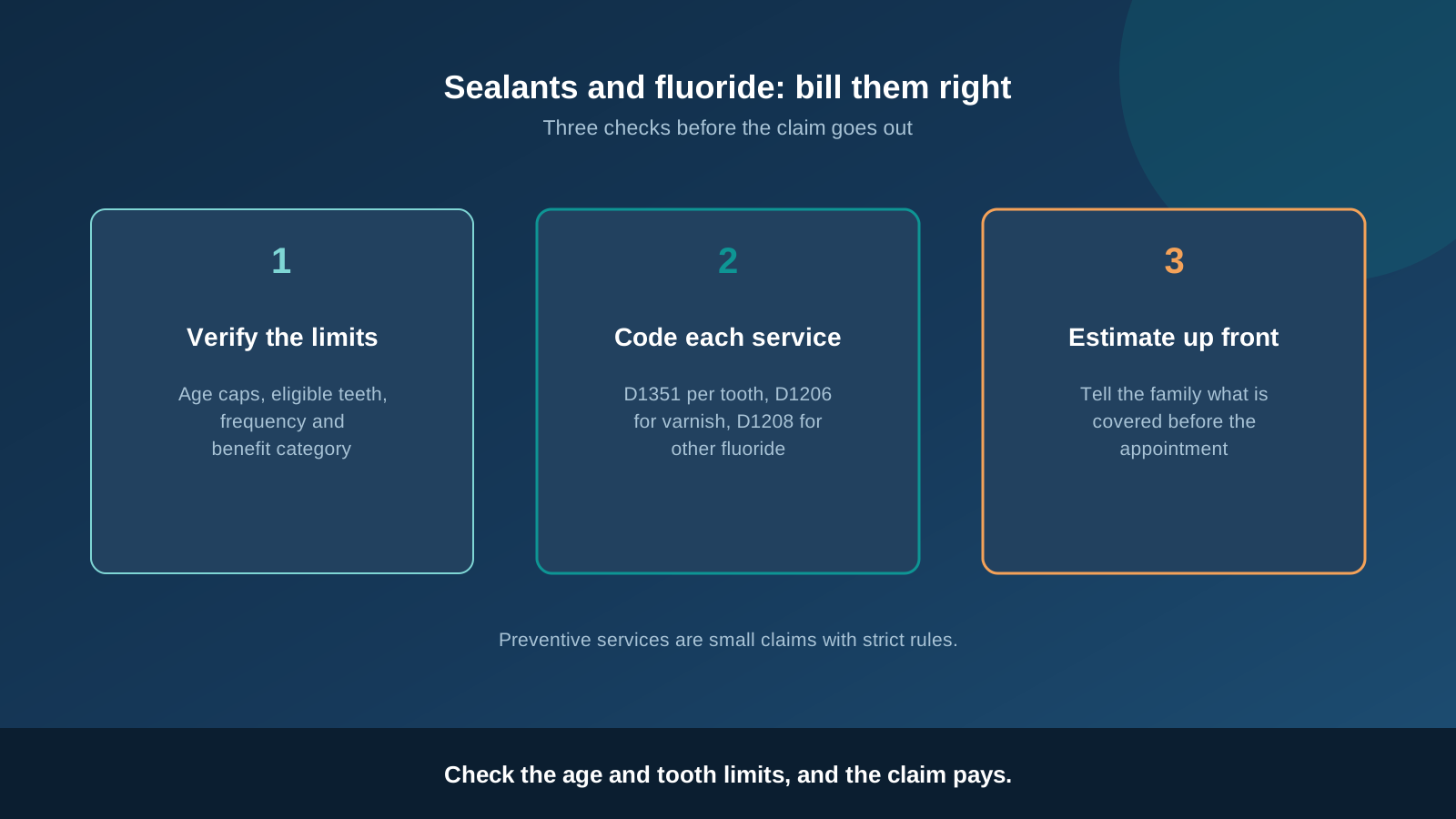
Verify age, tooth and frequency limits
Preventive coverage is generous in percentage but narrow in scope. During eligibility verification, look for the specific rules that apply to each service rather than relying on a general “preventive at 100%” note.
- Age caps. Sealants are commonly limited to children and teens, and fluoride is often capped at a younger age than most offices expect. Some plans cover adults with high caries risk, but only with documentation.
- Eligible teeth. Sealants are typically limited to unrestored permanent molars, and some plans also include premolars. A tooth with an existing filling on that surface will usually be denied.
- Frequency and replacement. Fluoride may be allowed once or twice per year, and a sealant may be limited to one per tooth within a set number of years. See our overview of frequency limitations.
- Benefit category. Some plans treat sealants as basic rather than preventive, which changes the percentage and may trigger a deductible.
Code each service accurately
Correct coding is simple once the habits are in place. Sealants are reported with D1351 for each tooth, and the tooth number belongs on every line. Do not list one line with a quantity of four. Fluoride is split by product: D1206 for varnish and D1208 for other topical fluoride such as gel or foam. If you apply silver diamine fluoride to arrest decay, that is a different service, reported with D1354, and it should not be coded as fluoride.
Also keep the visit coherent. Fluoride is a separate line from the cleaning, and the date of service must match the day the sealant or varnish was placed. When a payer lowers or bundles a line, our guides to downcoding and bundling explain how to respond, and annual CDT updates are worth checking so descriptors stay current.
Estimate up front and follow up on denials
Because the dollar amounts are modest, families are often surprised by even a small balance. Build the patient portion into your time-of-service estimate and tell parents before the appointment when a service falls outside the age or tooth rules. If your contract requires advance notice before billing for non-covered services, document that conversation.
When a legitimate preventive claim is denied, read the remittance closely, as described in our guide to reading a dental EOB. A denial for the wrong tooth number or a missing date is a quick correction. A denial for a true limitation should be posted correctly and moved to the patient or written off according to your contract. If your team does not have the time to track these details, our insurance billing services handle verification, coding review and follow-up.
Frequently asked questions
Why was a sealant denied for an adult patient?
Most plans cover sealants only up to an age limit, often the early to mid teens, and only on unrestored permanent molars. Check the age cap and tooth eligibility during verification and tell adult patients the service is likely their responsibility.
What is the difference between D1206 and D1208?
D1206 is topical application of fluoride varnish and D1208 is topical application of fluoride excluding varnish, such as gel, foam or rinse. Bill the code that matches the product actually used.
Is a sealant billed per tooth or per visit?
Per tooth. Code D1351 once for each sealed tooth and list the tooth number on every line so the payer can apply tooth and frequency limits correctly.
Can fluoride be billed on the same day as a prophylaxis?
Usually yes, but many plans limit fluoride to once or twice per year and to patients under a set age. Confirm the frequency and whether it shares a limit with other preventive services.
Can I bill the patient if insurance denies fluoride for age?
For in-network providers, check your contract first. Many contracts allow billing for non-covered services only if the patient was told in advance, so document the estimate before treatment.
Make small claims pay in full
Dental Claim Professionals verifies limits, reviews coding and follows up on every preventive denial.
Book a Free Consultation