
The explanation of benefits (EOB) and its electronic cousin, the electronic remittance advice (ERA), are the payer's record of exactly what happened to your claim. Yet many offices post the check amount and move on, missing underpayments, denials and patient balances hidden in the detail. Learning to read the document line by line is one of the fastest ways to improve collections.
Compare billed, allowed and paid amounts
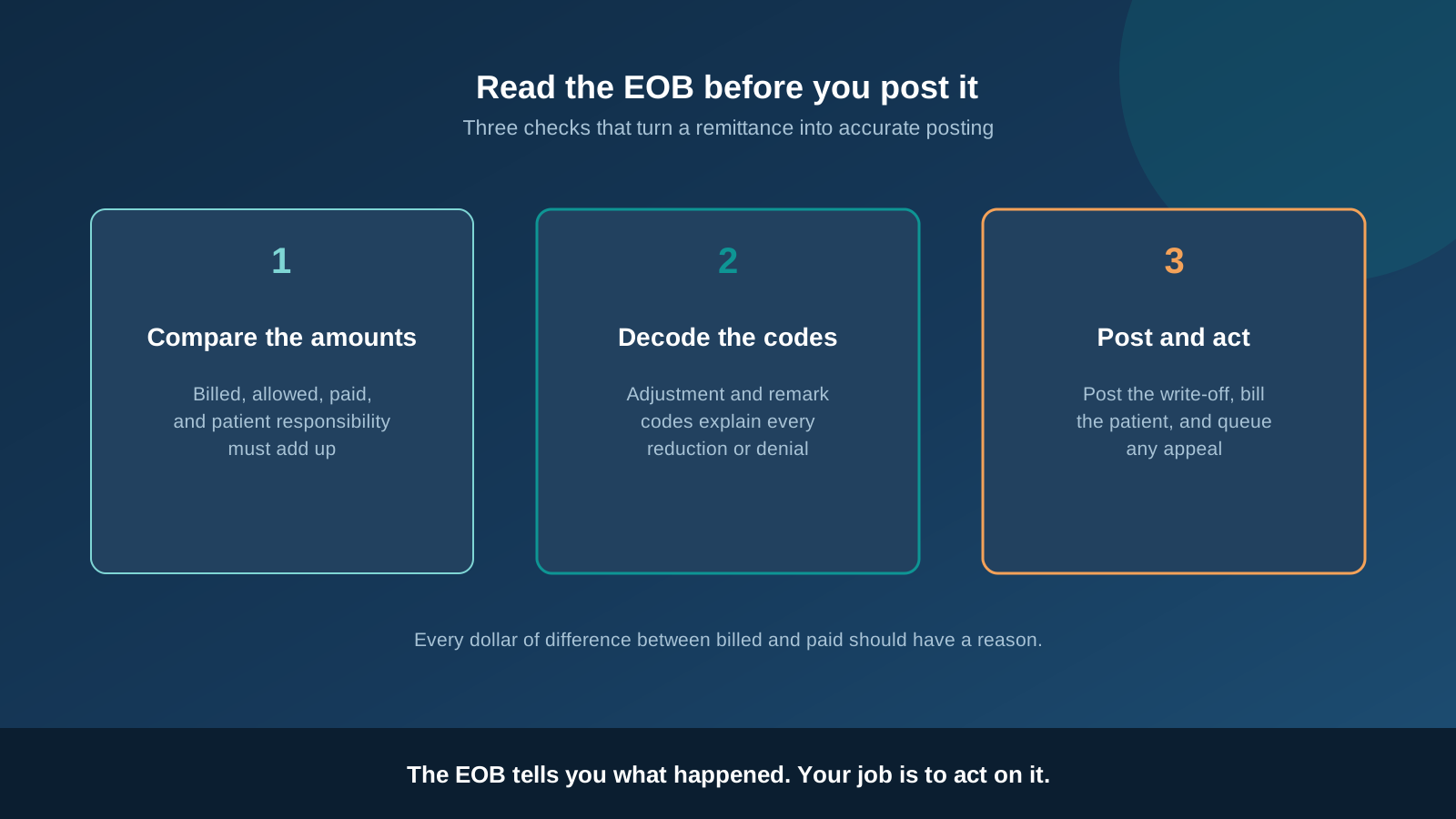
Start with the money columns for each procedure line. Most EOBs show the billed fee, the allowed amount, any deductible or coinsurance applied, the insurance payment, and the patient responsibility. For an in-network claim, the numbers should reconcile: allowed amount minus the insurance payment equals the patient portion, and billed minus allowed is the contractual write-off.
Then check each figure against what you expected:
- Allowed amount. Does it match your contracted fee schedule? A lower figure may mean an outdated schedule or a processing error.
- Deductible and coinsurance. Confirm the deductible was applied once and the percentage matches the benefit category you verified.
- Maximum used. Many EOBs show the remaining annual maximum. Compare it to your records so patient estimates stay accurate.
- Procedure codes. Make sure the payer did not change a code. Downcoding and bundling both appear here.
Decode adjustment and remark codes
Any time the payment is less than the allowed amount, the remittance should say why. ERAs use claim adjustment reason codes (CARCs), often paired with remittance advice remark codes (RARCs), and paper EOBs usually print a plain-language message instead. Group codes also matter: contractual obligation adjustments are generally the practice's write-off, while patient responsibility adjustments can be billed to the patient.
Sort the reasons into a few buckets so each line gets a clear next action:
- Contractual adjustments. Expected write-offs from the fee schedule. Post and move on.
- Benefit limits. Frequency limitations, waiting periods and the missing tooth clause can legitimately reduce or deny a line. Decide whether the patient owes it or whether eligibility was verified incorrectly.
- Missing information. Requests for x-rays or narratives mean the claim is not finished. See claim attachments and narratives.
- Errors and denials. Wrong coding, duplicate claims or a payer mistake may deserve reprocessing or an appeal.
Post accurately and act on every exception
Post by line, not by check total. Enter the payment, the write-off and the patient portion for each procedure, as covered in our guide to payment posting. Auto-posting saves time, but review exceptions manually: denials, zero payments and any line where the allowed amount differs from your schedule.
Then close the loop. Bill the patient only for the verified responsibility, queue appeals with their deadlines, and note any payer error with the reference number. Watch for payments that arrive by virtual credit card or later offsets, since a recoupment will show on a future remittance. If reading and chasing every remittance is more than your front office can handle, our insurance billing services take that work on.
Frequently asked questions
What is the difference between an EOB and an ERA?
An EOB is the explanation of benefits, traditionally a paper or PDF statement. An ERA is the electronic remittance advice, the same payment detail delivered as an electronic file that practice software can post automatically.
What does the allowed amount on an EOB mean?
The allowed amount is the most the payer recognizes for a procedure under the plan or contract. For in-network providers, the difference between your fee and the allowed amount is a contractual write-off.
What are CARC and RARC codes?
Claim adjustment reason codes (CARCs) explain why a payment was adjusted, and remittance advice remark codes (RARCs) add detail. Together they tell you why a line was reduced, denied or assigned to the patient.
Should I bill the patient for the full amount on the EOB?
Only bill the patient responsibility shown after verifying it is correct. For in-network claims, do not bill the patient for contractual write-offs or amounts denied for reasons that are the practice's responsibility.
What should I do if an EOB payment looks wrong?
Compare it to the claim, your fee schedule and the verified benefits. If the payer made an error, call to request reprocessing or file a written appeal within the payer's deadline.
Stop leaving money in the remittance
Dental Claim Professionals reviews every EOB, posts accurately, and follows up on underpayments and denials.
Book a Free Consultation