
Virtual visits have become a routine part of many dental practices, from emergency triage to post-operative checks and remote screenings. Billing them is less routine. Coverage differs by payer, the codes describe the technology rather than the clinical service, and many claims fail because the encounter was never documented like an in-office visit. A few consistent habits keep these claims paid.
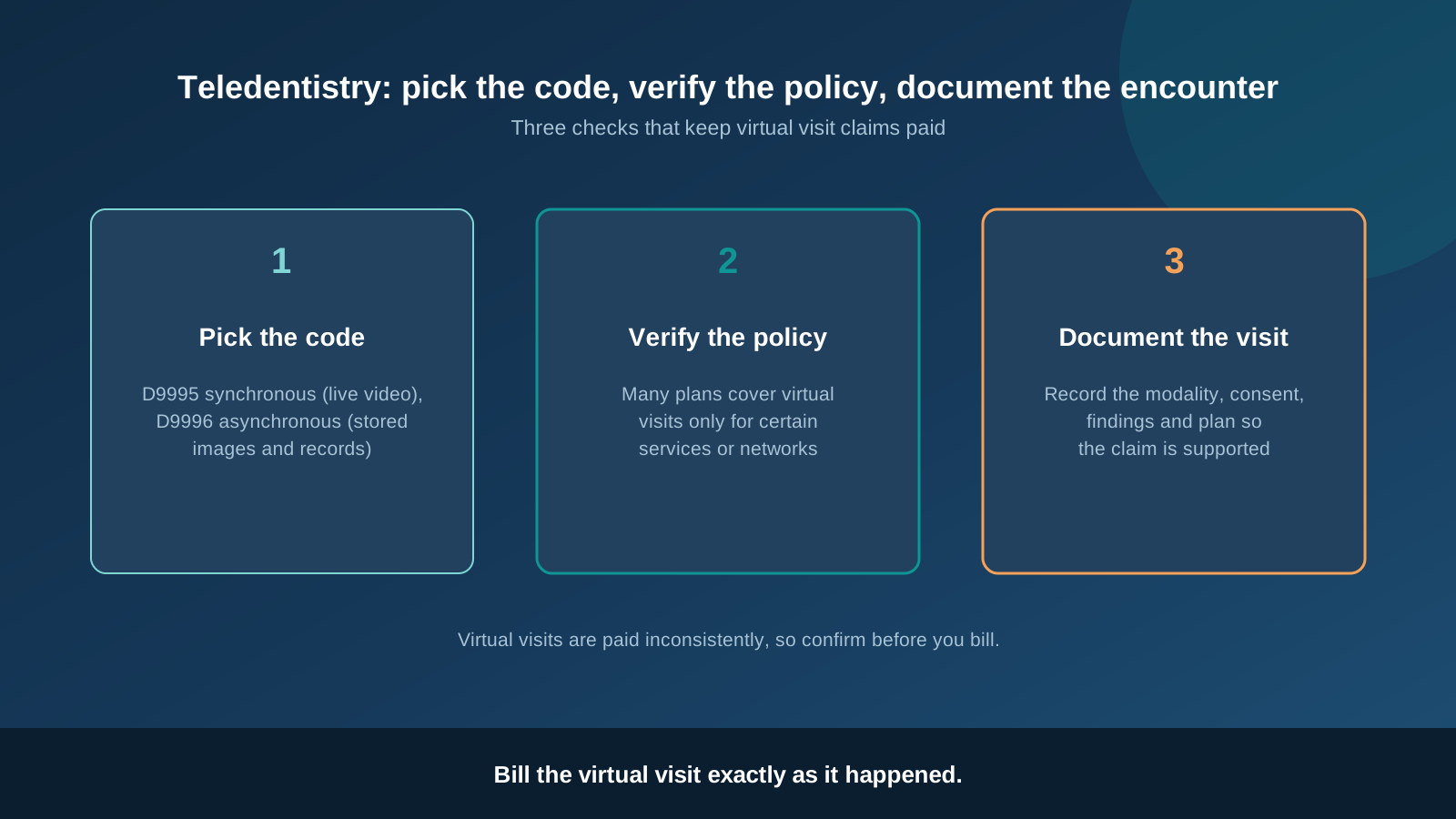
Know what D9995 and D9996 report
CDT includes two codes for teledentistry, and both describe how the service was delivered.
- D9995: teledentistry, synchronous. A real-time encounter between the patient and the provider, such as a live video consultation.
- D9996: teledentistry, asynchronous. Information such as photos, radiographs or history is captured and sent to the provider, who reviews it later.
These codes do not replace the clinical service. The evaluation is still reported with its own code, commonly a limited exam, D0140, as covered in our exam billing guide, and some payers expect both on the claim while others pay only one. Follow the payer's published instructions, and never report a virtual service as an in-person one.
Verify the payer's telehealth policy
This is where most denials start. Some plans reimburse D9995 and D9996, some pay only for specific services or provider types, and some treat teledentistry as non-covered. Medicaid programs and Medicare Advantage plans often have their own rules, so include the virtual visit in your eligibility verification and ask whether the exam, the telecommunication code, or both are payable, along with any frequency limits.
Where a service is covered, the same plan rules still apply: the benefit may count toward the annual maximum, and a virtual exam may use up the patient's exam frequency. Tell patients that before the visit with a clear estimate, especially if the plan may deny the claim.
Document the encounter fully
A virtual visit needs the same clinical record as an in-office one, plus a few details specific to the technology. Include the date, platform and modality, patient consent to the virtual visit, who participated and where, the chief complaint, findings, diagnosis and plan. For asynchronous visits, keep the images that were reviewed in the chart. If a claim is denied, a complete record is what makes an appeal succeed, and it protects you in a later recoupment audit.
Bottom line
Teledentistry billing comes down to three steps: report the service with the right code, confirm the payer will pay for it before the visit, and chart it as carefully as an in-person appointment. If you would rather hand off the verification and follow-up, our insurance billing services can handle it.
Frequently asked questions
What is the difference between D9995 and D9996?
D9995 is a synchronous teledentistry encounter, a live, real-time visit by video or phone. D9996 is asynchronous, where the dentist reviews images, records or history that were captured and sent earlier.
Does D9995 or D9996 replace the exam code?
No. They report the telecommunication service. The evaluation itself, such as a limited exam D0140, is billed separately with its own code, and payers differ on whether they pay both.
Do dental plans cover teledentistry?
Coverage varies. Some plans pay D9995 and D9996, some cover only a limited exam by video, and some do not cover virtual visits at all. Verify benefits before the visit.
What documentation supports a virtual visit claim?
Record the date, the platform used, patient consent, who participated and where, the chief complaint, findings, diagnosis and the treatment plan or referral.
Can I bill the patient if the plan denies it?
Only if your network contract allows it. In-network offices are often barred from charging for non-covered services unless the patient agreed in advance, so check the contract and give an estimate first.
Get paid for virtual visits
Dental Claim Professionals verifies benefits up front and follows up on every denied claim.
Book a Free Consultation