
The routine cleaning is the bread and butter of a recall schedule, yet it is also where payers push back most often. A prophylaxis billed for a patient with active periodontal disease, a child code used for a teenager, or a third cleaning in one benefit year can all turn into a denial or a downcode. A few checks before the patient sits down prevent most of them.
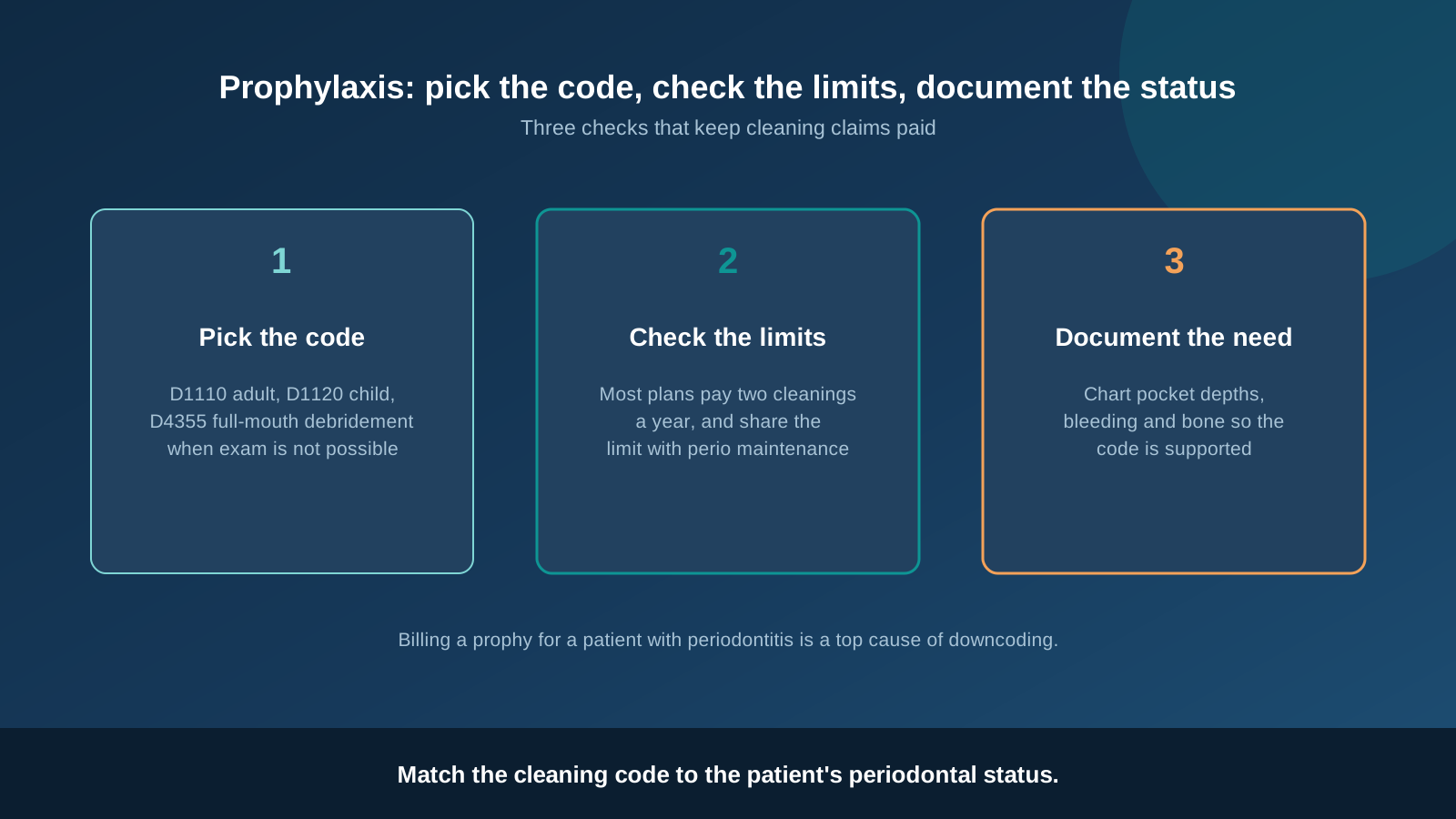
Match the cleaning code to the patient
- D1110: prophylaxis, adult. Removal of plaque, calculus and stain from a patient with healthy gingiva or gingivitis only.
- D1120: prophylaxis, child. The same service for a younger patient. Plans set the age cutoff, usually 14 to 16, and some pay a lower fee.
- D4355: full-mouth debridement. Used when heavy buildup prevents a thorough exam, so the evaluation can happen at a later visit.
- D4910: periodontal maintenance. For patients who have completed active periodontal therapy. It is not a prophylaxis and is covered in our perio maintenance guide.
The most common error is billing D1110 for a patient who has been treated with scaling and root planing. Payers see the history and downcode or deny the claim, so code the visit to the patient's current periodontal status.
Verify frequency and shared limits
During eligibility verification, confirm how many cleanings the plan covers, whether the limit counts by calendar year or by months since the last visit, and whether D1110 and D4910 share one limit. Many plans cover two per year at 100 percent, but some allow a third at a reduced rate or none at all. Our post on frequency limitations explains how the clock is measured.
A same-day exam and x-rays are paid under their own limits, but D4355 is frequently bundled with an exam, so check before scheduling.
Document status and set expectations
Record the periodontal screening or charting, bleeding on probing, calculus level and any change since the last visit. That chart is what supports a D1110 rather than a D4910, and it protects the office in an audit, as described in our post on recoupments.
Give patients a clear estimate up front, especially when a third cleaning or a perio maintenance visit may fall outside the plan. Patients accept a self-pay fee far more readily when they hear it before the visit.
Bottom line
Prophylaxis billing comes down to matching the code to the patient's periodontal health, confirming the frequency limit before the appointment and charting what you found. If you would rather not chase cleaning denials, our insurance billing services handle verification, submission and follow-up.
Frequently asked questions
What is the difference between D1110 and D1120?
D1110 is an adult prophylaxis and D1120 is a child prophylaxis. Plans set the age cutoff, usually 14 to 16, so check the patient's date of birth against the plan.
How often does insurance pay for a cleaning?
Most plans cover two prophylaxes per benefit year, often at 100 percent. Some plans limit it to one every six months, so confirm the exact interval.
When should I bill D4355 full-mouth debridement?
Use D4355 when heavy plaque or calculus prevents a proper exam, so the dentist can evaluate the patient at a later visit. Many plans cover it once and may bundle it with a same-day exam.
Can I bill a prophy for a patient with periodontitis?
Not if the patient has been treated for periodontal disease. After scaling and root planing, bill perio maintenance (D4910) instead, since a prophy would be downcoded or denied.
Does a cleaning count against the perio maintenance limit?
Often yes. Many plans share a combined limit across D1110 and D4910, so a patient may have only two cleanings of either type per year.
Get paid for every cleaning
Dental Claim Professionals verifies benefits up front and follows up on every denied claim.
Book a Free Consultation