
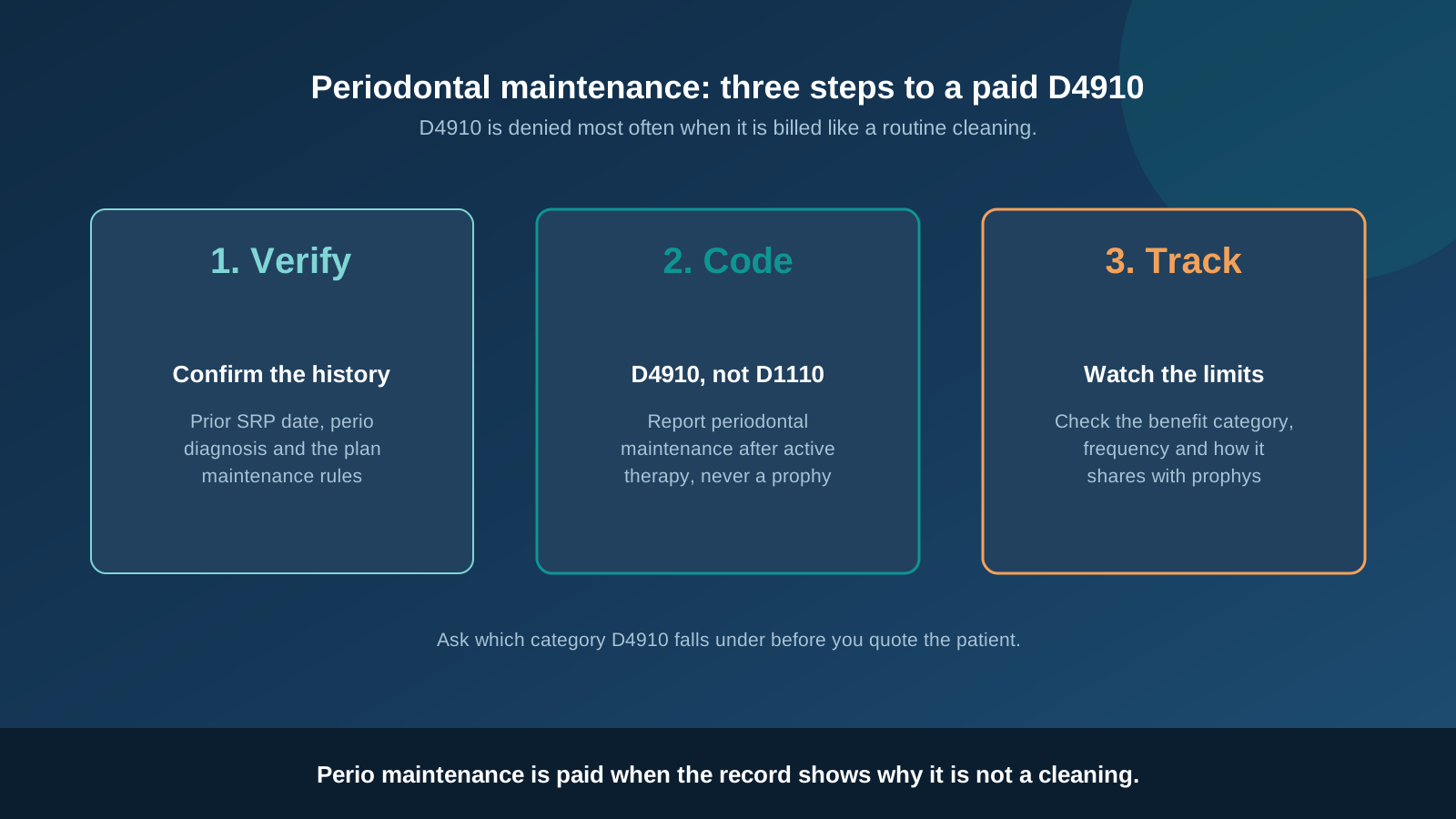
Periodontal maintenance is where many practices lose money quietly. After a patient completes scaling and root planing, the recall visit looks like a cleaning, so it is often billed like one. The payer then pays a prophylaxis rate, denies the claim for a missing prior treatment, or applies a frequency limit that was never checked. Billing D4910 correctly takes three habits: confirm the history, code the visit for what it is and track the benefit across the year.
Confirm the periodontal history
D4910 follows active periodontal therapy, so most payers look for a prior scaling and root planing claim before they pay it. Record the date of the D4341 or D4342 treatment, the periodontal diagnosis and the current charting in the patient's chart. If the therapy was done at another office or under a previous plan, note it, because the new payer may have no record of it. Many plans also require an interval after active treatment, commonly about three months, before maintenance is payable. Our guide to scaling and root planing billing covers the documentation that supports the first step, and the same narratives and attachments help when a reviewer questions the second.
Code D4910, not a prophylaxis
A prophylaxis (D1110) is for a patient without active periodontal disease. Once a patient has had periodontal therapy, the recall visit is generally reported as D4910, and a plan will usually not pay both on the same date. Billing D1110 for a periodontal patient may be paid quickly, but it misstates the treatment and invites a downcoding review or a later recoupment. Submit current periodontal charting and, where the plan asks, radiographs. If the payer denies D4910 or reduces it to a prophylaxis, an appeal with the prior therapy date and charting is the usual remedy.
Track the benefit category and frequency
Plans treat D4910 differently. Many classify it as a basic service, so the deductible and a coinsurance share can apply, while some pay it as a major service. Others share a frequency limit with prophylaxis, so a patient who alternates visits may reach the limit sooner than expected. Verify the category, the frequency and the remaining annual maximum at eligibility verification, then give the patient a written estimate, as described in our article on patient estimates. A patient who understands why the visit costs more than a routine cleaning is far more likely to keep the recall.
Periodontal maintenance is steady, recurring revenue and clinically important care. Confirm the history, report the right code and verify the benefit before the visit, and it becomes one of the most predictable lines on the claim.
Frequently asked questions
What is the difference between D4910 and D1110?
D1110 is a prophylaxis for patients without active periodontal disease. D4910 is periodontal maintenance, reported after active periodontal therapy, and it is usually paid at a different benefit level and frequency.
Does insurance pay for D4910 right after scaling and root planing?
Many plans require a waiting period or a minimum interval after D4341 or D4342, often about three months, so verify the rule and the prior treatment date first.
Is periodontal maintenance a basic or a preventive service?
It varies by plan. Many pay D4910 as a basic service, which means the deductible and a coinsurance share can apply. Confirm the category with the payer.
Can D4910 and a prophylaxis be billed on the same day?
Generally no. Plans treat them as alternatives, so report only the procedure that matches the patient's periodontal status.
How often is periodontal maintenance covered?
Frequencies commonly run two to four visits per year, and some plans share the limit with prophylaxis. Check the frequency and any shared limit.
Want periodontal claims paid the first time?
Dental Claim Professionals verifies benefits, files complete claims with the right attachments and follows up until they are paid.
Book a Free Consultation