
Late in the year, schedules fill with patients in pain who want to be seen before their benefits reset or lapse. Emergency visits are fast, unplanned and easy to code poorly. A limited exam billed as a comprehensive one, or a palliative code stacked on top of a root canal, can trigger a denial or a later recoupment. A few consistent habits keep these claims clean.
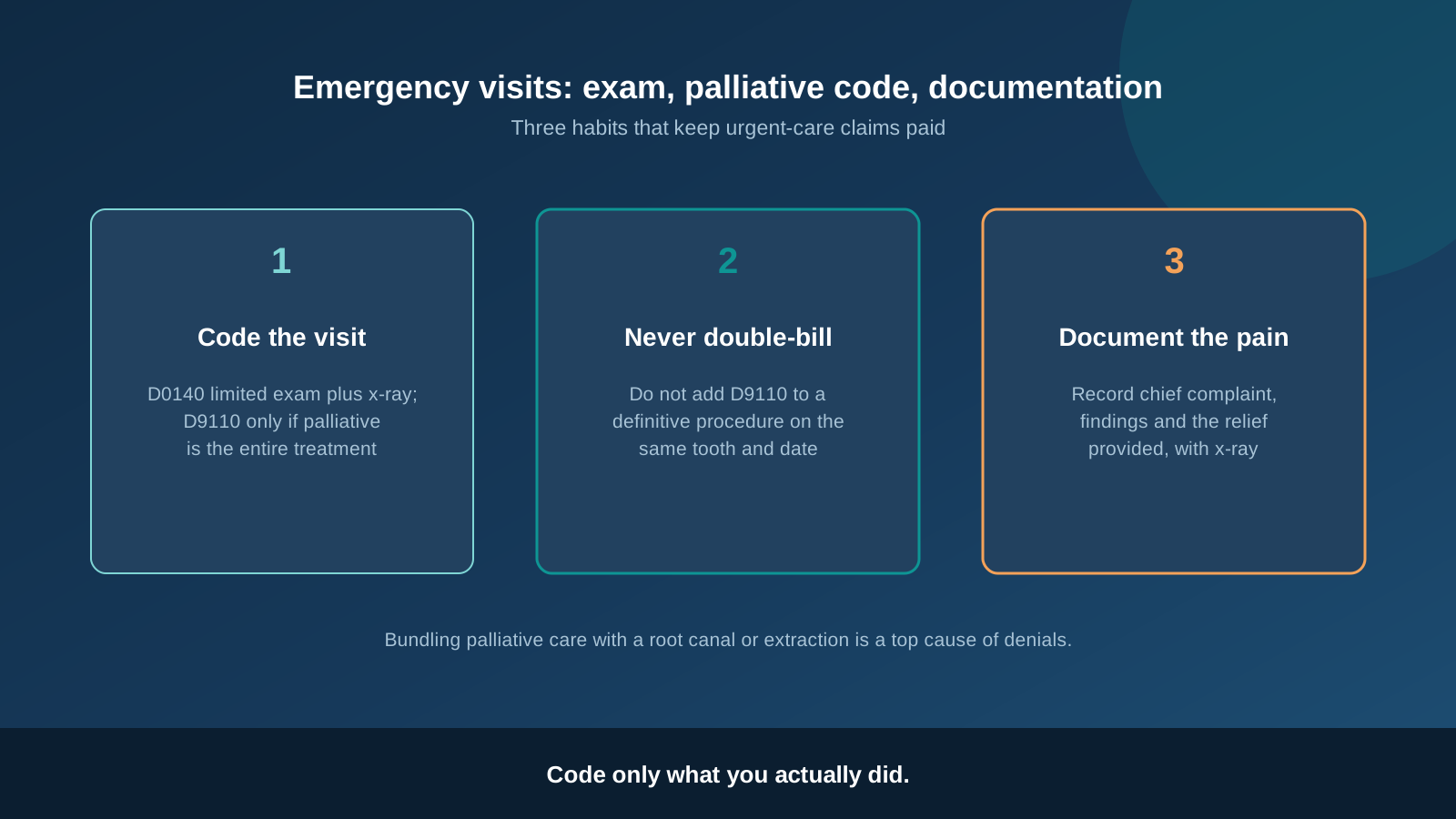
Choose the right exam and palliative codes
- D0140: limited oral evaluation, problem focused. The usual exam for a patient with a specific complaint such as a toothache or swelling.
- D9110: palliative treatment of dental pain, minor procedure. Billed when the visit provides temporary relief and no definitive treatment is done, such as placing a sedative dressing.
- Diagnostic imaging. A periapical x-ray is typically reported with the exam. See our guide to radiograph billing for frequency rules.
Avoid defaulting to a periodic or comprehensive exam. Mismatched exam codes are a common reason for downcoding, and our post on exam billing explains how each code is defined.
Do not bundle palliative care with definitive treatment
D9110 is meant to stand alone. If the patient is treated definitively on the same tooth and date, for example a pulpectomy, a root canal or an extraction, the relief of pain is part of that procedure and payers will not pay for it separately. Billing both invites a denial and is one of the patterns reviewers look for under bundling and unbundling edits.
When the emergency visit starts a longer treatment plan, bill each appointment for what was done that day. If a patient receives palliative care today and a root canal next week, each claim stands on its own date of service.
Document the complaint and set expectations
Because D9110 has no tooth-specific procedure behind it, documentation carries the claim. Record the chief complaint, onset and severity, clinical findings, tests performed, the exact treatment provided and the patient's response. Attach the x-ray and a short note when needed, as described in our post on claim attachments and narratives.
Check eligibility and frequency limits when you can, even for a same-day add-on, and give the patient a clear estimate before they leave. Emergency exams are often covered at a different rate or subject to a deductible, so collecting the patient portion at the visit prevents surprise balances.
Bottom line
Code the exam that matches the visit, use D9110 only when relief is the whole service, and document the complaint thoroughly. If you would rather not chase emergency-visit denials, our insurance billing services handle verification, submission and follow-up.
Frequently asked questions
What is D9110?
D9110 is palliative treatment of dental pain, minor procedure. It describes temporary relief of pain when no definitive treatment is performed at the visit.
Can I bill D9110 with a root canal or extraction?
Generally no. Palliative care performed as part of a definitive procedure on the same tooth is considered included, and most plans deny or bundle it.
Which exam code fits an emergency visit?
D0140, limited oral evaluation, problem focused, is the usual choice for a patient with a specific complaint. Use D0170 only for re-evaluation visits.
Do plans limit emergency exams?
Many plans cover D0140 but apply frequency limits or pay it at a lower rate. Verify before the visit when possible, and tell the patient what to expect.
What documentation supports D9110?
Record the chief complaint, onset, clinical findings, diagnostic tests, the specific palliative treatment provided and the patient's response. Attach the x-ray when requested.
Get paid for every emergency visit
Dental Claim Professionals verifies benefits up front and follows up on every denied claim.
Book a Free Consultation