
A crown is one of the highest-value procedures on the schedule, which is why payers scrutinize it so closely. A claim sent on the wrong date, coded for the wrong material or filed on a tooth that was crowned six years ago can be denied outright, leaving the office and the patient with a four-figure balance. With year-end approaching and benefits about to reset, getting crown claims right the first time matters more than ever.
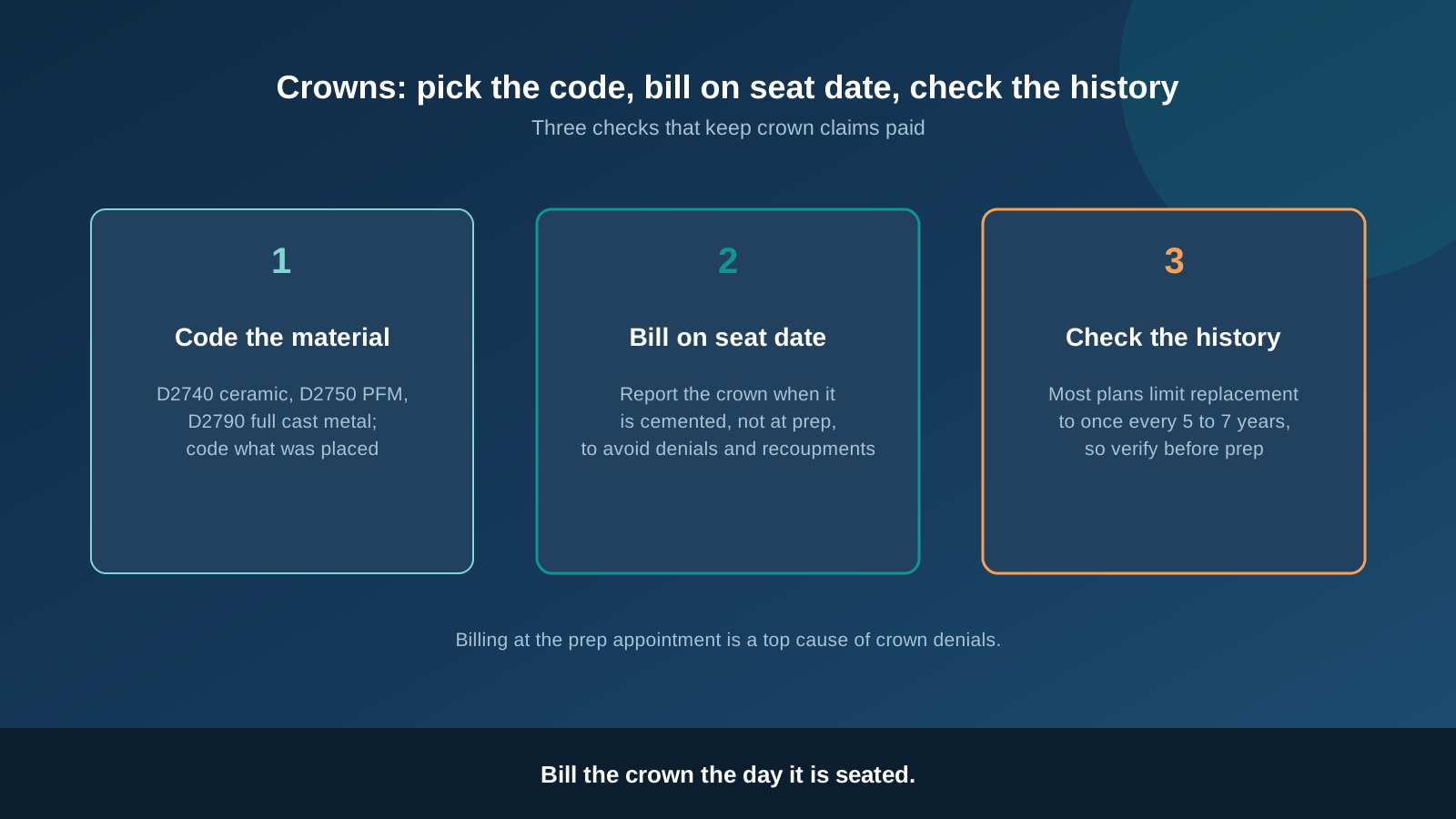
Code the material and bill on the seat date
- D2740: crown, porcelain/ceramic. Often the plan's most scrutinized crown, and the one most likely to be downgraded on posterior teeth.
- D2750: crown, porcelain fused to high noble metal. A common choice for molars where strength and appearance both matter.
- D2790: crown, full cast high noble metal. The material many plans use as the benchmark when they apply an alternate benefit.
- D2950: core buildup. Billed separately when it is clinically needed. See our guide to crown and build-up billing.
Report the crown on the seat date, when the permanent restoration is cemented, not on the prep date. Billing at prep is a frequent source of denials and recoupments. If the lab case is delayed or the patient cancels, a claim already filed becomes a problem to unwind, as covered in our post on recoupments. Also note that a temporary crown is usually considered part of the permanent crown and is not paid separately.
Check history, limits and downgrades
During eligibility verification, confirm the replacement limit (typically five to seven years per tooth), the coverage percentage, any waiting period for major services and how much of the annual maximum remains. A patient who has already used most of a $1,500 maximum may owe far more than expected.
Ask whether the plan applies an alternate benefit clause to ceramic crowns, and whether the tooth is subject to the missing tooth clause if it was extracted before coverage began. For high-cost cases, a predetermination removes most of the guesswork.
Document the need and set expectations
Support the claim with a pre-operative x-ray, a clear photo when helpful and a short narrative describing the fracture, recurrent decay or failing restoration. Our post on claim attachments and narratives shows what payers expect. Crowns submitted with only a code are far more likely to draw a request for information.
Give the patient a written estimate that shows the allowed amount, the insurance portion, any downgrade difference and the remaining balance. Collecting the patient's share at the seat appointment keeps accounts receivable low.
Bottom line
Crown billing comes down to coding the right material, billing on the seat date and confirming history and limits before treatment begins. If you would rather not chase crown denials, our insurance billing services handle verification, submission and follow-up.
Frequently asked questions
What is the difference between D2740, D2750 and D2790?
D2740 is a porcelain/ceramic crown, D2750 is porcelain fused to high noble metal, and D2790 is a full cast high noble metal crown. Code the material actually used, since plans reimburse by material and may downgrade.
Should I bill a crown on the prep date or the seat date?
Bill on the seat date, when the permanent crown is delivered. Billing at the prep appointment is a common cause of denials and can be treated as improper billing if the patient never returns.
How often will insurance replace a crown?
Most plans limit replacement of a crown on the same tooth to once every five to seven years. A crown within the limit is usually denied unless you document a fracture, decay or other need.
How do I bill a temporary crown?
A temporary crown is generally considered part of the permanent crown, so most plans do not pay it separately. Use D2799 only when the plan recognizes interim crowns, and tell the patient it may be their responsibility.
What is a downgrade clause?
Under an alternate benefit clause, the plan may pay a ceramic crown at the rate of a cheaper metal crown. The patient owes the difference, so disclose it before treatment.
Get paid for every crown
Dental Claim Professionals verifies benefits up front and follows up on every denied claim.
Book a Free Consultation